
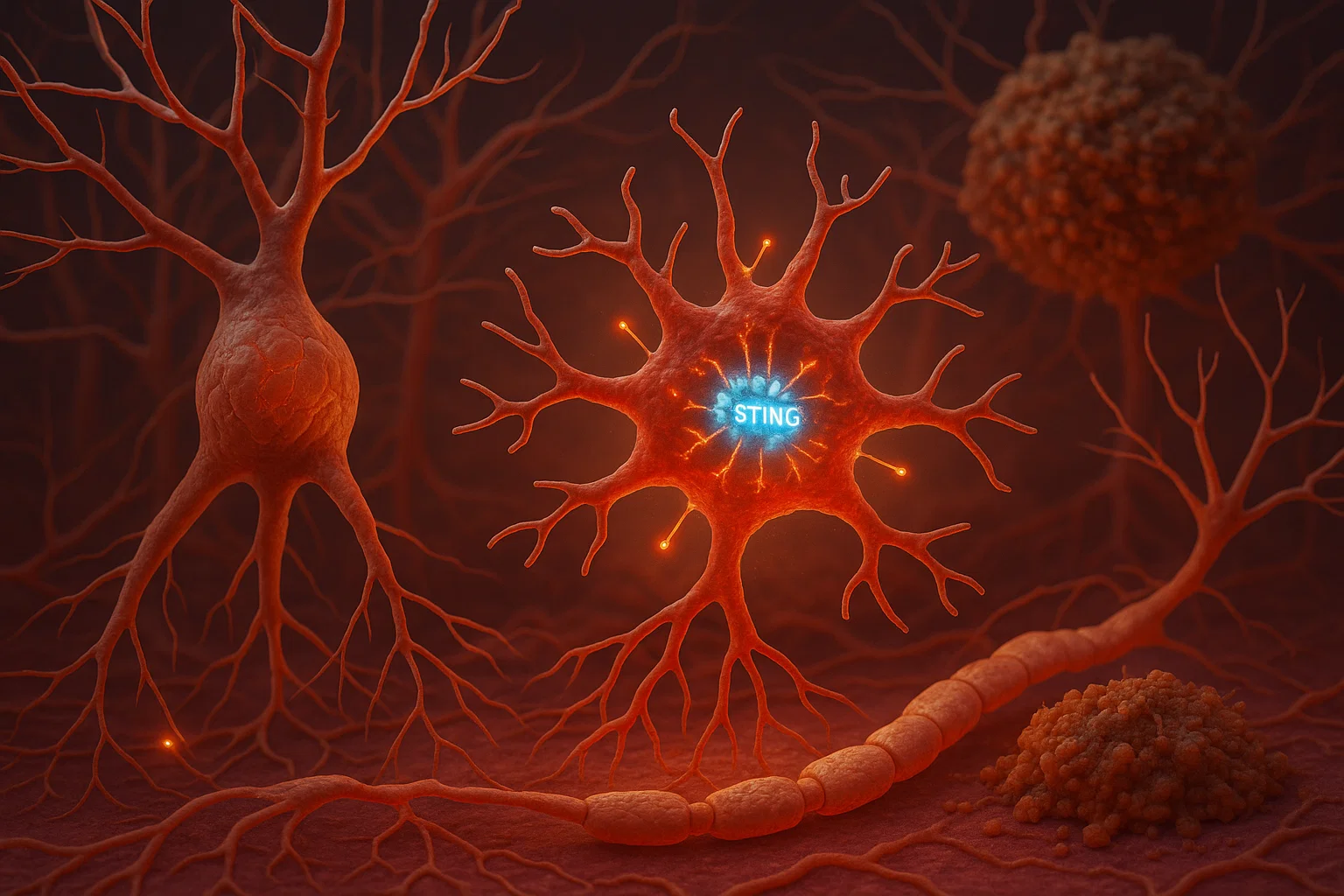

What if one of the biological pathways intended to protect the brain from danger also contributes to the damage seen in Alzheimer’s disease?
For decades, scientists have investigated the accumulation of amyloid-beta plaques and tau tangles as major features of Alzheimer’s disease. More recently, researchers have increasingly recognised that the brain’s immune system also plays an important role in neurodegeneration.
A study led by scientists at the University of Virginia School of Medicine identified a potentially important connection between Alzheimer’s-like brain pathology and an immune signalling protein known as STING (Stimulator of Interferon Genes).
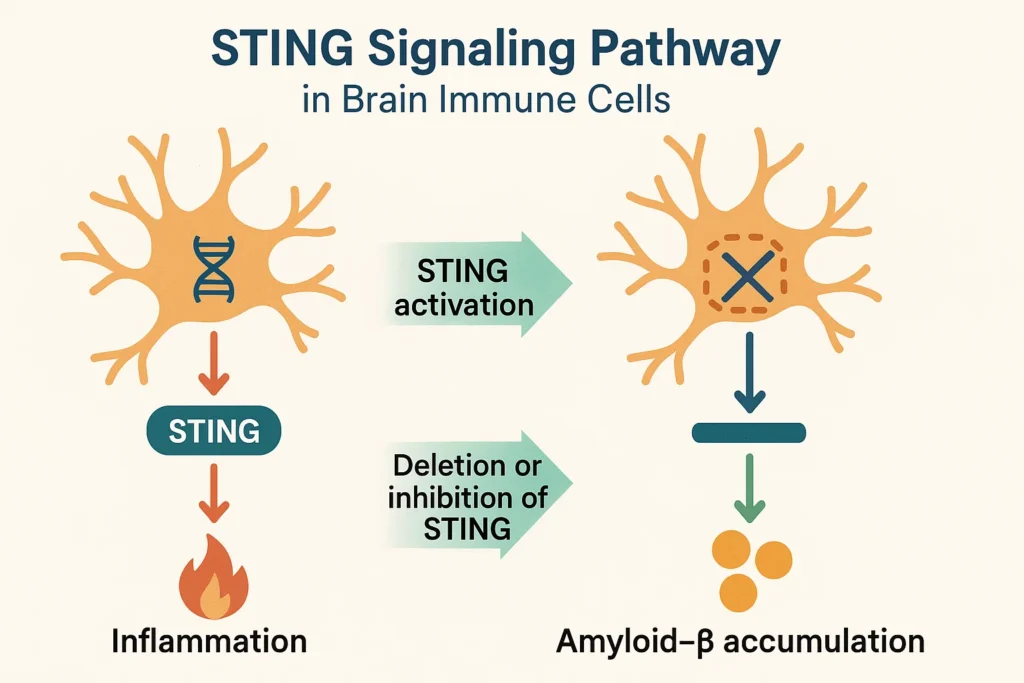
Published in Alzheimer’s & Dementia in May 2025, the research found that genetically removing STING in a mouse model of Alzheimer’s-related amyloid pathology reduced plaque accumulation, altered inflammatory responses, improved indicators of neuronal health, and protected against certain memory impairments.
These findings suggest that targeting excessive STING signalling could represent a promising direction for future Alzheimer’s treatments.
However, the research was conducted in laboratory mice, not human patients. STING deletion is not an available Alzheimer’s treatment, and no STING-targeting therapy has yet been established as safe and effective for treating the disease in humans.
Understanding Alzheimer’s Disease: More Than Amyloid Plaques
Alzheimer’s disease is a progressive neurodegenerative disorder that affects memory, thinking, behaviour, and the ability to perform everyday activities.
It is the most common cause of dementia, although not everyone with dementia has Alzheimer’s disease.
Two major pathological features characterise Alzheimer’s:
1. Amyloid-Beta Plaques
Amyloid-beta is a protein fragment that can accumulate outside neurons.
Over time, abnormal deposits may form plaques that are associated with disrupted communication between brain cells and other pathological changes.
2. Tau Tangles
Tau normally helps maintain neurons’ internal structure.
In Alzheimer’s disease, abnormal tau can accumulate inside neurons as neurofibrillary tangles.
These pathological changes are associated with neuronal dysfunction and progressive brain damage.
However, Alzheimer’s disease involves more than the accumulation of abnormal proteins.
Changes in immune signalling, inflammation, cellular metabolism, and neuronal communication also contribute to its complex biology.
This is why researchers are investigating additional therapeutic targets beyond amyloid-beta and tau.
What Is STING, and Why Is It Important?
STING stands for Stimulator of Interferon Genes.
It is a protein involved in the body’s innate immune system, which provides an early response to infections and potential cellular threats.
STING helps coordinate immune responses when cells detect DNA in places where it normally shouldn’t appear.
One important pathway involving STING is called the cGAS-STING signalling pathway.
How Does the cGAS-STING Pathway Work?
The pathway can be understood in several stages:
- Detection of unusual DNA: An enzyme called cyclic GMP-AMP synthase (cGAS) detects DNA in the cytoplasm, which may indicate infection or cellular damage.
- Activation of STING: Activated cGAS produces a signalling molecule called cyclic GMP-AMP (cGAMP), which activates STING.
- Immune signalling: STING activates downstream proteins that promote immune-related gene expression.
- Interferon production: The pathway can stimulate type I interferon production and other inflammatory mediators.
- Protective response: These signals help cells respond to infections and cellular stress.
Under normal circumstances, STING performs important protective functions.
Problems can arise when this signalling pathway becomes persistently or inappropriately activated.
Chronic immune activation may contribute to tissue inflammation and cellular dysfunction.
Scientists are now investigating whether this mechanism also contributes to Alzheimer’s-related neurodegeneration.
The Role of Microglia in Alzheimer’s Disease
Microglia are specialised immune cells in the central nervous system.
They help maintain a healthy brain environment by removing cellular debris, responding to injury, and interacting with neurons.
In Alzheimer’s disease, microglia often accumulate near amyloid-beta plaques.
Their responses can be beneficial or harmful depending on the circumstances.
Protective Functions of Microglia
Healthy microglia participate in:
- Clearing cellular waste and debris.
- Responding to infections and tissue damage.
- Supporting normal brain homeostasis.
- Regulating interactions with neurons.
- Responding to abnormal protein deposits.
When Microglial Responses Become Harmful
Persistent immune stimulation can lead to abnormal microglial activity.
In some circumstances, this may promote inflammatory signalling and contribute to neuronal damage.
The relationship is complicated because microglia may simultaneously perform protective functions while participating in harmful inflammatory processes.
The University of Virginia researchers wanted to determine whether STING influences this balance in Alzheimer’s-related disease.
Inside the 2025 University of Virginia Study
The study, titled “STING deletion protects against amyloid β-induced Alzheimer’s disease pathogenesis,” was published in Alzheimer’s & Dementia on May 23, 2025.
The research was led by Jessica M. Thanos and colleagues, including John R. Lukens, at the University of Virginia.
Read the original peer-reviewed study:
https://doi.org/10.1002/alz.70305
Free full-text research article:
https://pmc.ncbi.nlm.nih.gov/articles/PMC12101966/
How Was the Experiment Conducted?
The researchers used a genetically engineered mouse model known as 5xFAD.
This model develops substantial amyloid-beta pathology and is frequently used to investigate biological processes associated with Alzheimer’s disease.
The scientists genetically deleted Sting1, the gene encoding STING, in 5xFAD mice.
They then compared these animals with mice that retained normal STING expression.
The researchers examined several outcomes:
- Amyloid-beta plaque accumulation.
- Microglial activation and distribution.
- Inflammatory gene expression.
- Signs of neuronal injury.
- Oxidative stress.
- Spatial learning and memory.
This approach allowed the research team to investigate how removing STING influenced the development of amyloid-associated neurological abnormalities.
Importantly, genetically deleting STING in a mouse model is not the same as administering a drug to a person who already has Alzheimer’s disease.
Key Finding 1: STING Deletion Reduced Amyloid-Beta Plaque Accumulation
One of the study’s main findings was a reduction in amyloid-beta deposition in STING-deficient 5xFAD mice.
Compared with mice that retained STING, the genetically modified animals displayed improved control of amyloid-associated pathology.
This suggests that STING contributes to biological processes that influence amyloid plaque accumulation in the experimental model.
Why Does This Matter?
Amyloid-beta accumulation is one of the defining biological features of Alzheimer’s disease.
Treatments that influence amyloid pathology are therefore an important area of research.
However, reducing amyloid plaques does not automatically mean that a treatment will restore memory or stop disease progression.
The relationship between plaques, inflammation, neuronal injury, and cognitive function is complex.
The researchers therefore examined additional measures of brain health rather than relying solely on amyloid accumulation.
Key Finding 2: Removing STING Changed Microglial Responses
The researchers also discovered that STING deletion altered the brain’s immune response to amyloid pathology.
In STING-deficient 5xFAD mice, they observed reduced markers of microglial accumulation in affected brain regions.
These included the cortex, hippocampus, and subiculum.
The researchers also found fewer microglia or related immune cells in regions surrounding amyloid plaques.
Does This Mean Microglia Are Harmful?
Not necessarily.
Microglia perform many essential functions, and their activity cannot simply be classified as entirely beneficial or harmful.
The results suggest that STING contributes to the abnormal immune-cell responses associated with amyloid accumulation.
By altering this signalling pathway, the researchers observed changes in the brain’s inflammatory environment.
The study does not establish that eliminating microglia would be beneficial. Instead, it suggests that modifying specific immune signals could influence disease-related inflammation.
Key Finding 3: STING Deletion Reduced Signs of Neuronal Damage
Another important result involved neuritic dystrophy.
Neurites are extensions of nerve cells, including axons and dendrites, that support communication between neurons.
Dystrophic neurites are abnormal or damaged neuronal processes frequently observed near amyloid-beta plaques.
The researchers found that STING-deficient 5xFAD mice exhibited reduced neuritic dystrophy.
This suggests that removing STING may help protect certain neuronal structures from amyloid-associated injury in the mouse model.
The study also reported improvements in markers associated with neuronal health and reduced oxidative stress.
What Is Oxidative Stress?
Oxidative stress occurs when the production of reactive molecules exceeds the capacity of cellular systems to control their potentially damaging effects.
Excessive oxidative stress can interfere with normal cellular functions and may contribute to neuronal injury.
Although oxidative stress is implicated in many neurodegenerative conditions, the precise relationship between STING signalling, oxidative damage, and human Alzheimer’s disease requires further investigation.
Key Finding 4: STING-Deficient Mice Showed Better Memory Performance
Perhaps the most encouraging finding was the effect on cognitive performance.
The researchers reported that removing STING protected against impairments in spatial learning and memory in the 5xFAD mouse model.
Spatial memory allows animals to learn and remember information about their surroundings.
Researchers commonly assess these functions using established behavioural experiments.
Why Is This Finding Important?
A reduction in pathological changes is scientifically interesting, but improved behavioural performance provides additional evidence that the intervention may influence neurological function.
The finding suggests that STING contributes to processes associated with memory impairment in this experimental model.
However, mouse spatial-memory tests cannot reproduce the full range of cognitive difficulties people with Alzheimer’s disease experience.
The study therefore cannot establish that STING deletion would prevent dementia, restore lost memories, or improve daily functioning in human patients.
Key Finding 5: Type I Interferon Signalling Was Reduced
The research also investigated molecular pathways that might explain the observed protective effects.
Researchers found reduced expression of genes involved in type I interferon signalling in STING-deficient 5xFAD mice.
These changes were observed in both microglia and excitatory neurons.
Type I interferons are immune-signalling molecules that help the body respond to viral infections and other threats.
Although essential for normal immune defence, persistent interferon-related signalling can contribute to inflammation under certain conditions.
The findings suggest that excessive STING-associated interferon signalling may contribute to amyloid-related neurological disease.
Nevertheless, changes in gene expression do not prove that interferon signalling alone explains all the observed improvements.
Further experiments are needed to identify which downstream mechanisms matter most.
How Does STING Deletion Affect Alzheimer’s-Like Pathology?
The study identified several related changes.
| Biological measure | Findings in STING-deficient 5xFAD mice |
| Amyloid-beta pathology | Reduced plaque deposition |
| Microglial response | Altered activation and reduced accumulation in affected areas |
| Type I interferon signaling | Lower expression of related genes |
| Neuronal injury | Reduced neuritic dystrophy |
| Oxidative stress | Improvements in associated markers |
| Spatial learning and memory | Better performance than affected control mice |
Together, these findings support the possibility that STING influences multiple aspects of amyloid-associated pathology.
The results do not mean that STING deletion eliminated the disease or reversed established Alzheimer’s dementia.
Could STING Inhibitors Become a New Alzheimer’s Treatment?
The study raises an important question: Could researchers develop medications that reduce harmful STING signalling without disrupting its essential immune functions?
Unlike genetic deletion, a drug-based approach could potentially provide greater control over when and how strongly the pathway is inhibited.
Scientists are investigating several experimental approaches to modifying cGAS-STING signalling.
These include small-molecule inhibitors and methods designed to deliver therapeutic compounds to relevant cells.
However, translating laboratory findings into a safe treatment for patients is challenging.
Experimental STING-Targeting Compounds
A review published in Molecular Aspects of Medicine in February 2026 discussed preclinical candidates including H-151 and other experimental agents.
The review described evidence that pharmacological inhibition of cGAS-STING signalling may reduce inflammation and improve certain disease-related outcomes in laboratory models.
However, it emphasised that no cGAS-STING inhibitors had entered clinical trials specifically for Alzheimer’s disease at the time of the review.
This means the research remains at an early stage of therapeutic development.
Read the scientific review:
https://doi.org/10.1016/j.mam.2025.101444
Why Blocking STING Could Be Risky
STING is not simply a harmful molecule.
It performs important functions in antimicrobial defence, innate immune signalling, and cellular responses to stress.
Blocking STING too strongly could potentially interfere with the body’s ability to respond to infections.
Researchers therefore need to address several challenges:
1. Immune safety
A treatment must avoid causing excessive suppression of normal immune defences.
2. Blood-brain barrier penetration
Many medications struggle to reach brain tissue because of the blood-brain barrier.
3. Cell-specific targeting
Scientists need to determine which cell types should be targeted and whether broad STING inhibition would produce unwanted effects.
4. Treatment timing
Genetic deletion throughout development is different from inhibiting STING after neurological disease has begun.
5. Long-term safety
A treatment intended for a chronic condition may require prolonged use, making sustained immune effects particularly important.
These challenges explain why promising findings in mice do not immediately translate into clinical therapies.
How Does STING Research Compare With Existing Alzheimer’s Treatments?
As of November 2026, approved Alzheimer’s treatments include medications for symptom management and certain drugs that modify aspects of the underlying disease process.
Two important disease-modifying therapies are:
Lecanemab (Leqembi)
Lecanemab is a monoclonal antibody that targets amyloid-beta.
It has been approved by the U.S. Food and Drug Administration for appropriate patients with early Alzheimer’s disease.
Clinical trials demonstrated that it can modestly slow cognitive and functional decline in selected patients.
In 2026, the FDA also approved a subcutaneous starting regimen, expanding administration options.
Donanemab (Kisunla)
Donanemab is another amyloid-targeting monoclonal antibody approved for early symptomatic Alzheimer’s disease in eligible patients.
Clinical research demonstrated a slowing of disease progression in certain patient groups.
These treatments do not cure Alzheimer’s disease or reliably restore lost cognitive function.
They also carry important risks, including amyloid-related imaging abnormalities that may involve brain swelling or bleeding.
How Is STING Targeting Different?
The central distinction is the biological target.
Existing anti-amyloid antibodies primarily address amyloid-beta pathology.
STING-targeting strategies aim to modify immune-signalling pathways that may contribute to inflammation and neuronal injury.
| Treatment approach | Main target | Development status |
| Lecanemab | Amyloid-beta | FDA-approved for eligible patients with early Alzheimer’s |
| Donanemab | Amyloid-beta | FDA-approved for eligible patients with early Alzheimer’s |
| STING-targeting approaches | Innate immune signaling | Preclinical research for Alzheimer’s |
This comparison does not establish that STING inhibitors will be more effective or safer than approved medicines.
Official treatment guidance:
National Institute on Ageing: How Is Alzheimer’s Disease Treated?
Related Research: Additional Evidence for the cGAS-STING Pathway
The University of Virginia study is not the only research investigating this immune pathway.
A separate 2025 study published in Advanced Science examined what happened when researchers removed cGAS specifically from microglia in an Alzheimer’s-related mouse model.
The researchers observed reduced amyloid pathology and protection against cognitive impairment.
Because cGAS acts upstream of STING, these results provide additional preclinical evidence that this signalling pathway is relevant to amyloid-associated neurological disease.
However, deleting cGAS in microglia and deleting STING throughout the body are different experimental interventions.
Their results should not be treated as interchangeable.
Related original research:
Microglial cGAS Deletion Preserves Intercellular Communication and Alleviates Amyloid-β-Induced Pathogenesis of Alzheimer’s Disease
Another study published in Proceedings of the National Academy of Sciences in 2025 investigated a nanomedicine approach designed to interrupt harmful interactions between amyloid-beta pathology and STING-associated immune signalling.
These findings further support interest in the pathway but remain experimental.
Related study:
Nanoimmunomodulation of the Aβ-STING Feedback Machinery in Microglia for Alzheimer’s Disease Treatment
What Are the Limitations of the University of Virginia Study?
Although the results are promising, several limitations are important.
1. The Research Was Conducted in Mice
The 5xFAD model develops substantial amyloid pathology, but it does not reproduce every feature of human Alzheimer’s disease.
Human Alzheimer’s involves complex interactions between amyloid, tau, inflammation, ageing, genetics, and other biological processes.
2. Genetic Deletion Is Not the Same as Drug Treatment
The researchers deleted the gene encoding STING.
They did not demonstrate that administering a STING inhibitor to human patients produces equivalent benefits.
3. The Model Does Not Reproduce the Full Human Disease
The 5xFAD model is primarily used to investigate amyloid-related pathology.
It cannot fully reproduce human tau pathology, the long clinical course of Alzheimer’s, or all forms of cognitive impairment.
4. Long-Term Safety Remains Unknown
Because STING has important immune functions, suppressing the pathway may produce unwanted consequences.
The mouse findings do not establish the safety of long-term STING inhibition in humans.
5. The Results Do Not Prove a Cure
Although the researchers observed improvements in pathology and cognitive performance, they did not demonstrate that Alzheimer’s disease can be cured or reversed.
6. Clinical Effectiveness Has Not Been Established
Further research must determine whether STING-targeting therapies can safely slow cognitive decline in people.
These findings should therefore be described as a promising preclinical discovery rather than an established medical breakthrough.
What Could Happen Next in STING Research?
Future investigations may focus on several important questions.
Can medications reproduce the effects of STING deletion?
Scientists must establish whether pharmacological inhibitors can produce similar benefits in animal models.
When should STING signalling be targeted?
Researchers need to determine whether treatment must begin before extensive pathology develops or whether benefits are possible after symptoms appear.
Which brain cells matter most?
STING functions in multiple cell types. Identifying the most relevant cells could help researchers design more precise treatments.
Can harmful inflammation be reduced without compromising immunity?
Balancing protective and potentially damaging immune functions will be essential.
Will the results translate to humans?
Ultimately, properly designed clinical trials will be needed to determine whether STING-targeting medicines provide meaningful benefits for people with Alzheimer’s disease.
Conclusion: A New Direction in Alzheimer’s Research
The discovery that STING deletion can reduce amyloid-related pathology and protect memory performance in laboratory mice adds important evidence to the growing role of immune signalling in Alzheimer’s disease.
The University of Virginia study found that removing STING improved several measures of neurological health, including amyloid plaque accumulation, microglial responses, neurotoxic damage, and spatial learning and memory.
Subsequent research has further strengthened scientific interest in the cGAS-STING pathway as a potential therapeutic target.
Nevertheless, substantial challenges remain before these findings can be translated into human treatments.
The key takeaway is that Alzheimer’s research is expanding beyond amyloid and tau to investigate immune pathways that influence brain inflammation and neuronal survival.
STING represents a promising experimental target, but its therapeutic value in humans must still be established through rigorous clinical research.
References
1. Original University of Virginia study
Thanos, J. M., Campbell, O. C., Cowan, M. N., et al. (2025). STING deletion protects against amyloid β-induced Alzheimer’s disease pathogenesis. Alzheimer’s & Dementia, 21(5), e70305.
https://doi.org/10.1002/alz.70305
2. Free full-text original study
PubMed Central, National Library of Medicine.
https://pmc.ncbi.nlm.nih.gov/articles/PMC12101966
3. University of Virginia research announcement
Immune System Discovery Reveals Potential Solution to Alzheimer’s. June 3, 2025.
4. Review of STING-targeting therapeutic opportunities
cGAS-STING signalling in Alzheimer’s disease: Microglial mechanisms and therapeutic opportunities. Molecular Aspects of Medicine, 107, 101444. February 2026.
https://doi.org/10.1016/j.mam.2025.101444
5. Related cGAS deletion study
Microglial cGAS Deletion Preserves Intercellular Communication and Alleviates Amyloid-β-Induced Pathogenesis of Alzheimer’s Disease. Advanced Science, 2025.
https://doi.org/10.1002/advs.202410910
6. Related experimental nanomedicine study
Nanoimmunomodulation of the Aβ-STING Feedback Machinery in Microglia for Alzheimer’s Disease Treatment. PNAS, 2025.
https://doi.org/10.1073/pnas.2427257122
7. National Institute on Ageing
How Is Alzheimer’s Disease Treated?
https://www.nia.nih.gov/health/alzheimers-treatment/how-alzheimers-disease-treated
8. Alzheimer’s Association
Amyloid-Targeting Treatments for Alzheimer’s.
https://www.alz.org/professionals/health-systems-medical-professionals/amyloid-targeting