

What if scientists could fight harmful bacteria not by killing them directly, but by blocking access to an essential nutrient?
This idea is gaining attention as antibiotic resistance continues to threaten modern medicine.
A study published in Nature Communications in July 2025 demonstrated a new experimental approach to limiting the growth of certain pathogenic Escherichia coli (E. coli) bacteria.
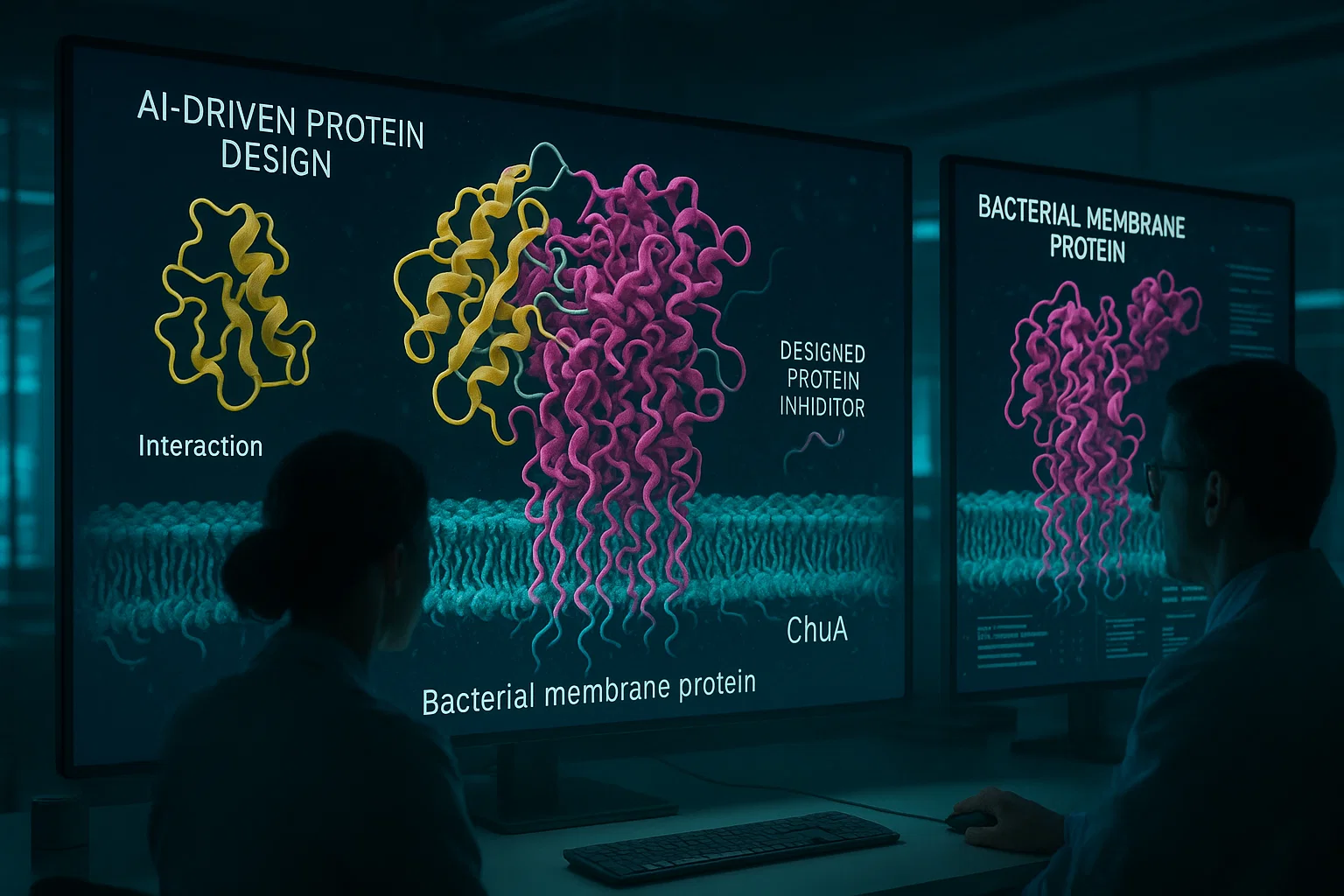
Researchers from Monash University in Australia used artificial intelligence-guided protein design to develop molecules that interfere with a bacterial process known as heme piracy.
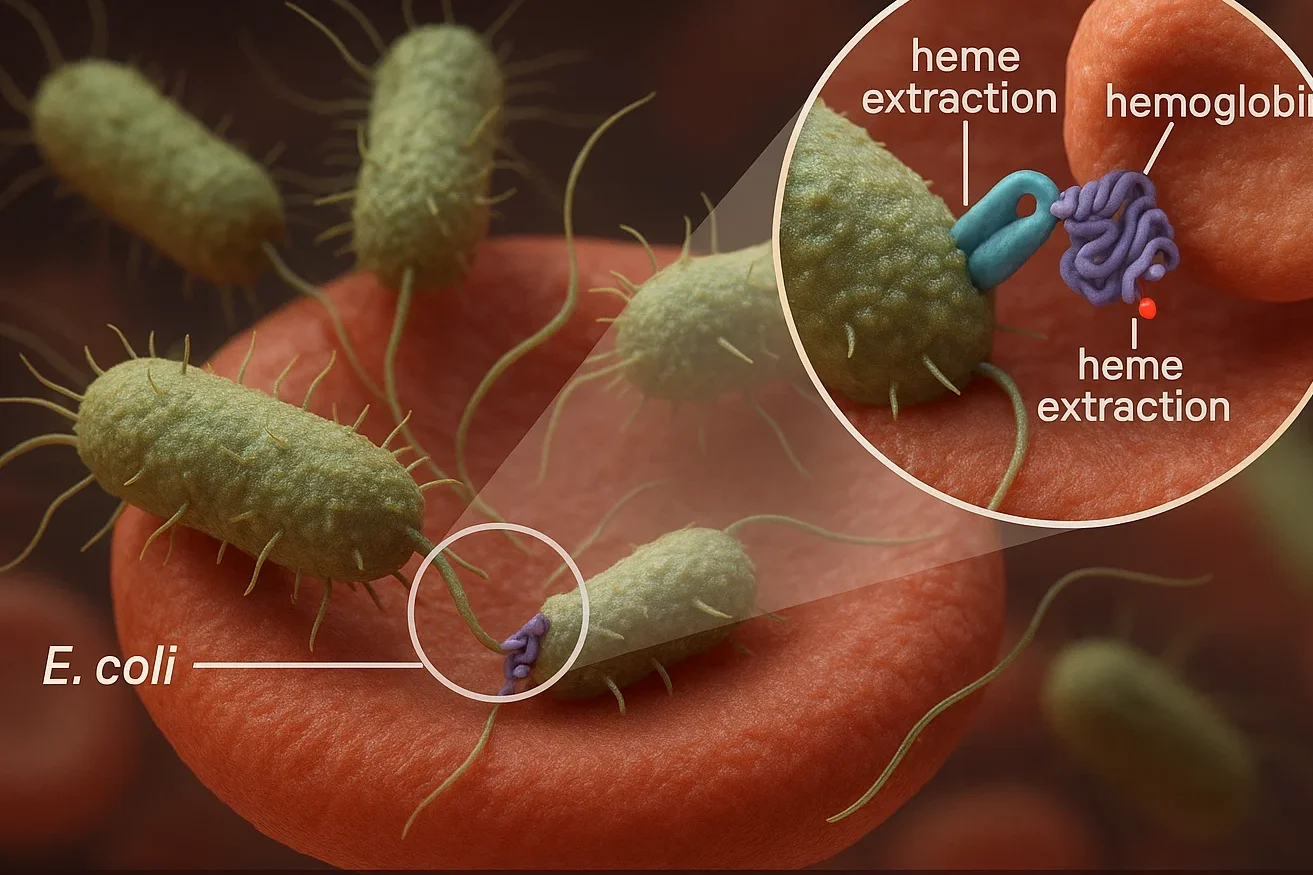
Heme piracy allows some disease-causing bacteria to obtain iron from haemoglobin, the oxygen-carrying protein found in red blood cells.
By targeting a bacterial membrane protein called ChuA, the researchers created designed proteins that prevented bacteria from efficiently acquiring heme from haemoglobin.
Several of these experimental inhibitors reduced bacterial growth at remarkably low concentrations under laboratory conditions.
The discovery suggests that blocking nutrient acquisition could become a useful strategy for developing future antibacterial medicines.
However, these proteins have not been established as treatments for human infections. Their safety, effectiveness, and ability to work inside the human body remain important unanswered questions.
Why Antibiotic-Resistant E. coli Is a Growing Health Concern
Escherichia coli is a group of Gram-negative bacteria commonly found in the intestines of humans and animals.
Most strains are harmless and contribute to the normal intestinal environment.
However, certain pathogenic strains can cause serious infections.
These include:
- Urinary tract infections (UTIs): Often caused by uropathogenic E. coli strains that can infect the bladder or kidneys.
- Bloodstream infections: Some strains can enter the bloodstream and cause serious systemic illness.
- Gastrointestinal infections: Certain types cause diarrhoea, abdominal pain, and sometimes severe complications.
- Neonatal meningitis: Particular pathogenic strains can cause dangerous infections involving the nervous system of newborns.
- Other extraintestinal infections: Some strains can cause infections outside the digestive system.
These illnesses are caused by different groups of E. coli that possess different virulence characteristics.
Not every strain causes disease, and not every pathogenic strain uses the same methods to obtain nutrients.
The Challenge of Antibiotic Resistance
Antibiotics work through different mechanisms, including interfering with bacterial cell-wall production, protein synthesis, or DNA-related processes.
However, bacteria can acquire genetic changes that make particular antibiotics less effective.
Antibiotic resistance may develop through mutations or by acquiring resistance genes from other bacteria.
Some resistant E. coli strains produce extended-spectrum beta-lactamases (ESBLs), enzymes that can inactivate several commonly used antibiotics.
Other strains may develop resistance to multiple antibiotic classes.
The World Health Organisation’s 2025 global antimicrobial resistance surveillance report highlighted the continuing threat of resistant bacterial infections.
According to the WHO, approximately one in six laboratory-confirmed bacterial infections involving common infections worldwide in 2023 showed resistance to antibiotic treatment.
This estimate covers multiple bacterial species and infection types, not E. coli alone.
Official source: WHO Global Antibiotic Resistance Surveillance Report 2025
These challenges demonstrate why researchers are investigating antibacterial strategies beyond traditional antibiotic targets.
One possibility is interfering with the nutrients bacteria need to survive inside the human body.
What Is Bacterial Heme Piracy?
Iron is essential for the growth and survival of most bacteria.
It supports important biological processes, including:
- Energy production.
- DNA synthesis.
- Enzyme activity.
- Cellular metabolism.
- Responses to environmental stress.
However, bacteria face a major challenge when infecting humans: freely available iron is scarce.
The human body deliberately restricts access to iron as part of its natural immune defences.
This protective process is known as nutritional immunity.
How Nutritional Immunity Works
Human cells and proteins store or bind most of the body’s iron.
For example:
Transferrin transports iron through the bloodstream.
Ferritin stores iron inside cells.
Haemoglobin contains iron within heme groups that enable oxygen transport.
Hemopexin binds free heme and helps prevent its uncontrolled circulation.
By keeping iron bound to specific molecules, the body limits how much is available to invading microorganisms.
Many bacteria have evolved sophisticated systems to overcome these restrictions.
How Bacteria Steal Iron From the Host
Pathogenic bacteria can obtain iron through several mechanisms.
One strategy is to produce molecules called siderophores, which bind available iron and transport it back into bacterial cells.
Another strategy is to extract heme from host proteins.
Heme is an iron-containing molecular structure found in haemoglobin and several other proteins.
Some pathogenic E. coli strains have specialised transport systems that can acquire heme from these sources.
This process is often described as heme piracy because bacteria effectively take an iron-containing molecule from host proteins to support their own growth.
The 2025 research focused on a key protein involved in this process: ChuA.
What Is the ChuA Protein?
ChuA is an outer membrane heme transporter found in certain pathogenic E. coli strains and related bacteria, including Shigella species.
The protein is located in the bacterial outer membrane, where it can interact with molecules outside the cell.
One of its important functions is to obtain heme from host haemoglobin.
How ChuA Extracts Heme From Haemoglobin
Researchers have found that ChuA can interact directly with haemoglobin.
The interaction allows the transporter to extract the iron-containing heme group.
The heme can then be imported through the bacterial transport system, providing access to an important iron source.
The process involves several molecular interactions.
Two histidine residues in ChuA, known as His-86 and His-420, contribute to heme binding and transport.
Structural regions of ChuA, including extracellular loops 7 and 8, also appear important for interactions with haemoglobin.
These features make ChuA an attractive experimental target.
If researchers can prevent haemoglobin from interacting with ChuA, they may be able to restrict one pathway bacteria use to obtain iron.
However, ChuA is not present in every E. coli strain, and bacteria may possess additional iron-acquisition mechanisms.
Blocking ChuA therefore would not necessarily eliminate bacterial growth under all conditions.
Inside the 2025 Monash University Study
Daniel R. Fox and colleagues, including Rhys Grinter, led the research at Monash University in Australia.
The paper was titled:
“Inhibiting heme piracy by pathogenic Escherichia coli using de novo-designed proteins.”
It was published in Nature Communications, volume 16, article 6066, on July 9, 2025.
Read the original peer-reviewed study:
https://doi.org/10.1038/s41467-025-60612-9
Read the free full-text article:
https://pmc.ncbi.nlm.nih.gov/articles/PMC12241658/
What Did the Researchers Want to Discover?
The researchers investigated two related questions.
First, how does ChuA recognise haemoglobin and extract its heme?
Second, could scientists create artificial proteins that bind ChuA and prevent this process?
To investigate these questions, the team combined several advanced technologies.
These included:
- Cryo-electron microscopy.
- X-ray crystallography.
- Structural modelling.
- Site-directed mutagenesis.
- Artificial intelligence-assisted protein design.
- Laboratory bacterial growth experiments.
This combination let researchers study ChuA’s structure and function before designing proteins that could interfere with it.
How Artificial Intelligence Helped Design the New Protein Inhibitors
One of the study’s most innovative aspects was its use of computational protein design.
Proteins are chains of amino acids that fold into specific three-dimensional structures.
Their shapes determine how they interact with other molecules.
Scientists can now use computational tools to design new proteins with structures intended to recognise particular molecular targets.
This process is called de novo protein design.
Rather than modifying an existing therapeutic protein, researchers can computationally generate new protein structures for a specific purpose.
The Role of AlphaFold2
AlphaFold2 is an AI-based system developed to predict protein structures from amino acid sequences.
In this study, structural modelling helped researchers investigate how haemoglobin interacts with ChuA.
The models suggested that extracellular loops 7 and 8 were important regions involved in haemoglobin recognition.
These predictions helped identify areas of the protein that could potentially be blocked.
The Role of RFdiffusion
RFdiffusion is a generative protein-design system that can produce candidate protein structures.
The research team used RFdiffusion to create proteins predicted to bind to the haemoglobin-interacting region of ChuA.
The researchers also used ProteinMPNN, a computational method that helps identify amino acid sequences compatible with designed protein structures.
Together, these tools enabled the scientists to generate and prioritise candidate binders.
From Computer Predictions to Laboratory Testing
The researchers computationally generated about 20,000 candidate ChuA-binding designs.
They then selected 96 candidates for experimental screening.
The selected proteins were produced in the laboratory and evaluated for their ability to interact with ChuA and interfere with heme acquisition.
Several designs successfully inhibited bacterial growth when the bacteria depended on haemoglobin or myoglobin as their available iron source.
This demonstrated that AI-guided protein design could produce functional inhibitors of an important bacterial nutrient-acquisition mechanism.
Key Finding 1: Designed Proteins Blocked ChuA-Dependent Heme Acquisition
The researchers identified several designed proteins that could interfere with ChuA’s ability to extract heme from host proteins.
The proteins were engineered to bind regions of ChuA involved in recognising haemoglobin.
By occupying these regions, the binders interfered with the normal interaction between ChuA and haemoglobin.
This reduced the bacteria’s ability to acquire an essential nutrient under the tested conditions.
Why Is This Important?
Many traditional antibacterial strategies target processes essential to bacterial survival.
The Monash University study explored a different approach: disrupting a nutrient-acquisition mechanism used by pathogenic bacteria.
Instead of directly damaging the bacterial cell wall or inhibiting protein synthesis, the designed proteins restricted access to one source of iron.
This represents a proof of concept for targeting bacterial nutrient uptake.
However, restricting a single nutrient-acquisition pathway is not necessarily sufficient to eliminate an infection.
Bacteria may use alternative iron sources, depending on the strain and infection environment.
Key Finding 2: Some Inhibitors Worked at Low Nanomolar Concentrations
Several designed proteins inhibited bacterial growth at low nanomolar concentrations in the laboratory assays.
A nanomolar concentration refers to an extremely small quantity of molecules in a given volume.
This result suggests that the designed proteins were potent under the experimental conditions.
Does High Laboratory Potency Mean Clinical Effectiveness?
Not necessarily.
A molecule can work at a very low concentration in a controlled laboratory experiment yet fail to produce the same effect in a living organism.
Several factors influence whether an experimental inhibitor could become a useful medication:
- Stability in blood and tissues.
- Ability to reach the site of infection.
- Susceptibility to degradation by enzymes.
- Interactions with the immune system.
- Potential toxicity.
- Duration of activity.
- Manufacturing feasibility.
Therefore, the low nanomolar results are encouraging, but they do not establish a clinically effective dose or demonstrate safety in humans.
Key Finding 3: The Inhibitors Were Highly Specific to Hemoglobin-Dependent Uptake
An important finding concerned the specificity of the designed proteins.
The inhibitors interfered with ChuA-dependent growth when haemoglobin or myoglobin served as the iron source.
However, they did not similarly block growth supported by free hemin.
Why Does This Matter?
ChuA can acquire heme through different substrate interactions.
Haemoglobin is a protein containing heme, while free hemin is a form of heme available independently of haemoglobin.
The experiments suggested that the designed binders primarily disrupted the interaction between ChuA and heme-containing host proteins, rather than completely shutting down all ChuA-mediated heme transport.
This supports the proposed mechanism of action.
It also highlights a potential limitation.
If bacteria have access to free heme or other usable iron sources, the inhibitors may not sufficiently restrict their growth.
The results therefore demonstrate pathway-specific inhibition, not universal bacterial starvation.
Key Finding 4: Structural Experiments Confirmed the Designed Interactions
The researchers used structural biology to investigate whether the designed proteins interacted with ChuA as predicted.
Techniques included X-ray crystallography and cryo-electron microscopy.
These methods help scientists examine molecular arrangements at extremely small scales.
The researchers determined structures of selected designed proteins, including complexes involving ChuA.
The experimentally observed structures closely resembled the computational predictions.
Why Is Structural Validation Important?
Computational predictions alone do not prove that a designed protein will behave as intended.
A predicted binder may fail to fold correctly or interact effectively with its target.
By experimentally confirming representative protein structures, the researchers showed that their design process could produce molecules with the intended binding behaviour.
This supports using AI-guided protein engineering to target complex bacterial membrane proteins.
It does not, however, demonstrate that the proteins will function identically inside infected human tissues.
Key Finding 5: ChuA Targets Haemoglobin Efficiently
The researchers also investigated which heme-containing molecules ChuA could use.
Their experiments indicated that ChuA interacts particularly efficiently with adult and fetal haemoglobin.
The transporter could also acquire heme from myoglobin and import free hemin, though its efficiency varied by substrate.
These observations strengthened the understanding of ChuA’s biological function.
They also helped explain why interfering with the haemoglobin-binding region could influence bacterial growth in iron-restricted conditions.
Importantly, the study showed that haemoglobin acquisition is a dynamic process.
ChuA can extract heme through relatively brief interactions without requiring a stable, long-lasting ChuA-hemoglobin complex.
Understanding these molecular details enabled researchers to develop inhibitors that target the relevant interaction surface.
Summary of the Main Research Findings
| Research question | What the study found |
| Can ChuA obtain heme from hemoglobin? | Yes. It efficiently extracts heme from hemoglobin. |
| Can AI design proteins that bind ChuA? | Yes. Several designed binders were experimentally validated. |
| Can these proteins inhibit bacterial growth? | Yes, under laboratory conditions where growth depended on specified heme sources. |
| Were the inhibitors potent? | Several worked at low nanomolar concentrations. |
| Did the inhibitors block free hemin uptake? | Not in the same way as hemoglobin-dependent acquisition. |
| Were human infections treated successfully? | No human treatment outcomes were reported. |
| Is this an approved antimicrobial therapy? | No. The approach remains experimental. |
Why This Research Matters for Antibiotic Resistance
Antibiotic-resistant bacteria remain a major global health challenge.
The World Health Organisation has emphasised the need for new treatments, improved diagnostics, infection prevention, and responsible antibiotic use.
The Monash University study contributes to this broader effort by showing that essential bacterial nutrient-acquisition processes can be targeted with specifically designed proteins.
A Different Type of Antibacterial Strategy
Traditional antibiotics commonly target bacterial processes such as cell-wall synthesis, DNA replication, or protein production.
The experimental ChuA binders instead target the ability to obtain iron-containing heme from certain host proteins.
This may offer a complementary strategy for future antimicrobial development.
Nevertheless, nutrient-acquisition inhibitors are not automatically resistant to evolution.
Bacteria might evolve changes in the target protein, alter transport-system expression, or compensate through alternative pathways.
Additional research is needed to investigate these possibilities.
Could the Inhibitors Work Alongside Antibiotics?
Researchers may eventually investigate whether blocking heme acquisition makes particular bacteria more vulnerable to existing antibiotics.
Such combinations could potentially attack bacterial survival through different mechanisms.
However, the 2025 findings do not establish that combining ChuA binders with antibiotics improves treatment outcomes in patients.
This remains an area for future investigation.
What Makes Protein-Based Inhibitors Different From Conventional Antibiotics?
Designed protein binders differ from many traditional small-molecule medicines.
Their potential advantages include:
Target recognition: A designed protein may recognise a specific surface or structural feature on a bacterial protein.
Structural flexibility: Computational design may allow researchers to target molecular regions that are difficult to reach with conventional compounds.
Custom engineering: Protein sequences can be modified and tested to optimise particular properties.
New therapeutic targets: The strategy may help researchers investigate membrane proteins that have received less attention in traditional antibiotic discovery.
However, protein-based medicines also present challenges.
They may be degraded by biological enzymes, require specialised delivery methods, or provoke unwanted immune responses.
Manufacturing, storage, and distribution can also be more complicated than for some small-molecule medicines.
The ability to bind a bacterial protein is therefore only the first stage of drug development.
Could This Approach Work Against Other Bacterial Pathogens?
The study focused on the ChuA heme transporter, which occurs in certain pathogenic E. coli and related bacteria, including Shigella species.
Other pathogens possess distinct nutrient-acquisition systems that may also be attractive research targets.
The same computational design strategy could potentially be adapted to different bacterial membrane proteins.
However, successful inhibition of ChuA does not demonstrate that these particular binders will work against unrelated pathogens.
Each target would require separate structural investigation, protein design, laboratory validation, and safety evaluation.
The study’s broader significance may therefore lie as much in the design methodology as in the individual molecules produced.
What Are the Limitations of the 2025 Study?
Although the findings are promising, several limitations should be considered.
1. The Research Was Primarily Laboratory-Based
The study demonstrated inhibition of bacterial growth in controlled experimental systems.
It did not establish successful treatment of naturally occurring infections in patients.
2. The Experimental Conditions Restricted Iron Availability
The researchers used conditions designed to investigate specific bacterial iron-acquisition mechanisms.
Bacteria in the human body may encounter different iron sources and complex environmental conditions.
3. Not Every E. coli Strain Possesses ChuA
The findings apply most directly to bacteria with a functional ChuA system.
Other E. coli strains may depend on different iron-acquisition pathways.
4. Alternative Iron Sources May Limit Effectiveness
The designed proteins did not comprehensively block all forms of iron acquisition.
Some bacteria could potentially continue growing if alternative usable iron sources were available.
5. Human Safety Has Not Been Established
The researchers did not demonstrate that the proteins are safe for clinical administration.
Potential problems include toxicity, immune reactions, and insufficient delivery to infection sites.
6. Resistance Could Still Develop
The study does not prove that bacteria cannot become resistant to the designed inhibitors.
Mutations or alternative nutrient-acquisition mechanisms could potentially reduce their effectiveness.
7. No Approved Treatment Emerged From the Study
The experiments represent proof-of-concept research rather than evidence supporting immediate clinical use.
These limitations are important when interpreting claims that the discovery could transform antibiotic-resistant infection treatment.
What Research Is Needed Before Clinical Use?
Several stages of investigation would be necessary before ChuA-targeting protein inhibitors could become medicines.
Testing Against Clinical Isolates
Researchers would need to examine a broad collection of pathogenic E. coli strains, including isolates resistant to multiple antibiotics.
This would help determine how frequently the target is present and whether the inhibitors work against clinically relevant bacteria.
Evaluating Infection Models
Future experiments could assess whether the designed proteins reach infection sites and influence bacterial survival in appropriate animal models.
These studies would also help evaluate possible effects on host tissues.
Improving Protein Stability
Protein therapeutics can be degraded by enzymes.
Researchers may need to modify the designs to improve their stability while preserving target recognition.
Investigating Delivery Methods
Delivery presents a major challenge for protein-based antibacterial agents.
An effective formulation must deliver the protein to the relevant site without losing its activity.
Assessing Safety
Preclinical safety studies would need to investigate immune responses, toxicity, and effects on normal physiological processes.
Testing Potential Resistance
Scientists would also need to determine how readily bacteria can escape inhibition through genetic changes or alternative nutrient pathways.
Only after sufficient preclinical evidence could clinical trials evaluate whether the approach is safe and beneficial in humans.
What Does This Mean for Patients Today?
The discovery does not change current clinical recommendations for treating E. coli infections.
Patients with suspected bacterial infections should receive medical evaluation appropriate to their symptoms and risk factors.
Treatment depends on the type of infection, severity, suspected or identified bacterial strain, and antibiotic susceptibility where testing is indicated.
For example, a urinary tract infection requires different clinical considerations from a gastrointestinal infection caused by Shiga toxin-producing E. coli.
Some gastrointestinal infections are managed primarily with supportive care, and antibiotics can be inappropriate or harmful in certain circumstances.
Patients should not attempt to treat infections by changing their dietary iron intake or taking unproven iron-binding products.
The experimental inhibitors discussed in this research are not available as validated clinical therapies.
For official information, see:
CDC: Clinical Overview of Urinary Tract Infections
Conclusion: A Promising New Direction in Antibacterial Research
The 2025 Monash University study demonstrates how structural biology, artificial intelligence, and microbiology can be combined to explore new strategies against pathogenic bacteria.
By examining the ChuA transporter, researchers gained a more detailed understanding of how certain E. coli bacteria extract iron-containing heme from host haemoglobin.
They then used computational protein design to create molecules that can interfere with this process.
Several designed proteins inhibited bacterial growth at low nanomolar concentrations under controlled laboratory conditions.
The results provide proof of concept for targeting bacterial nutrient acquisition.
However, important questions remain regarding clinical effectiveness, safety, delivery, alternative iron sources, and potential bacterial resistance.
The central takeaway is that preventing bacteria from obtaining essential nutrients may become a valuable addition to future antimicrobial research.
Although the current findings do not provide a treatment for patients, they demonstrate the potential of AI-designed proteins to target bacterial mechanisms that conventional antibiotics do not usually address.
References
1. Original peer-reviewed research
Fox, D. R., Asadollahi, K., Samuels, I., et al. (2025). Inhibiting heme piracy by pathogenic Escherichia coli using de novo-designed proteins. Nature Communications, 16, 6066.
https://doi.org/10.1038/s41467-025-60612-9
2. Free full-text study
National Library of Medicine, PubMed Central.
https://pmc.ncbi.nlm.nih.gov/articles/PMC12241658
3. PubMed research record
National Library of Medicine. PMID: 40634285.
https://pubmed.ncbi.nlm.nih.gov/40634285
4. World Health Organisation
Global Antibiotic Resistance Surveillance Report 2025.
https://www.who.int/publications/i/item/B09585
5. Centres for Disease Control and Prevention
About Escherichia coli Infection.
https://www.cdc.gov/ecoli/about
6. Centres for Disease Control and Prevention
Kinds of E. coli.
https://www.cdc.gov/ecoli/about/kinds-of-ecoli.html
7. Centres for Disease Control and Prevention
Clinical Overview of Urinary Tract Infections.