

Why do some people maintain sharp memories well into old age while others experience noticeable cognitive decline?
Scientists have spent decades investigating the biological changes that affect the ageing brain. Although Alzheimer’s disease research has often focused on abnormal protein deposits, including amyloid-beta plaques and tau tangles, growing evidence suggests that less visible changes in protein structure may also deserve attention.
A study published in Science Advances on July 11, 2025, offers a new perspective.
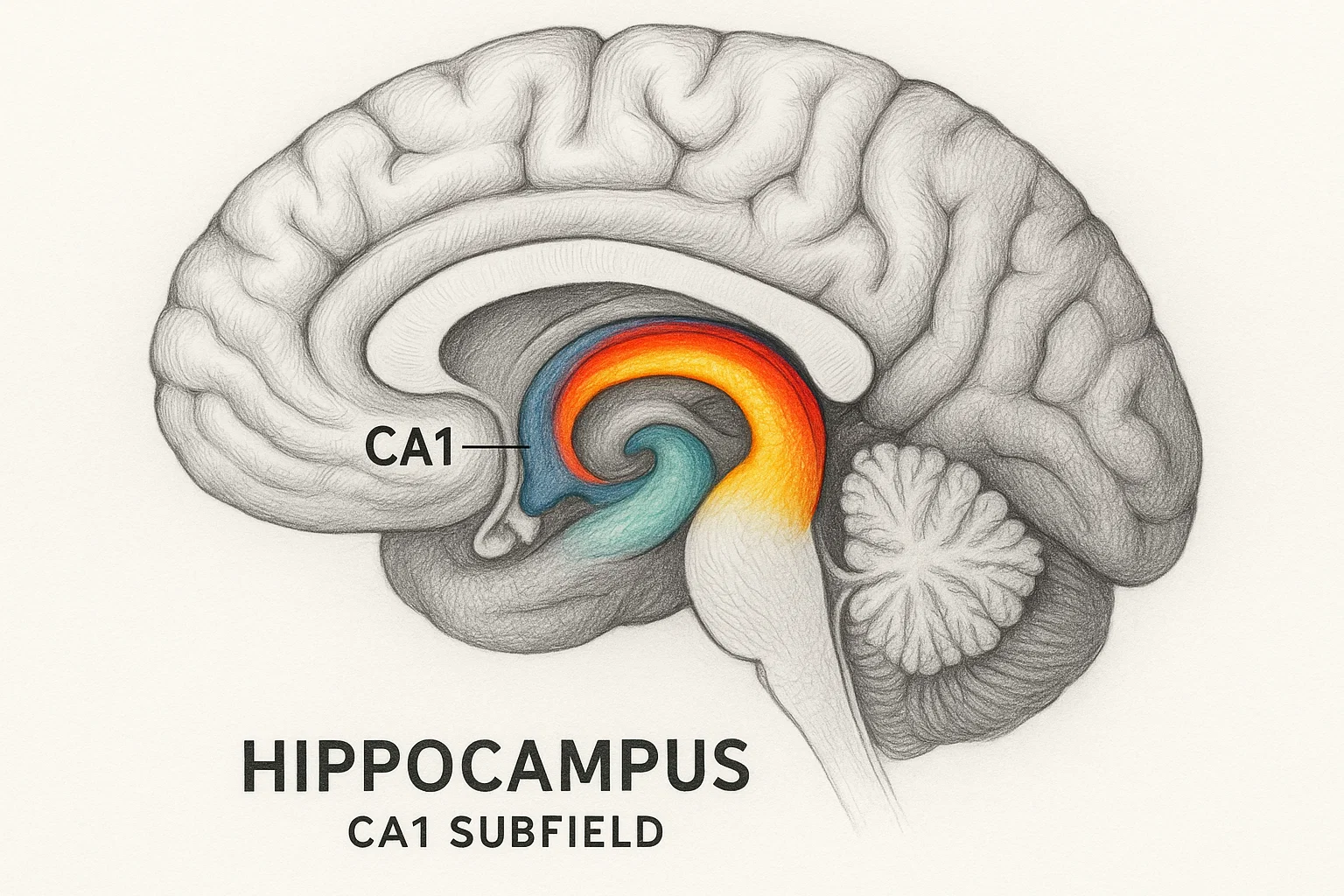
Researchers at Johns Hopkins University found that hundreds of soluble proteins in the hippocampus, a brain region essential for learning and memory, showed structural differences between older rats with preserved cognitive abilities and those with memory impairment.
The findings suggest that cognitive decline may involve widespread changes in how proteins fold, even when those proteins do not form the large, insoluble aggregates traditionally associated with neurodegenerative disease.
Although the research does not establish a treatment or directly explain human cognitive decline, it offers an important starting point for investigating how changes in protein stability may contribute to brain ageing.
What Is Protein Misfolding, and Why Does It Matter?
Proteins perform thousands of essential functions inside the brain.
They help neurons communicate, support energy production, regulate chemical signalling, and maintain cellular health.
However, a protein’s ability to function depends partly on its three-dimensional structure.
How Proteins Normally Fold
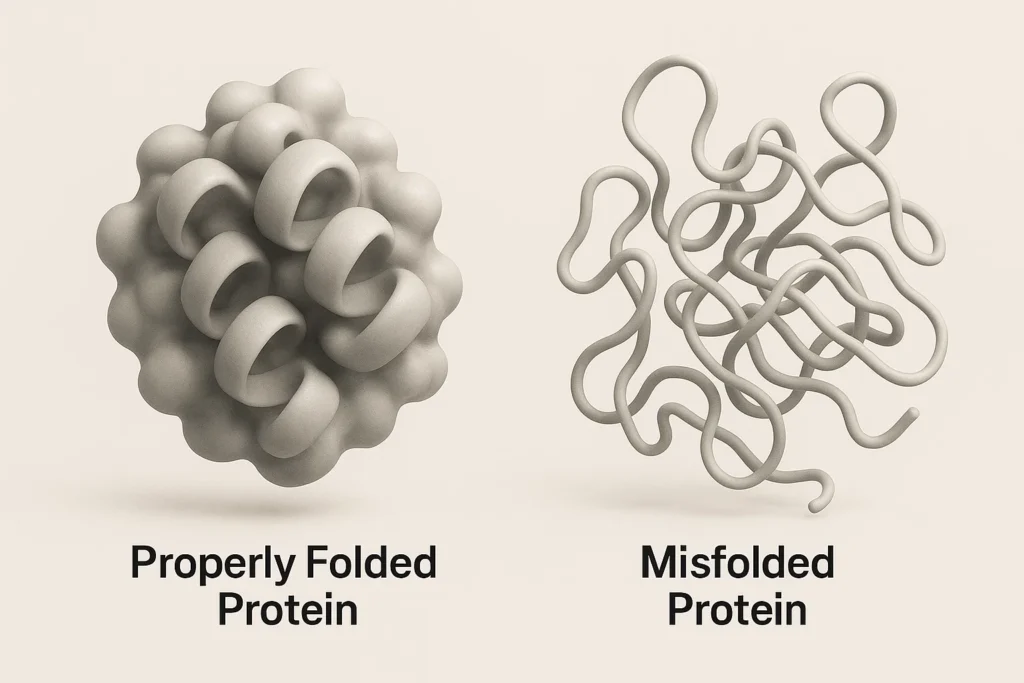
Proteins begin as chains of amino acids. These chains fold into intricate shapes through interactions between different parts of the molecule.
A correctly folded protein can perform its biological function more effectively.
For example, proteins involved in neuronal communication must maintain appropriate structures to interact with other molecules.
Cells also contain systems that help proteins fold correctly, repair some damaged proteins, and remove proteins that cannot be recovered.
Together, these processes contribute to proteostasis, or protein homeostasis.
What Happens When Proteins Misfold?
Protein misfolding occurs when a protein adopts a structure that differs from its normal functional state.
Depending on the protein and circumstances, this can cause several problems:
- Reduced or altered protein activity.
- Disruption of normal cellular interactions.
- Greater vulnerability to degradation.
- Abnormal interactions with other proteins.
- Accumulation of damaged or improperly folded proteins.
Some misfolded proteins form visible aggregates, while others remain soluble.
Soluble proteins matter because structural abnormalities may exist before large deposits become detectable.
However, not every structural change is necessarily harmful. Some proteins naturally adopt different conformations during normal biological activity.
Determining which changes are damaging requires further investigation.
The Connection Between Protein Misfolding and Brain Ageing
Ageing affects several systems that maintain protein quality.
These include molecular chaperones, cellular degradation pathways, and mechanisms that help prevent damaged proteins from accumulating.
Molecular chaperones are proteins that help other proteins fold and maintain their structural stability.
Meanwhile, the ubiquitin-proteasome system and autophagy-related pathways help remove or recycle cellular components.
When protein quality-control systems become less effective, some proteins may become more vulnerable to structural damage.
Protein misfolding has long been associated with neurodegenerative diseases.
For example:
- Alzheimer’s disease: Amyloid-beta and tau proteins can accumulate in abnormal forms.
- Parkinson’s disease: Alpha-synuclein can form pathological aggregates.
- Huntington’s disease: Mutant huntingtin protein can undergo abnormal folding and aggregation.
Yet ordinary cognitive ageing and neurodegenerative disease are not identical.
Some older adults experience mild changes in memory or processing speed without developing dementia.
The Johns Hopkins researchers wanted to examine whether more widespread, subtle protein structural differences might also be associated with age-related cognitive impairment.
Inside the 2025 Johns Hopkins University Study
The research was conducted by Haley E. Tarbox, Audrey Branch, and Stephen D. Fried.
Their paper, titled “Proteins with cognition-associated structural changes in a rat model of ageing exhibit reduced refolding capacity,” was published in Science Advances, volume 11, issue 28.
Original research:
Read the peer-reviewed study in Science Advances
Free full-text version:
Read the study through PubMed Central
Why Did Researchers Study Ageing Rats?
The researchers used aged rats because cognitive performance can vary among animals of the same age.
Some older rats maintain relatively strong spatial learning and memory abilities, while others show impairment.
This provides an opportunity to investigate molecular changes associated with differences in cognition without simply comparing young and old animals.
The research examined approximately 24-month-old rats, an age representing advanced adulthood in this animal model.
The animals were divided by cognitive performance.
Aged unimpaired (AU): Older rats that maintained relatively preserved spatial learning and memory.
Aged impaired (AI): Older rats that performed worse on behavioural assessments.
This comparison allowed the researchers to examine whether differences in protein structure were associated with cognitive status among animals of similar ages.
How Did Scientists Measure Memory and Protein Structure?
The study combined behavioural testing with advanced molecular analysis.
1. Morris Water Maze Testing
Researchers used the Morris water maze, a widely used experimental method for studying spatial learning and memory in rodents.
In this test, rats learn to locate a hidden platform within a pool using spatial information.
Their performance helps researchers assess specific aspects of spatial learning and memory.
However, this test does not diagnose dementia or measure all forms of human cognition.
2. Examining the Hippocampus
After behavioural classification, the researchers analysed proteins extracted from the hippocampus.
The hippocampus plays an important role in memory formation and spatial navigation.
The researchers examined hippocampal subregions, including CA1, which participates in neuronal signalling and memory-related processing.
3. Limited Proteolysis Mass Spectrometry
The scientists used an analytical method called limited proteolysis mass spectrometry (LiP-MS).
This technique identifies differences in protein structure by examining how accessible different protein regions are to enzymatic cutting.
In simplified terms:
- Proteins with different shapes may expose different regions of their amino acid chains.
- Enzymes cut proteins at accessible sites.
- Mass spectrometry identifies the resulting protein fragments.
- Researchers compare fragment patterns to detect possible structural differences.
This approach can reveal subtle changes in protein conformation that might not be detected by measuring protein abundance alone.
The method does not directly create complete three-dimensional models of every protein, but it provides evidence of structural differences between experimental groups.
Key Finding 1: Hundreds of Proteins Showed Structural Differences
One of the most important findings was the identification of widespread changes in soluble hippocampal proteins.
The researchers identified 215 proteins with cognition-associated structural changes in the CA1 region.
The study described these proteins as having cognition-associated structural changes (CASCs).
These proteins had structural signatures that differed between cognitively impaired and cognitively unimpaired aged rats.
The findings suggest that age-related cognitive impairment may involve structural differences across numerous proteins rather than abnormalities limited to a few well-known disease-associated proteins.
Why Is This Important?
Much of the public discussion surrounding brain protein abnormalities focuses on amyloid plaques and other large protein aggregates.
The Johns Hopkins study examined the soluble protein fraction.
This means the researchers investigated proteins that remained in solution during sample preparation rather than focusing exclusively on insoluble deposits.
The findings suggest that relatively subtle protein structural changes could be relevant to cognitive ageing.
However, the results do not establish that all 215 proteins were permanently damaged or that their altered structures directly caused memory impairment.
Key Finding 2: Vulnerable Proteins Had Reduced Refolding Capacity
Another central finding concerned proteins’ ability to regain their normal shapes.
The researchers investigated whether proteins associated with cognitive impairment were more likely to struggle to refold after chemical denaturation.
Denaturation is a process that disrupts a protein’s normal structure.
Some proteins can return to their original conformations when suitable conditions are restored.
Others cannot reliably refold without additional cellular assistance.
The researchers found that proteins displaying cognition-associated structural changes were substantially more likely to be nonrefoldable than proteins without those changes.
What Does Reduced Refolding Capacity Mean?
Consider a protein that temporarily loses its normal structure.
If it can refold successfully, it may regain its functional state.
If it cannot, the abnormal state may persist unless cellular quality-control mechanisms repair or remove it.
The study suggests that proteins with intrinsically limited refolding ability may be more vulnerable to persistent structural changes.
Nevertheless, the refolding experiments were conducted under laboratory conditions involving chemical denaturation.
They do not directly demonstrate that the same unfolding and refolding process occurs inside ageing neurons.
The findings identify an association between refolding behaviour and cognition-related structural changes, rather than proving a complete biological mechanism.
Key Finding 3: Protein Structure May Matter Beyond Protein Quantity
Researchers often investigate disease by measuring whether particular proteins become more or less abundant.
However, protein quantity does not necessarily indicate whether a protein retains its normal structure or function.
Two biological samples can contain similar amounts of a protein while differing in its molecular conformation.
The Johns Hopkins research demonstrated the value of investigating protein structure as an additional dimension of molecular analysis.
This could matter because conventional protein abundance measurements may miss relevant structural differences.
Why Protein Conformation Matters
A change in protein structure could potentially alter:
- Enzyme activity.
- Interactions between proteins.
- Cellular signaling.
- Protein stability.
- Recognition by protein quality-control systems.
Additional experiments must establish whether any particular structural change affects these functions.
The study therefore provides a foundation for investigating possible functional consequences, rather than demonstrating that every observed structural difference interferes with brain activity.
Key Finding 4: The Changes Involved Multiple Brain-Related Pathways
The structurally altered proteins included molecules associated with processes important for neuronal health.
These included pathways related to:
- Protein quality control and degradation.
- Cellular energy metabolism.
- Protection against oxidative stress.
- Synaptic organisation and signalling.
- Maintenance of cellular components.
Examples discussed in the research include proteins involved in antioxidant defence, metabolism, and regulating protein turnover.
Protein Degradation Pathways
The ubiquitin-proteasome system helps cells identify and degrade many proteins that are damaged or no longer needed.
Alterations affecting components of this system could potentially influence how cells maintain protein quality.
However, detecting structural changes in related proteins does not, by itself, show that the degradation pathway was functionally impaired.
Energy Metabolism
Neurons require substantial energy to maintain electrical signalling and communication.
Proteins involved in mitochondrial function and glucose metabolism are therefore important to brain health.
Structural differences involving metabolic proteins may generate hypotheses about how energy-related processes change during cognitive ageing.
Synaptic Communication
Synapses allow neurons to communicate with one another.
Proteins involved in synaptic organisation and signalling contribute to memory-related neural activity.
Structural changes affecting these proteins could affect cognitive function, but their exact effects remain to be tested.
What About Oxidation and Other Chemical Changes?
Protein structure can be influenced by chemical modifications, including oxidation and phosphorylation.
These are examples of post-translational modifications, which occur after a protein has been produced.
Some modifications regulate normal protein activity, while others may contribute to dysfunction under particular circumstances.
The researchers examined whether differences in oxidation and phosphorylation could explain the structural signatures they observed.
Their analyses suggested that these modifications did not account for a substantial proportion of the detected changes.
This supports the possibility that differences in noncovalent protein conformation contributed to the results.
Nevertheless, it does not eliminate every possible chemical modification or establish the precise cause of each structural difference.
Additional studies will be needed to determine how the altered conformations arise and persist.
How Is This Different From Alzheimer’s Disease Research?
Alzheimer’s disease is associated with several biological abnormalities, including amyloid-beta plaques and abnormal tau pathology.
These processes are important areas of investigation, but they are not the only potential contributors to cognitive dysfunction.
The 2025 study expands the scientific conversation by highlighting structural changes in soluble proteins in cognitively impaired aged rats.
| Traditional protein aggregation research | Approach used in the 2025 study |
| Often examines specific disease-associated proteins | Examined structural differences across many proteins |
| Frequently investigates amyloid or other aggregates | Focused on the soluble protein fraction |
| May characterize accumulated pathological deposits | Used LiP-MS to identify subtle structural signatures |
| Often investigates diagnosed neurodegenerative disease models | Compared aged rats with different cognitive performance |
Importantly, the study does not show that soluble misfolding replaces amyloid or tau pathology as an explanation for Alzheimer’s disease.
It also does not establish that the rats had Alzheimer’s disease.
Instead, the findings suggest that protein structural biology may provide additional insights into age-associated cognitive impairment.
Could Protein Misfolding Become a Target for Future Treatments?
One possible implication is that scientists may eventually identify proteins or protein quality-control pathways that could be targeted to protect cognitive function.
Potential research directions include:
1. Supporting protein quality control
Scientists could investigate whether improving cellular systems responsible for protein folding and degradation influences neuronal function.
2. Understanding molecular chaperones
Molecular chaperones help proteins maintain appropriate conformations.
Future research may examine whether changes in chaperone activity contribute to the structural abnormalities identified in the study.
3. Identifying specific vulnerable proteins
Not every structurally altered protein is necessarily responsible for cognitive impairment.
Researchers must determine which alterations are biologically harmful and which may be consequences or incidental markers of ageing.
4. Investigating potential biomarkers
Protein structural signatures might eventually help researchers study cognitive ageing.
However, the current findings are based on experimental analysis of rat brain tissue.
They do not provide a validated blood test, brain scan, or clinical biomarker for predicting human memory loss.
5. Testing whether structural changes are reversible
Scientists may investigate whether particular protein conformations can be stabilised or restored and whether doing so improves cognitive outcomes in experimental models.
At present, these are possible future research directions—not established treatments.
What Are the Limitations of the Study?
Although the findings are scientifically interesting, several limitations are essential for interpreting their significance.
1. The Study Was Conducted in Rats
Animal models help researchers investigate biological processes, but findings cannot automatically be applied to humans.
Human cognitive ageing involves a wide range of genetic, environmental, medical, and lifestyle factors.
2. Association Does Not Establish Causation
The researchers observed structural differences between two groups of aged rats.
They did not demonstrate that altering one of the identified proteins directly produces memory impairment or that correcting it restores cognition.
3. The Research Focused on Specific Memory Functions
The Morris water maze primarily examines spatial learning and memory.
It does not assess every domain of cognition, such as language, complex decision-making, or human executive function.
4. Protein Structural Changes Were Measured Indirectly
LiP-MS provides valuable information about protein conformation through proteolytic sensitivity.
However, it does not independently determine every protein’s exact structure or biological activity.
5. The Refolding Experiments Were Performed Outside Living Brain Cells
Experimental refolding after chemical denaturation differs from the conditions proteins experience inside living neurons.
Therefore, the results cannot fully explain how protein misfolding develops during normal ageing.
6. No Human Treatment Was Tested
The research did not investigate a medication, supplement, dietary intervention, or clinical treatment for cognitive decline.
Any suggestion that a commercially available product can reverse the protein abnormalities identified in this study would be unsupported.
What Does This Research Mean for Human Brain Health?
The study contributes to the scientific understanding of how ageing and cognition may relate to molecular changes.
Its principal contribution is methodological and biological: it shows that advanced protein-structure analysis can identify differences associated with cognitive performance in an ageing animal model.
This creates opportunities for investigating cellular mechanisms that may have been overlooked by approaches focused primarily on protein abundance or insoluble aggregates.
However, the findings should not be interpreted as evidence that protein misfolding is the main cause of ordinary human memory loss.
Nor do they show that preventing protein misfolding will necessarily prevent dementia.
Human studies and experimental interventions are needed to determine whether the identified mechanisms are clinically relevant.
Can You Reduce the Risk of Cognitive Decline?
The study itself did not evaluate lifestyle interventions.
However, maintaining overall brain and cardiovascular health remains a sensible approach to healthy ageing.
Evidence-based recommendations commonly emphasise:
- Staying physically active at a level appropriate for your health.
- Managing blood pressure, diabetes, and other cardiovascular risk factors.
- Avoiding smoking.
- Maintaining social connections and engaging in mentally stimulating activities.
- Getting sufficient sleep.
- Seeking medical advice about persistent or worsening memory problems.
These measures support general health and may help address some modifiable dementia risk factors.
They should not be described as proven methods for correcting the specific protein structural changes observed in the Johns Hopkins rat study.
For general brain-health information, see the National Institute on Ageing’s cognitive health guidance.
Future Research: What Questions Still Need Answers?
The Johns Hopkins findings raise several important scientific questions.
Which structural changes are harmful?
Researchers need to distinguish proteins that contribute directly to cognitive impairment from those altered as a consequence of other biological processes.
Do similar changes occur in humans?
Future research could investigate whether comparable protein structural signatures exist in human brain tissue and how they relate to cognitive performance.
Can these changes be detected earlier?
Scientists may investigate whether structural abnormalities arise before measurable cognitive impairment.
Are the changes reversible?
Intervention studies could test whether stabilising particular proteins improves neuronal function or memory in experimental systems.
How do these findings relate to established disease mechanisms?
Additional work could examine relationships between soluble protein misfolding, inflammation, metabolic dysfunction, and established neurodegenerative pathology.
Answering these questions will require multiple complementary approaches, including molecular experiments, animal studies, and human research.
Conclusion: A New Direction for Understanding Cognitive Ageing
The 2025 Johns Hopkins University study provides an important insight into the molecular biology of cognitive ageing.
By examining soluble proteins in the hippocampus of older rats, researchers identified widespread structural differences associated with poorer spatial learning and memory.
Their findings also revealed that proteins displaying cognition-associated structural changes were more likely to have difficulty spontaneously refolding after chemical denaturation.
These results suggest that protein stability and folding capacity may be useful areas of investigation beyond the familiar focus on large protein aggregates.
Yet important questions remain.
The study does not establish that the identified proteins cause cognitive decline, and the findings have not been demonstrated to support a human treatment.
The key takeaway is that age-related cognitive impairment may involve subtle changes in protein structure that conventional measurements can overlook.
Understanding these changes could eventually contribute to a more complete picture of how the brain ages and why some individuals maintain cognitive function longer than others.
References
1. Original peer-reviewed research
Tarbox, H. E., Branch, A., & Fried, S. D. (2025). Proteins with cognition-associated structural changes in a rat model of ageing exhibit reduced refolding capacity. Science Advances, 11(28), eadt3778.
https://doi.org/10.1126/sciadv.adt3778
2. Full-text research article
National Library of Medicine, PubMed Central.
https://pmc.ncbi.nlm.nih.gov/articles/PMC12248298
3. PubMed research record
National Library of Medicine. PMID: 40644533.
https://pubmed.ncbi.nlm.nih.gov/40644533
4. Research proteomics dataset
ProteomeXchange / PRIDE. Dataset PXD052770.
https://www.ebi.ac.uk/pride/archive/projects/PXD052770
5. National Institute on Ageing
Assessing Cognitive Impairment in Older Patients.
https://www.nia.nih.gov/health/brain-health/assessing-cognitive-impairment-older-patients