


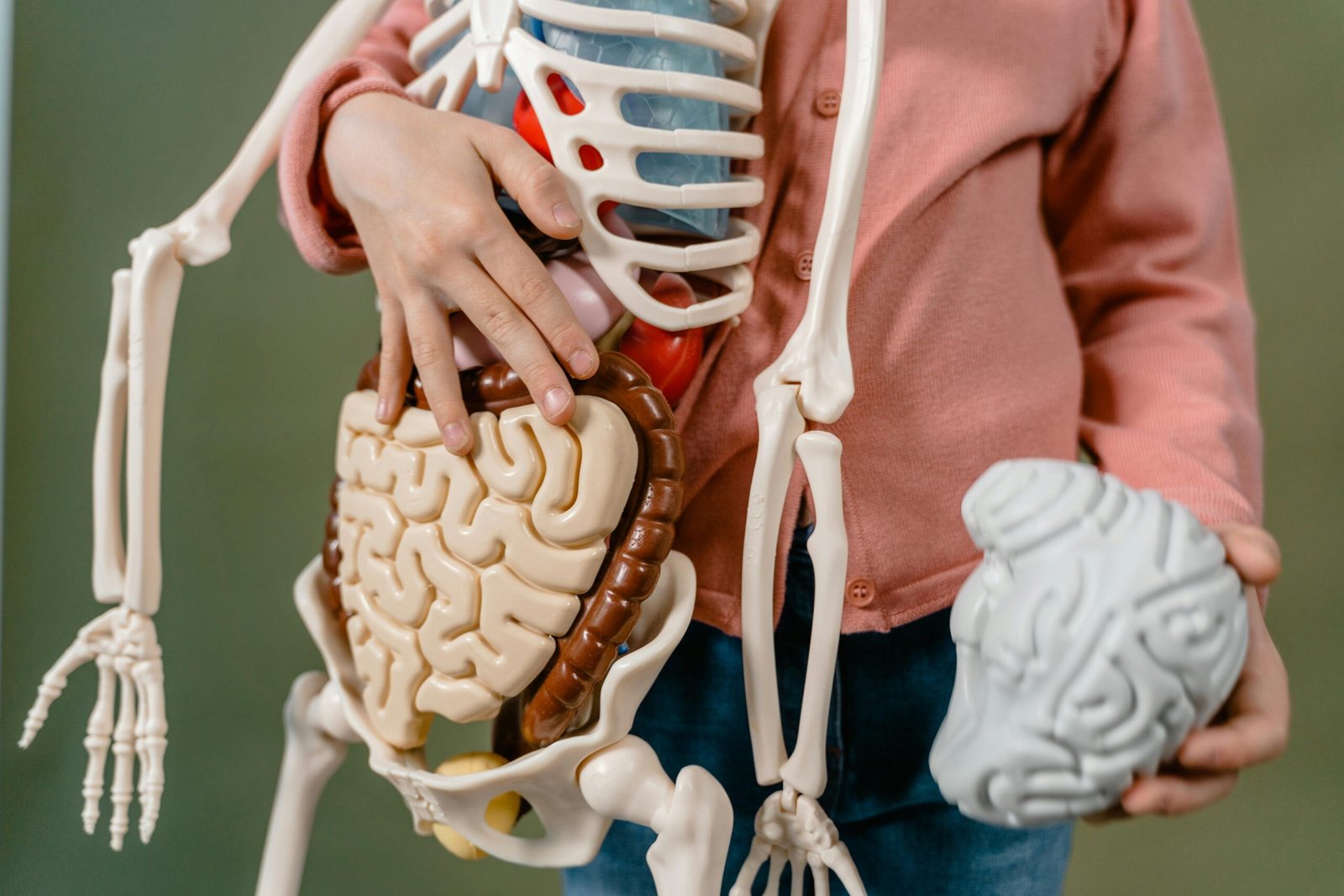
Each time an individual stands, takes a step, or engages the core muscles, the brain shifts within the skull. This movement does not result from the heartbeat or respiration, but rather from the contraction of abdominal muscles, which compress the abdomen and generate a hydraulic pressure wave through the spine. This process physically displaces the brain by several micrometers, a phenomenon that scientists can now measure with remarkable precision.
This phenomenon is not metaphorical or a loose analogy regarding the gut-brain connection. It represents a literal, mechanical, and biomechanical reality, first documented by researchers at Penn State University in a 2026 study published in Nature Neuroscience.
The implications of this discovery are substantial, not only for understanding brain mechanics but also for informing perspectives on exercise, sleep, obesity, and the biological systems responsible for daily clearance of toxic waste from the brain.
Uncovering the Mechanisms Behind Brain Movement
For decades, it has been established that the brain exhibits slight movement within the skull. In sleeping or anesthetized individuals, this motion is associated with the heartbeat and respiration, manifesting as gentle, rhythmic pulses driven by cardiovascular and respiratory cycles. However, in awake and active animals and humans, the pattern differs markedly. During wakefulness, brain motion correlates with locomotion and body movements, yet the origin of these driving forces remained unidentified until recently.
This presented a genuine scientific puzzle. The skull and vertebrae are structurally designed to protect the central nervous system from external forces, and it was traditionally assumed that the brain was largely insulated from forces generated elsewhere in the body. However, during locomotion, intracranial pressure in mice increases sharply from a baseline of approximately 5 mmHg to over 20 mmHg—a fourfold rise that occurs almost instantaneously and precedes any dilation of cerebral blood vessels. This observation indicated that a force was acting rapidly and repeatedly on the brain during movement, prompting further investigation into its source.
The Penn State team, led by Patrick J. Drew and Francesco Costanzo, set out to find the answer using high-speed, two-photon microscopy in awake mice walking on a treadmill. By simultaneously imaging brain tissue and fluorescent microspheres fixed to the inner surface of the skull, they could measure, in real time, how much the brain moved relative to its bony housing, with micrometer precision.
Key Finding: Abdominal Contraction Drives Brain Movement
The data were unequivocal: brain motion was strongly correlated with locomotion. Notably, the brain began moving before leg movement, indicating that locomotion itself was not the direct cause. Instead, another factor was responsible for initiating brain movement in anticipation of physical activity.
The researchers implanted miniature electromyography (EMG) electrodes into the abdominal muscles of the mice. The results were notable: activation of the abdominal muscles preceded the onset of locomotion, and brain motion occurred almost simultaneously with the abdominal EMG signal, rather than with the locomotion signal.
Each contraction of the abdominal muscles to stiffen the core, a process that occurs automatically in preparation for movement, resulted in a shift of the brain. Upon relaxation of these muscles, the brain returned to its resting position. Furthermore, when researchers applied a pneumatic pressure belt to the abdomen of lightly anesthetized mice, thereby mechanically compressing the abdomen without inducing movement, the brain shifted rostrally (toward the front of the skull) in a pattern identical to that observed during locomotion. These findings demonstrated that abdominal activity was responsible for moving the brain, prompting further investigation into the underlying mechanism.
The Underlying Hydraulic Mechanism: The Vertebral Venous Plexus
The mechanism involves a network of valveless veins known as the vertebral venous plexus (VVP), a system well-characterized in humans but not previously confirmed in mice until this study.
When the abdominal muscles contract, they compress the abdominal cavity, driving a sharp rise in intra-abdominal pressure. This pressure forces blood from the large abdominal veins into the vertebral venous plexus, a network of vessels that lines the interior of the spinal column. Because the spinal canal is an enclosed space, this sudden influx of blood compresses the dural sac surrounding the spinal cord, triggering a surge of cerebrospinal fluid (CSF) upward toward the brain.
Using micro-CT imaging with radiopaque contrast agents, the team visualized this system in detail for the first time in mice. They found small holes, foramina, in the ventral (belly-facing) surfaces of the lumbar and sacral vertebrae, through which blood vessels pass, directly connecting the abdominal cavity to the spinal canal. This confirmed that mice possess a functionally anatomical VVP, meaning the hydraulic link between the abdomen and the brain is real, structural, and likely universal across mammals.
This system functions analogously to a biological hydraulic pump: contraction of the abdomen moves fluid, which in turn displaces the brain.
The Functional Significance of Brain Movement: Implications for Waste Clearance
This discovery is directly relevant to a prominent and actively debated area of neuroscience: the glymphatic system.
The brain faces a unique waste-removal problem. Unlike most of the body, it has no traditional lymphatic drainage system. Instead, it relies on a specialized fluid circulation system in which cerebrospinal fluid flows through channels alongside blood vessels, picking up metabolic waste products including beta-amyloid and tau, the proteins implicated in Alzheimer’s disease, and flushing them out of brain tissue.
This glymphatic flow is heavily dependent on mechanical forces. During sleep, slow, rhythmic expansions and contractions of blood vessel walls drive CSF into the brain along perivascular channels, powering a deep-cleaning cycle. This is one of the core reasons sleep is considered essential for long-term brain health. The glymphatic system is most active during slow-wave sleep.
But what happens during wakefulness? Tracers injected into the CSF of awake animals do not enter the cortex; they are actively excluded. The reasons for this suppression of glymphatic flow during wakefulness have been poorly understood.
The Penn State study offers a compelling new hypothesis. Using computational fluid dynamics models of the brain and spinal cord, the team simulated how brain fluid behaves when the abdomen is squeezed. The results showed that brain motion drives a net flow of interstitial fluid from the brain into the surrounding subarachnoid space, in the opposite direction to the glymphatic inflow observed during sleep.
The simulation suggested that brain-motion-induced fluid flows could be several times larger than the normal rate of CSF production (~1 nanoliter per second). This would make motion-driven fluid dynamics the dominant driver of cerebrospinal fluid movement in the awake brain, actively expelling fluid from the brain’s interior with each abdominal contraction, in stark contrast to the inward glymphatic flow during sleep.
In summary, sleep facilitates the influx of fluid into the brain for deep cleaning, while waking movement expels it. The brain thus appears to possess two distinct fluid-management modes, with abdominal muscle contractions serving as the primary driver during wakefulness.
Implications for Exercise, Obesity, and Brain Health
The discovery opens several clinically important doors.
Exercise is well-established as protective against cognitive decline, dementia, and various neurological disorders. While one prevailing hypothesis attributes these benefits to increased cerebral blood flow, this study suggests an additional mechanism: each step engages the abdominal muscles, compresses the abdomen, drives fluid through the spinal column, and physically moves the brain, thereby facilitating the clearance of waste.
The implications for obesity are particularly significant. Elevated intra-abdominal pressure is a recognized consequence of abdominal obesity. The study’s authors propose that obesity-related alterations in intra-abdominal pressure may disrupt normal blood flow dynamics between the abdominal cavity and the spinal canal, potentially impairing the brain’s movement-driven fluid-clearance system. This disruption could partially explain the established association between obesity and cognitive impairment.
Patterns of brain motion also vary in the presence of neurological conditions. Intracranial hypertension, Chiari malformations (characterized by the extension of brain tissue into the spinal canal), and meningiomas all modify the movement of the brain within the skull. The authors suggest that these motion signatures could serve as non-invasive MRI-detectable biomarkers for diagnosing or monitoring such conditions.
Even bathroom habits may be relevant. Defecation reduces intra-abdominal pressure by releasing sustained abdominal muscle contractions. This temporary pressure relief could transiently alter cerebrospinal fluid (CSF) dynamics, which may partially explain the longstanding anecdotal observation that cognitive clarity often follows defecation.
Broader Implications: Integration of Body and Brain
Historically, neuroscience has conceptualized the brain as a protected, isolated command center, shielded by bone and fluid from the body’s mechanical forces. This study fundamentally challenges that perspective.
The brain is not isolated from the body. It is mechanically coupled to the abdominal compartment through a hydraulic network of valveless veins that translates every squeeze of your gut muscles into a microscopic yet physiologically significant brain movement. The brain actively monitors this motion: sensory neurons in the surrounding dura detect locomotion-related displacement of the brain, suggesting that the brain is aware of and responsive to its own movement.
As the body moves and the abdomen contracts, the spine transmits these forces, resulting in displacement of the brain. This rhythmic movement regulates the brain’s internal fluid environment, facilitating waste clearance, maintaining homeostasis, and supporting the ongoing maintenance of cognitive function.
Conclusion
This discovery fundamentally alters the understanding of routine physical activities. Actions such as walking, climbing stairs, engaging core muscles, or taking deep breaths that recruit the abdominal muscles contribute to brain movement in ways sedentary behavior cannot replicate. Through these movements, individuals facilitate the brain’s self-cleaning processes.
The relationship between physical movement and brain health is now understood to be both literal and mechanical to a greater extent than previously recognized.
References
Garborg, C.S., Ghitti, B., Zhang, Q., Ricotta, J.M., Frank, N., Mueller, S.J., Greenawalt, D.I., Turner, K.L., Kedarasetti, R.T., Mostafa, M., Lee, H., Costanzo, F., & Drew, P.J. (2026). Brain motion is driven by mechanical coupling with the abdomen. Nature Neuroscience. https://doi.org/10.1038/s41593-026-02279-z