
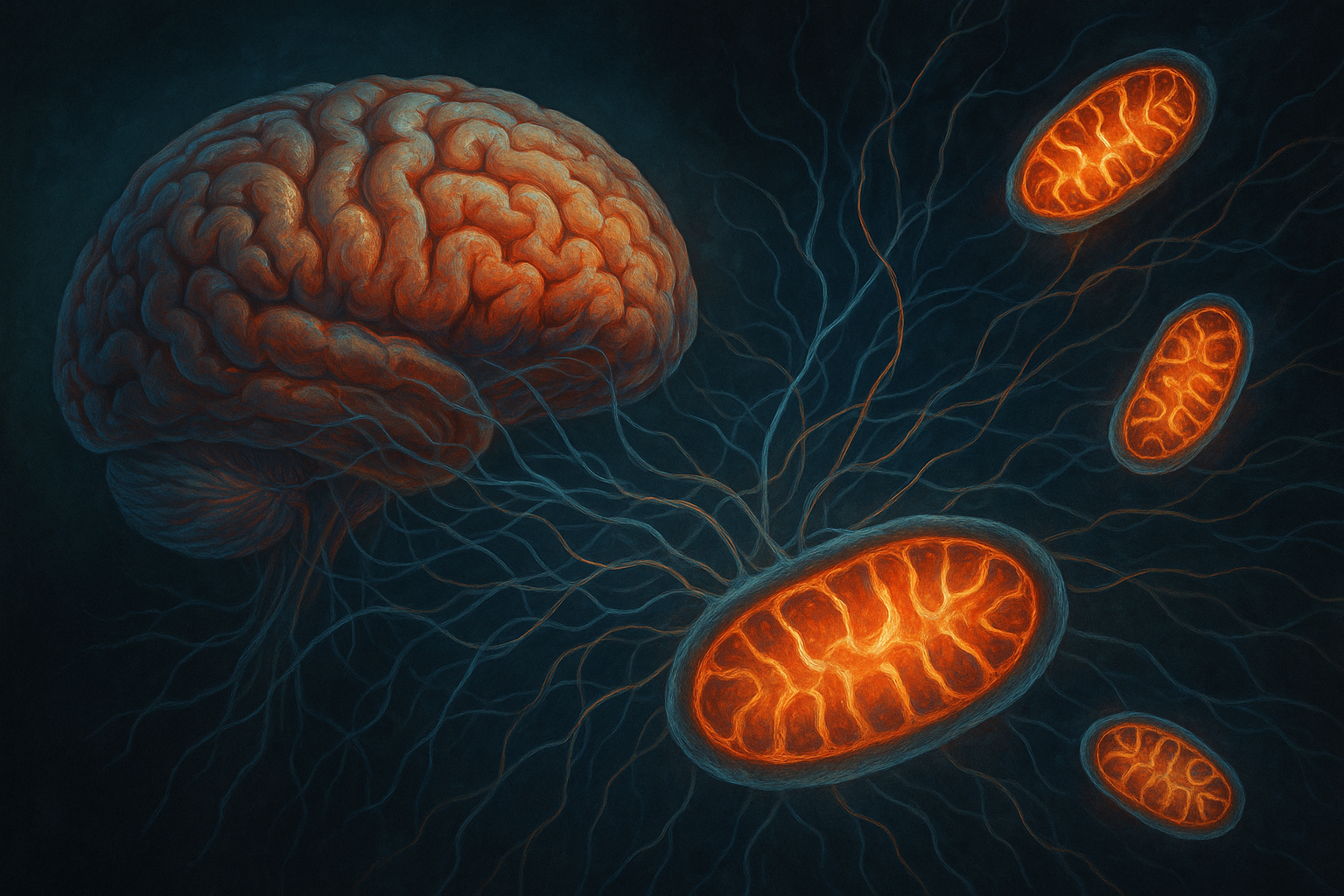

For decades, scientists have faced a difficult challenge in genetic medicine: how do you repair faulty DNA inside the tiny structures that produce much of the energy our cells need?
Those structures are called mitochondria, and they carry their own genetic instructions. When mutations affect mitochondrial DNA, the consequences can be devastating, particularly for organs that require large amounts of energy, such as the brain, heart, and muscles.
Now, a growing body of research suggests that scientists are making meaningful progress toward correcting some of these mutations.
A study published in PLOS Biology in June 2025 demonstrated that specialized gene-editing tools could correct a disease-associated mitochondrial DNA mutation in cells obtained from a patient. Additional research published in late 2025 and 2026 has explored how to make mitochondrial editing more precise and effective.
The developments are promising, but they also raise important questions about safety, delivery, and whether changes observed in laboratory cells can eventually translate into effective treatments for patients.
As of October 2026, mitochondrial gene editing remains an experimental technology, not an established treatment for inherited mitochondrial disorders.

What Are Mitochondrial Diseases?
Mitochondria are small structures found in most human cells. They produce much of the adenosine triphosphate (ATP) used to power essential cellular processes.
Unlike most cell structures, mitochondria contain their own DNA, commonly abbreviated as mtDNA.
Human mitochondrial DNA is a circular molecule containing 37 genes. These genes support the cellular machinery that produces energy.
Mitochondrial disorders can arise from mutations in mtDNA or in nuclear genes involved in mitochondrial function.
Symptoms vary widely depending on the mutation, the affected tissues, and the severity of the underlying dysfunction.
Possible symptoms include:
- Muscle weakness and exercise intolerance.
- Neurological problems, including seizures or developmental difficulties.
- Vision and hearing impairment.
- Heart complications.
- Liver dysfunction and metabolic abnormalities.
- Fatigue and difficulty maintaining normal cellular energy production.
Many mitochondrial DNA disorders are inherited through the maternal line, although mutations can also arise spontaneously.
One reason these conditions are difficult to treat is that a cell often contains hundreds or thousands of copies of mitochondrial DNA.
Some copies may carry a harmful mutation, while others remain unaffected.
This mixture is known as heteroplasmy.
The proportion of mutated mitochondrial DNA can influence disease severity, but the relationship varies by mutation and tissue.
A treatment that reduces the proportion of harmful mitochondrial DNA could improve cellular function.
That possibility has become a central goal of mitochondrial gene-editing research.
Why Is Editing Mitochondrial DNA So Difficult?
Gene editing has advanced considerably since the development of CRISPR-based technologies.
However, mitochondria present a distinct challenge.
Conventional CRISPR-Cas systems generally rely on guide RNA molecules to direct a DNA-cutting enzyme to a particular genetic sequence.
Delivering these RNA components into mitochondria remains technically difficult.
Mitochondria also have different DNA-maintenance and repair characteristics from the cell nucleus, complicating efforts to apply conventional editing approaches.
To overcome these obstacles, researchers have developed specialized editing systems that can target mitochondrial DNA without depending on the standard CRISPR guide-RNA mechanism.
One of the most important is the DddA-derived cytosine base editor, or DdCBE.
How Does Mitochondrial Base Editing Work?
Base editing allows scientists to change specific DNA letters without necessarily cutting both strands of the DNA molecule.
DNA contains four chemical bases: adenine (A), thymine (T), cytosine ©, and guanine (G).
Some inherited diseases result from a single-letter change in the genetic code.
DdCBE systems are designed to perform targeted changes that ultimately convert a cytosine–guanine (C–G) base pair into a thymine–adenine (T–A) pair.
The technology combines programmable DNA-binding proteins with an engineered bacterial enzyme.
These components help direct editing activity toward selected regions of mitochondrial DNA.
However, DdCBEs cannot correct every possible mutation. Their effectiveness depends on the specific DNA change, nearby sequence, and editing system.
Researchers are developing additional mitochondrial base editors to expand the range of changes that can be made.
The key advantage is the ability to alter selected mitochondrial DNA sequences without relying on conventional double-strand DNA cutting.
But avoiding double-strand breaks does not eliminate all safety concerns. Unintended changes elsewhere in mitochondrial or nuclear DNA remain an important challenge.
The 2025 PLOS Biology Study: Editing Disease-Associated Mutations in Human Cells
On June 24, 2025, researchers led by Indi P. Joore and colleagues published a study titled:
Published in PLOS Biology, the research examined whether DdCBE technology could create disease models and correct mitochondrial mutations in human cells.
The scientists focused on two experimental systems: human liver organoids and skin cells obtained from a patient with mitochondrial disease.
These experiments addressed different questions.
Experiment 1: Creating a Mitochondrial Disease Model in Liver Organoids
Organoids are three-dimensional cell cultures designed to reproduce selected features of human tissues.
Researchers used liver organoids derived from adult human stem cells to investigate how a disease-associated mitochondrial mutation affects energy production.
They introduced the m.15150G>A mutation into the MT-CYB gene, which encodes a protein involved in the mitochondrial electron transport chain.
The resulting organoids contained different proportions of mutated mitochondrial DNA.
This variation allowed the researchers to investigate how mutation levels affected cellular energy production.
The team reported that cells containing approximately 24% of the introduced mutation had 23% lower ATP levels than control cells.
This finding demonstrated a functional consequence of the mutation.
Importantly, the liver experiment introduced a disease-associated mutation to create a laboratory model, rather than correcting it to restore ATP production.
Such models are valuable because they allow scientists to study mitochondrial disease mechanisms in relevant human cell systems.
They may also help researchers evaluate future treatment strategies.
Experiment 2: Correcting a Mutation in Patient-Derived Skin Cells
The second experiment examined whether a pathogenic mitochondrial mutation could be corrected in primary human cells obtained from a patient.
The researchers targeted the m.4291T>C mutation in the MT-TI gene, which encodes mitochondrial transfer RNA for isoleucine.
The cells came from a patient with a Gitelman-like clinical syndrome associated with mitochondrial dysfunction.
Using DdCBE, the team successfully changed a proportion of the affected mitochondrial DNA molecules back toward the reference sequence.
Some experimental conditions achieved high correction levels.
The researchers then investigated whether correcting the genetic defect improved cellular function.
One important observation was the restoration of mitochondrial membrane potential, a feature associated with normal mitochondrial activity.
However, oxygen consumption and ATP production improved only modestly or inconsistently.
This distinction is crucial.
The study showed that mitochondrial DNA could be corrected in patient-derived cells and that one measure of mitochondrial function improved.
It did not establish complete restoration of cellular energy production or a treatment capable of curing mitochondrial disease in patients.
A Major Delivery Advance: Modified RNA and Lipid Nanoparticles
Creating an effective gene editor is only part of the challenge.
Scientists must also deliver the editing machinery to the right cells and ensure it reaches the mitochondria.
In 2025, researchers tested modified messenger RNA, or modRNA, as a way to temporarily give cells instructions to produce the editing proteins.
They also investigated lipid nanoparticles (LNPs), tiny fat-based particles that can carry RNA molecules.
LNP technology has attracted substantial scientific interest because it can deliver RNA-based therapies.
In patient-derived fibroblasts, the researchers found that modified-RNA delivery achieved a transfection efficiency of approximately 96.6%, compared with 13.1% using the tested DNA-based delivery approach.
With modRNA delivery, average correction of the targeted mutation reached approximately 59% under the reported experimental conditions.
The team also successfully delivered the editing machinery using LNPs.
In the tested fibroblasts, LNP delivery achieved more than 90% transfection efficiency and approximately 28% average editing in a reported condition.
These results demonstrated that lipid nanoparticles were compatible with mitochondrial base editing in cultured human cells.
However, transfection efficiency and gene-editing efficiency are different measurements.
Successful delivery of RNA does not mean every cell undergoes the intended genetic correction.
It is also important to distinguish laboratory delivery from effective treatment in a living organism.
Delivering editing machinery safely to enough affected cells across complex organs remains a major obstacle to clinical applications.
What Did Scientists Discover After the 2025 Study?
Research did not stop with the original PLOS Biology findings.
Subsequent publications have explored ways to overcome limitations in editing accuracy, unwanted mutations, and delivery.
September 2025: More Precise Cytosine Base Editing
A study published in Molecular Cell in September 2025 examined the structural mechanisms of DdCBE editing.
The researchers investigated how the gene-editing machinery interacts with DNA and how design changes could improve precision.
They developed approaches to narrow the range of DNA positions susceptible to editing, potentially reducing unwanted nearby changes.
This matters because a gene editor may sometimes alter neighboring DNA letters in addition to its intended target.
Such changes are called bystander edits.
Even when the targeted mutation is corrected, an unintended change elsewhere could add risk.
The research provided useful structural insights for designing more selective editors.
Read the September 2025 study in Molecular Cell.
2025–2026: Engineering Better Adenine Base Editors
Another important challenge is expanding the range of mitochondrial mutations that researchers can target.
DdCBEs primarily support cytosine-related base conversions.
Other systems, including transcription activator-like effector-linked deaminases (TALEDs), can support adenine-to-guanine editing.
Research first published online in March 2025 and appearing in a 2026 issue of Nature Biotechnology investigated how mitochondrial DNA repair processes contribute to TALED activity.
The team developed enhanced editors designed to increase on-target efficiency while reducing some unwanted DNA and RNA changes.
This matters because disease-associated mitochondrial mutations aren’t limited to one type of DNA substitution.
Multiple editing systems could eventually let researchers address a broader range of genetic conditions.
However, the effectiveness and safety of each editor must be evaluated separately.
Read the study in Nature Biotechnology.
2026 Research: Greater Precision in Patient-Derived Cells
Another study in Nature Structural & Molecular Biology described a computationally designed mitochondrial cytosine base editor.
The researchers developed a more structurally constrained editing system to reduce unwanted changes to neighboring DNA.
As a proof of concept, they used the technology to correct a disease-associated mutation linked to myoclonic epilepsy with ragged-red fibers (MERRF syndrome) in patient-derived cells.
The study also created a mitochondrial disease model in mice.
The findings illustrate how structural biology and computational protein design may help improve the precision of future mitochondrial therapies.
They do not, however, mean the technology has completed human clinical testing.
Read the research in Nature Structural & Molecular Biology.
Can Mitochondrial Gene Editing Actually Treat Disease?
The answer is promising but still uncertain.
Laboratory experiments have established that some disease-associated mitochondrial mutations can be corrected in human cells.
Researchers have also reported encouraging results in animal models.
For example, research published in Nature Communications investigated mitochondrial editing in a mouse model of Leber hereditary optic neuropathy (LHON), an inherited condition that can cause severe vision loss.
The study reported improvements in genetic and visual-function outcomes in the experimental animals.
Explore the LHON mouse-model research.
Such findings suggest that mitochondrial base editing may eventually support treatment strategies for selected inherited disorders.
Nevertheless, results obtained in cultured cells and mice cannot be assumed to apply directly to humans.
Before clinical use, researchers need to establish whether these technologies can correct enough mutated mitochondrial DNA in relevant tissues while maintaining an acceptable safety profile.
Researchers also need to determine how long the benefits last and whether repeated treatment would be possible or necessary.
What Are the Biggest Challenges in Mitochondrial Gene Editing?
Despite encouraging advances, several major obstacles remain.
1. Preventing Unintended DNA Changes
An editor may alter DNA at locations other than its intended target.
These are known as off-target edits.
Bystander edits may also occur near the target sequence.
The original 2025 PLOS Biology study found limited evidence of unwanted changes at nine selected nuclear sites but identified mitochondrial off-target changes in some experiments.
In their small sample, the researchers reported that greater on-target editing was associated with more mitochondrial off-target changes.
This highlights why broader genomic safety testing is essential.
2. Delivering Editors to the Right Tissues
Mitochondrial disorders can affect the brain, muscles, heart, liver, and other organs.
A delivery system that works well in cultured skin cells may not reach every affected tissue.
Developing delivery systems that are effective, selective, and tolerable remains a central challenge.
3. Correcting Enough Mitochondrial DNA
Cells contain many copies of mitochondrial DNA.
Correcting only a small proportion of mutated copies may not be sufficient to improve disease symptoms.
The required level of correction may depend on the mutation and affected tissue.
4. Establishing Long-Term Safety
Researchers need to determine whether the edited DNA remains stable and whether unintended changes produce delayed effects.
Studies must also evaluate immune responses, potential toxicity, and the consequences of delivering gene-editing proteins to different tissues.
5. Moving From Laboratory Research to Human Trials
Successful laboratory experiments are an essential first step, but they do not automatically translate into safe and effective treatments.
Clinical development requires carefully designed studies, manufacturing standards, regulatory oversight, and long-term monitoring.
Until these questions are answered, mitochondrial base editing should be considered an experimental therapeutic approach.
Could Mitochondrial Editing Help Other Diseases?
Mitochondrial dysfunction has been studied in a wide range of conditions, including neurodegenerative diseases and age-related disorders.
However, mitochondrial dysfunction and inherited mitochondrial DNA mutations are not interchangeable concepts.
A disease associated with altered mitochondrial function will not necessarily respond to mitochondrial gene editing.
The strongest immediate rationale for this technology concerns disorders in which a specific disease-causing mitochondrial DNA mutation has been identified and is technically accessible to an editor.
Possible applications beyond these disorders require separate experimental evidence.
It would therefore be premature to suggest that mitochondrial editing could broadly treat aging, autism, ADHD, or neurodegenerative diseases based solely on the studies discussed here.
What Should Patients and Families Know?
For people living with mitochondrial disorders, the developments are scientifically meaningful.
They show that researchers are gaining tools to investigate mitochondrial DNA mutations and, in some laboratory settings, correct them.
However, no one should interpret these results as evidence that an established mitochondrial gene-editing cure is currently available.
Patients and caregivers should discuss diagnosis, genetic testing, available treatments, and specialist referrals with qualified healthcare professionals.
Because mitochondrial diseases vary considerably, clinical management generally depends on the specific disorder and affected organs.
Families interested in research participation should seek information from recognized medical centers and legitimate clinical trial registries.
Promising laboratory experiments do not justify pursuing unregulated genetic treatments.
The Future of Mitochondrial Medicine
Progress from 2025 through October 2026 points to several key research priorities.
Scientists are working to improve editing accuracy, expand the range of treatable mutations, and develop more effective delivery systems.
Researchers are also investigating whether correcting mitochondrial DNA can measurably improve organ function and disease symptoms.
One of the most significant developments is the transition from experiments designed primarily to demonstrate genetic editing toward studies that evaluate functional outcomes.
That transition matters because a successful genetic correction is only one component of an effective therapy.
Patients ultimately need treatments that improve health, daily functioning, and quality of life.
The next stage of research must establish whether mitochondrial gene editing can meet those goals safely.
Final Takeaway
Mitochondrial gene editing has entered an important period of scientific development.
The June 2025 PLOS Biology study demonstrated that researchers could correct a disease-associated mitochondrial DNA mutation in patient-derived cells and improve mitochondrial membrane potential.
Subsequent studies have explored more precise editing tools, additional DNA conversions, and potential benefits in experimental animal models.
These developments a the groundwork for future therapies, but substantial work remains before mitochondrial editing can become a routine medical treatment.
This research is significant not because scientists have already cured mitochondrial disease. It is that they are beginning to develop the tools needed to investigate, and potentially correct, some of its underlying genetic causes.
References
1. Joore, I. P., et al. (2025). Correction of pathogenic mitochondrial DNA in patient-derived disease models using mitochondrial base editors. PLOS Biology, 23(6), e3003207.
https://doi.org/10.1371/journal.pbio.3003207
2. Xiang, J., et al. (2025). Structural insights into DdCBE in action enable high-precision mitochondrial DNA editing. Molecular Cell, 85(18), 3357–3372.e9.
https://doi.org/10.1016/j.molcel.2025.08.016
3. Fan, Y., et al. (2025; print 2026). Leveraging base excision repair for efficient adenine base editing of mitochondrial DNA. Nature Biotechnology, 44, 277–290.
https://doi.org/10.1038/s41587-025-02608-w
4. Computational design of a high-precision mitochondrial DNA cytosine base editor. Nature Structural & Molecular Biology.