

Key takeaways
- In March 2025, Choi and colleagues at Yonsei University reported in npj Digital Medicine that machine-learning models built from photos of the back of the eye separated 323 children with ADHD from 323 matched comparison children with an AUROC of 95.5% to 96.9%.
- That result comes only from internal testing. The authors say no external validation was done, and the comparison photos were collected at a different time and place than the ADHD photos.
- The model could not tell ADHD from autism well (best AUROC 63.0%) and could not predict symptom severity. The authors say retinal images should complement standard diagnosis.
- ADHD is still diagnosed by a clinician. The CDC says no single test exists.
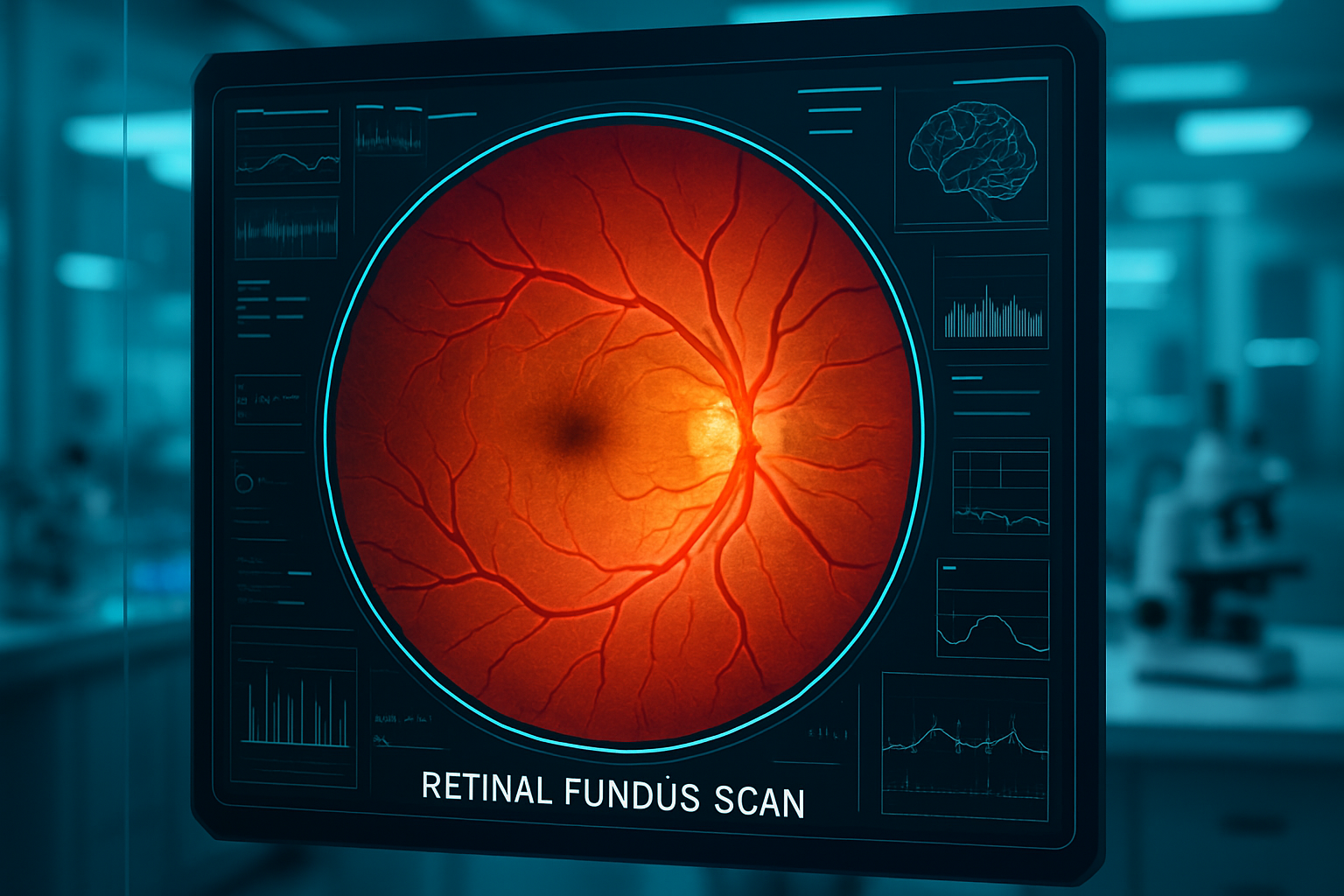
A photo of the retina is not an ADHD test yet. In a 2025 Korean study, software trained on retinal photographs sorted most children with ADHD from matched children without it, but only within one dataset, and the comparison photos were gathered differently from the ADHD photos. It is an early screening signal, not a diagnosis.
Why researchers want an objective ADHD test
There is no single test for ADHD, and the CDC notes that sleep problems, anxiety, depression and some learning disabilities can look like it. Diagnosis involves a medical exam, including hearing and vision tests, and reports from parents, teachers and others about the child’s behavior in different settings. The study’s authors add that the process is slow and subjective, and that symptoms overlap with autism, anxiety, oppositional defiant disorder and conduct disorder. That is why an objective, quick screen appeals.
The condition is common, though estimates vary. The study cites 5.41% for children and adolescents worldwide, based on a 2023 re-analysis of data published before 2013. A 2023 meta-analysis found 7.6% in children aged 3 to 12 and 5.6% in teenagers aged 12 to 18, and an umbrella review of meta-analyses put the figure near 8.0%. Reasonable estimates run from about 5% to 8%, depending on method and period.
How the study worked
The paper is Choi et al., npj Digital Medicine, published 17 March 2025. The idea is that the retina is an extension of the central nervous system, and dopamine, which is involved in ADHD, also shapes retinal function and blood vessels. So retinal structure might carry a signal. This is a hypothesis, not something the study tested.
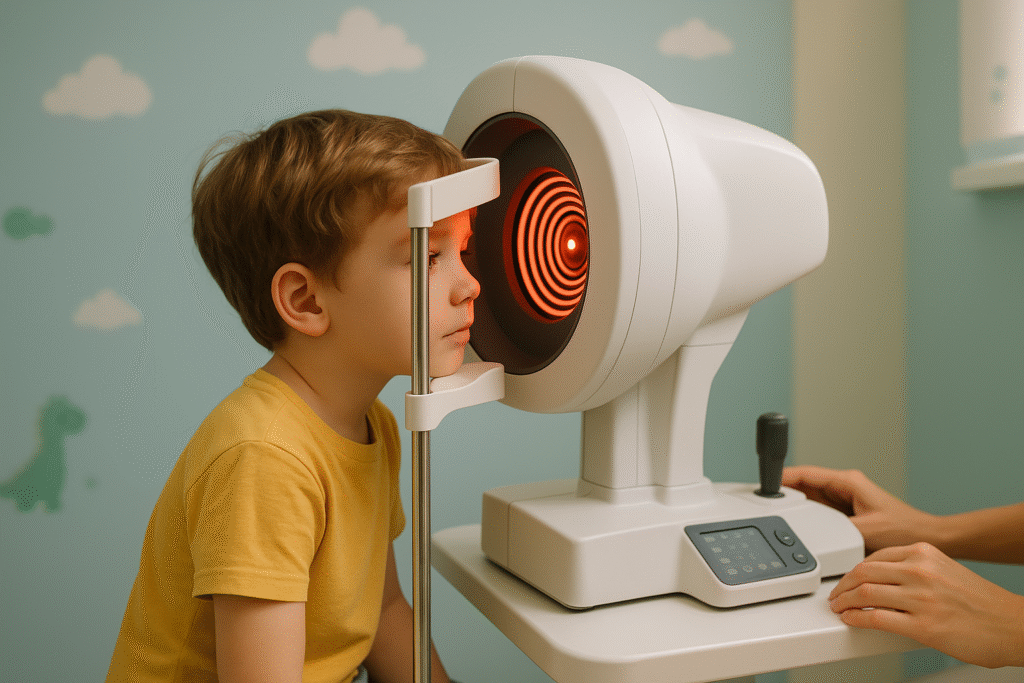
The team recruited 323 children and adolescents with ADHD, diagnosed under DSM-5 criteria, at two South Korean hospitals between April and October 2022. All were drug-naive, meaning none had taken ADHD medication. They then collected photos from 323 age- and sex-matched children with typical development. Those photos came retrospectively from one hospital’s ophthalmology department and span December 2007 to July 2024. Children with autism, other major psychiatric or neurological disorders, or eye diseases that could affect the retina were excluded. After quality checks, the study used 1,108 photos from 646 children (average age 9.5 years, 77.1% boys), taken with a 50-degree camera on undilated eyes.
An automated tool called AutoMorph measured features such as blood vessel density and width, as well as optic disc and cup size. Four standard machine-learning models then used those measurements to guess which children had ADHD. The researchers tested them with five-fold cross-validation, which repeatedly splits one dataset into training and testing parts, and combined the results for each child.
What was shown, and what was not
| Finding | Evidence | Limit |
| Retinal features separate ADHD from comparison children | AUROC of 95.5% (random forest) to 96.9% (XGBoost). The best model had sensitivity 91.6% and specificity 92.0% | Internal cross-validation only, no external dataset, two hospitals in one country |
| Which features mattered most | In the ADHD group, vessel density and vessel width were higher, and the optic cup-to-disc ratio was lower. Vessel density had the most influence. | An association, not a cause. The dopamine link is a hypothesis |
| Predicts visual attention problems | Best AUROC of 87.3% and 85.8% on two visual attention measures, among 118 children with ADHD who took an attention test. Auditory attention performed poorly. | Small subgroup, and visual attention only |
| Predicts symptom severity | No. Models using the parent rating scale had an AUROC under 60% | Not supported |
| Tells ADHD from autism | Poorly. Best AUROC of 63.0% in a matched set of 160 children with ADHD and 160 with autism | The authors say retinal images alone lack specificity |
| Works across real clinic patients | Not tested. Children with other conditions were excluded; the average age was 9.5, and none were on medication. | Clinics see many children with overlapping conditions |
Why the numbers need careful reading
- AUROC is not accuracy. It measures how well a model ranks children; 0.5 is a coin flip, and 1.0 is perfect. Some news coverage reported 96.9% as accuracy. Sensitivity and specificity, both about 92%, are a better guide.
- The comparison photos came from a different time and place. The ADHD photos were taken in 2022, and the comparison photos were pulled from hospital eye-clinic records over 17 years. The paper confirms this. I found no analysis in it testing whether camera or setting differences explain part of the result. A June 2026 critique by the ADHD Evidence Project raised this point, along with the eye-clinic source of the comparison group, and I treat it as a published criticism, not a verdict.
- A second criticism is unconfirmed. The same critique says the data were split by eye rather than by child. The paper says results were combined for each child but does not say the split was by child, so I cannot confirm either claim.
- Preliminary by the authors’ own account. They say validation in other countries and settings is essential.
- A screen is not a diagnosis. A screen flags children who should be assessed, and false alarms are expected. As an illustration only, using my own arithmetic and assuming the study’s figures held in the general population, which is a big assumption: at a 7% rate, about 64 of 1,000 children would screen positive for ADHD, but about 74 without it would also screen positive. Roughly half of the positive screens would be false alarms.
What comes next
The authors call for testing on independent datasets from other countries and cameras, a wider age range, and children who also have conditions such as autism or anxiety. They also suggest three-dimensional eye imaging and combining the retinal data with other measures to improve specificity. Researchers are also studying other eye-based approaches. A July 2026 study in Scientific Reports used pupil and eye-movement signals from 439 people across 14 centers and reported cross-validated sensitivity of 0.79 and specificity of 0.82 in children. That uses a different method and population, so the numbers are not directly comparable. I read only its abstract.
What you can do today
I couldn’t find a retinal ADHD test available in the clinic. This is research.
If you are concerned about a child, start with a healthcare provider. The CDC says the diagnosis can be made by a psychologist, a psychiatrist or a primary care provider such as a pediatrician, and that the American Academy of Pediatrics recommends gathering information from parents, teachers and others who care for the child. In the US, schools can offer a free evaluation for children aged 3 and older.
Expect the provider to check other explanations, including hearing, vision, sleep, anxiety and learning problems.
Be cautious about commercial eye-scan or AI products that claim to diagnose ADHD. This research does not support that claim.
For related reading, see our guides to AI therapy chatbots and mental health ethics and brain-computer interfaces in medicine, which look at how promising technology holds up in practice.
The bottom line
This study is a promising early step: a simple eye photo carried enough signal for software to sort ADHD from non-ADHD children in one carefully built dataset. It is not a diagnostic test. It was tested only internally, with comparison photos gathered at a different time; it could not separate ADHD from autism or predict severity, and it has not been tested in the children a clinic actually sees. Treat “breakthrough” headlines as a reason to watch for independent validation, and if you are worried about a child, talk to a healthcare provider.
Related on Scientifix Digest: AI Therapy Chatbots Are Breaking Mental Health Ethics: A New Study Proves It · Brain-Computer Interfaces in Medicine: What They Can Do Today and What Is Still Unproven · More in Health
References
Choi, H., et al. (2025). npj Digital Medicine. DOI: 10.1038/s41746-025-01547-9
Centers for Disease Control and Prevention. Diagnosing ADHD. Reviewed 30 July 2026.
Cortese S, et al. Incidence, prevalence, and global burden of ADHD from 1990 to 2019 across 204 countries: data, with critical re-analysis, from the Global Burden of Disease study. Molecular Psychiatry. 2023;28:4823-4830. Abstract read.
Salari N, et al. The global prevalence of ADHD in children and adolescents: a systematic review and meta-analysis. Italian Journal of Pediatrics. 2023. Abstract read.
The prevalence of attention deficit hyperactivity disorder in children and adolescents: an umbrella review of global evidence. Abstract read.
Korea Biomedical Review. AI identifies ADHD with high accuracy through retinal imaging: study. 21 April 2025.