
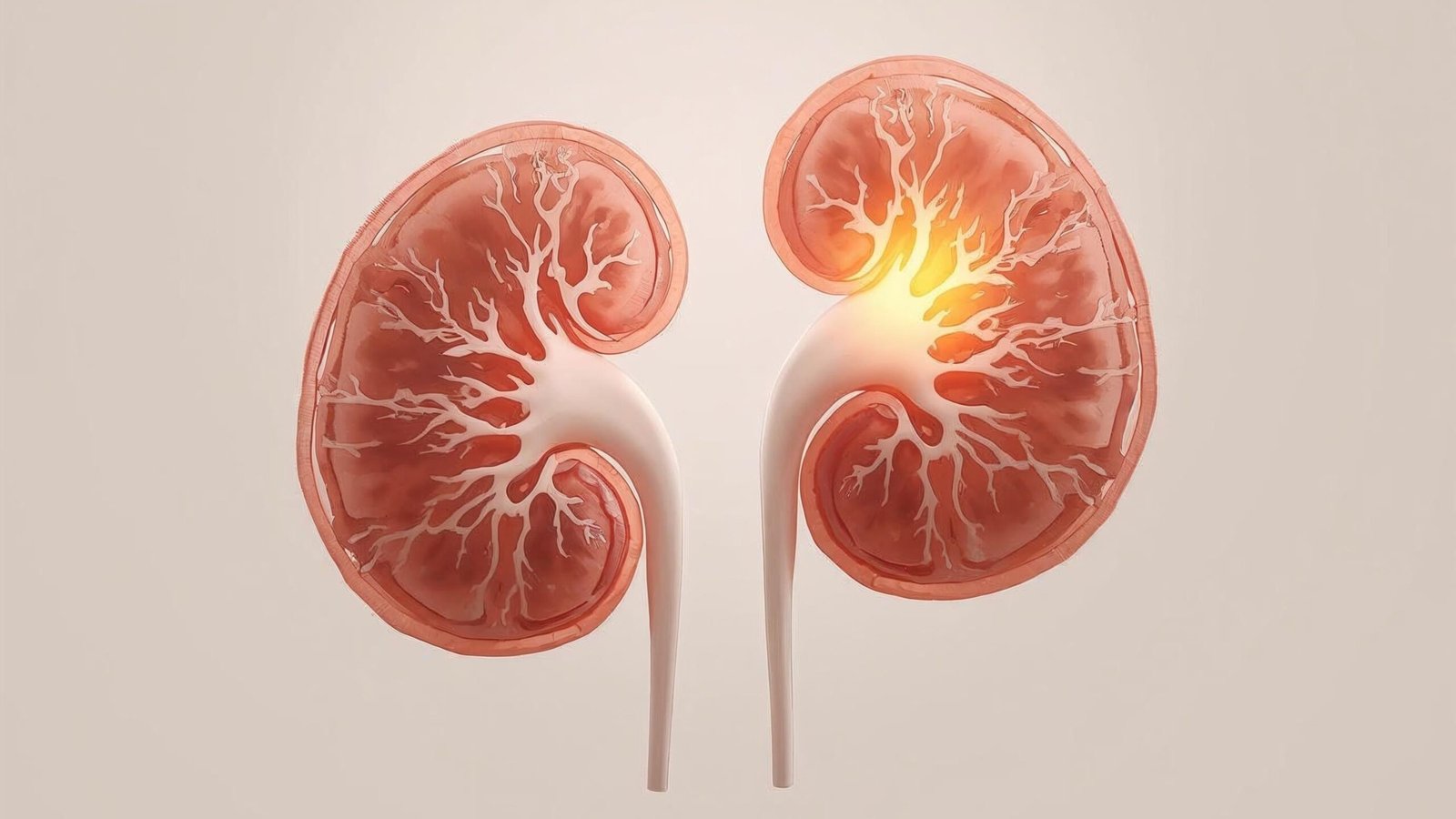

Your kidneys filter around 200 liters of blood every single day. Yet for more than 788 million people on Earth, roughly 1 in 7 adults, these organs are quietly failing. A major new study published in The Lancet has mapped the full scale of chronic kidney disease (CKD) across 204 countries, and the numbers are alarming.
Here is what the science says, why it matters, and what you can do about it.

What Is Chronic Kidney Disease?
Chronic kidney disease is a condition in which the kidneys gradually lose their ability to filter waste, excess fluids, and toxins from the blood. It is defined by two main indicators: a reduced glomerular filtration rate (GFR), a measure of how well the kidneys filter the blood, or an abnormal level of albumin (a protein) in the urine.
CKD develops silently. Most people have no noticeable symptoms until the disease has already progressed significantly. That is one of the biggest reasons it remains underdiagnosed and undertreated worldwide.
The Scale of the Problem: Key Numbers From the 2023 Study
The Global Burden of Diseases, Injuries, and Risk Factors Study (GBD) 2023, published in The Lancet in November 2025, is the most comprehensive analysis of CKD ever conducted. Here are the headline findings:
- 788 million adults worldwide were living with CKD in 2023, up from 378 million in 1990, a doubling in just over three decades.
- The global age-standardized prevalence is 14.2% among adults, meaning roughly 1 in 7 adults has CKD. Now the 9th leading cause of death globally, accounting for approximately 1.48 million deaths in 2023.
- It ranks 12th as a cause of disability-adjusted life years (DALYs), a metric that combines years of life lost with years lived in poor health.
- Impaired kidney function accounts for 11.5% of all cardiovascular deaths worldwide, making it a significant hidden driver of heart disease mortality.
To put this in perspective, the disease burden from CKD has surpassed many conditions that attract far more public attention and research funding.
Where in the World Is CKD Worst?
CKD does not affect all regions equally. The study found striking geographic variation:
North Africa and the Middle East carry the highest age-standardized prevalence at 18.0%, followed closely by South Asia (15.8%), sub-Saharan Africa (15.6%), and Latin America and the Caribbean (15.4%).
By contrast, high-income countries collectively have the lowest age-standardized prevalence (10.8%), though they have the highest rates of patients on dialysis or kidney transplant reflecting better access to care for those already severely ill.
Among individual countries, Iran, Haiti, Panama, Nigeria, and Mauritius had the highest age-standardized CKD prevalence. The counThe countries with the most people living with CKD, in absolute numbers, were China (152 million) and India (138 million), simply because of their enormous populations. The United States also showed a concerning trend: its age-standardized death rate from CKD increased by nearly 189% between 1990 and 2023, one of the steepest rises globally.
What Is Driving the Rise in CKD?
The study identified several major forces accelerating CKD worldwide.
1. Diabetes and High Blood Sugar
The single biggest contributor to CKD DALYs is high fasting plasma glucose, responsible for 31.9% of the attributable burden. Diabetes, which causes persistently elevated blood sugar levels, damages the tiny blood vessels in the kidneys over time. As global diabetes rates climb, so does CKD.
2. High Blood Pressure
Elevated systolic blood pressure accounts for 24.5% of CKD-related disability. Hypertension forces the kidneys to work under excess pressure, gradually scarring and destroying kidney tissue.
3. Obesity
A high body-mass index (BMI) accounts for 23.5% of global CKD. Excess body fat triggers inflammation, insulin resistance, and metabolic changes that are directly toxic to kidney function.
4. Diet
Poor diet, specifically one low in fruits, vegetables, and whole grains, or high in sodium, red meat, and processed foods, contributes 17.6% of the CKD disease burden. Dietary patterns that raise blood pressure and blood sugar levels are particularly harmful.
5. Emerging and Underappreciated Causes
Beyond the well-known metabolic risk factors, the study highlights several emerging drivers:
- CKD of unknown etiology (CKDu): This mysterious form of kidney disease is surging in Central America and parts of South Asia, primarily affecting agricultural workers. Excess heat, toxin exposure, and dehydration from physical labor in hot climates are suspected causes, and climate change may be accelerating it.
- APOL1 gene variants: People of West African descent carry genetic variants in the APOL1 gene that significantly increase the risk of CKD. These variants are now recognized as a major contributor to the high burden of kidney disease in West Africa and among Black populations in North America.
- Climate change: Rising temperatures and more frequent extreme heat events are being linked to faster kidney function decline, potentially worsening global CKD rates in the coming decades.
CKD as a Heart Disease Risk Factor
One of the study’s most important yet overlooked findings is the role of kidney disease in cardiovascular mortality. When the kidneys are impaired, they disrupt fluid balance, blood pressure regulation, and the removal of toxins that damage blood vessels. The result: kidney dysfunction is responsible for 11.5% of all global cardiovascular deaths.
This places kidney dysfunction seventh on the list of cardiovascular mortality risk factors, below high blood pressure and dietary risks, but above high blood sugar and obesity, two conditions that typically receive far more media attention.
Most CKD Is Caught Too Late or Not at All
One of the study’s sobering conclusions is that early CKD almost never causes symptoms. By the time someone feels unwell, the disease has often advanced significantly.
Even when guidelines recommend routine testing, uptake is weak. Studies cited in the paper found that only 35% of people with diabetes and just 4% of people with hypertension are regularly tested for the earliest warning sign: excess albumin in the urine. Even in countries with electronic health records capable of flagging at-risk patients, around 30% of people with CKD do not have it recorded in their clinical file.
The Treatments That Work But Aren’t Reaching Enough People
There is encouraging news: effective treatments for CKD exist and are improving. Several drug classes have been shown to slow kidney disease progression and reduce the risk of heart attacks, stroke, and kidney failure:
- SGLT2 inhibitors (a newer class of diabetes medication) have demonstrated strong kidney-protective effects, even in patients without diabetes.
- GLP-1 receptor agonists (best known from weight-loss drugs like semaglutide) are proving beneficial for people with CKD and type 2 diabetes.
- Mineralocorticoid receptor antagonists (MRAs) and established osterone system (RAAS) blockers (such RAAS) blockers (such asCE inhibitors and ARBs) remain important pillars of treatment.
The challenge: these therapies are underused even in wealthy countries, and access in low and middle-income nations remains deeply unequal. Political instability and healthcare gaps make the situation worse, with dialysis, the life-sustaining treatment for kidney failure, entirely unavailable to many who need it in low-income settings.
What This Means for You
Most people reading this have at least one risk factor for CKD, whether that is high blood pressure, elevated blood sugar, obesity, a family history of kidney disease, or simply age. The disease is overwhelmingly common and vastly underrecognized.
The researchers behind the GBD 2023 study make a clear call: better screening, earlier diagnosis, and faster adoption of proven treatments are essential to turning the tide. The WHO has already recognized kidney disease as a noncommunicable disease of increasing global priority alongside cancer, cardiovascular disease, and diabetes.
If you have diabetes, hypertension, or obesity, ask your doctor about kidney function testing. A simple urine test for albumin and a blood test for GFR can detect CKD years before it causes symptoms at a stage when intervention can genuinely make a difference.
References
GBD 2023 Chronic Kidney Disease Collaborators. Global, regional, and national burden of chronic kidney disease in adults, 1990–2023, and its attributable risk factors: a systematic analysis for the Global Burden of Disease Study 2023. The Lancet, 2025; 406: 2461–82. https://doi.org/10.1016/S0140-6736(25)01853-7