
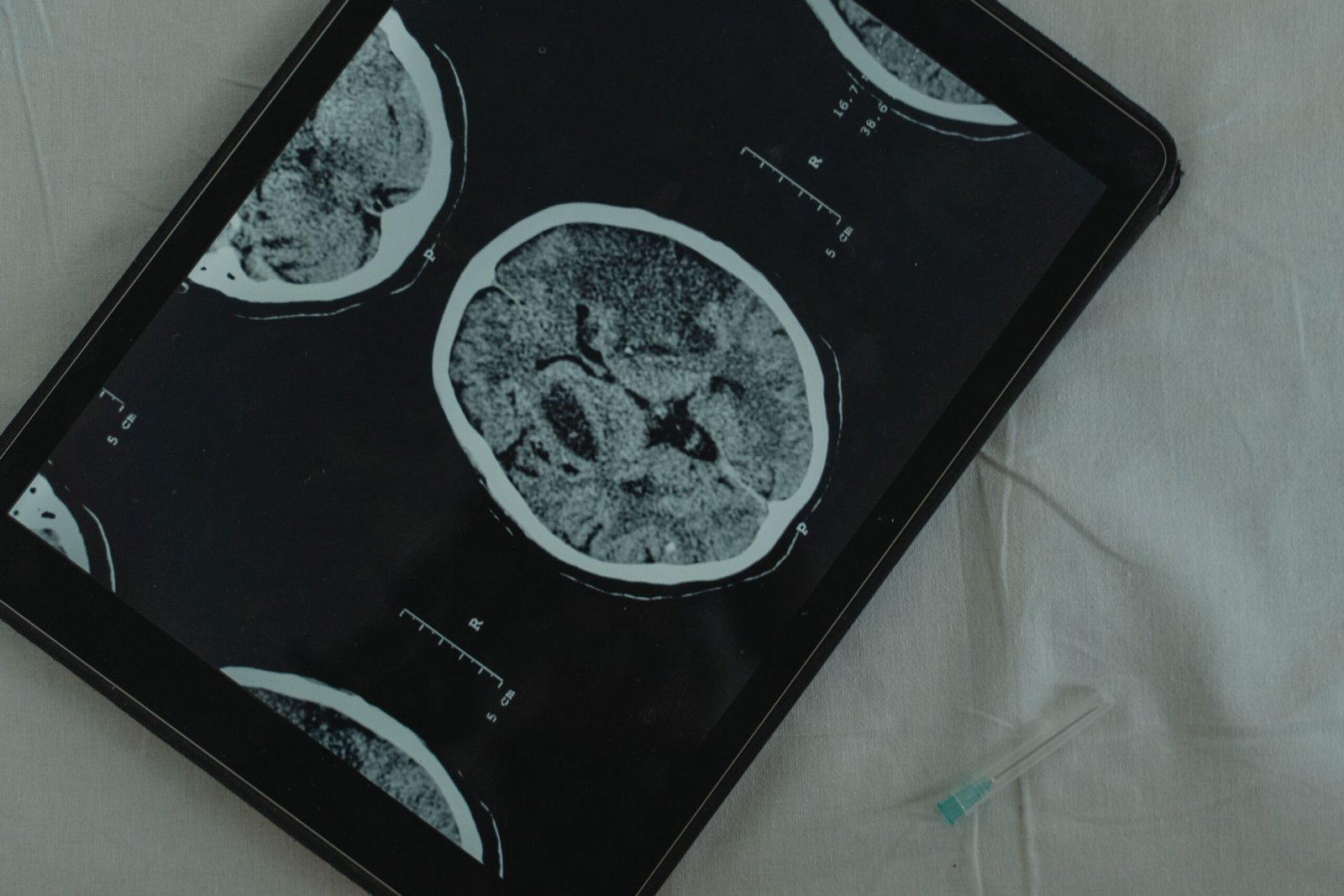

A team at USC used artificial intelligence to screen 36 billion chemical compounds and identified a potent molecule that could transform how we treat Alzheimer’s disease by targeting brain inflammation.
There is plenty of Alzheimer’s disease research, but real breakthroughs are rare. Even after decades of trials and billions spent, the disease is still one of medicine’s biggest challenges. Most approved drugs target amyloid plaques, the protein clumps linked to Alzheimer’s, but clearing these plaques often does not stop cognitive decline.
Researchers are now exploring new directions. A recent study from the University of Southern California, published in npj Drug Discovery, may have found something promising: a new group of small molecules that target neuroinflammation, the ongoing brain inflammation that drives Alzheimer’s, with high precision, strong effects, and the important ability to reach the brain.

The Fire Inside: Why Brain Inflammation Matters in Alzheimer’s
To determine whether research matters, it’s important to examine the biological problem. The brain, like other organs, is built on lipids for structure and signaling; these lipids are well regulated. In disease, this control is lost. One important enzyme is phospholipase A2 (cPLA2). This enzyme sits inside cells and acts like a molecular crowbar, prying open the cell membrane to release arachidonic acid. Arachidonic acid is released from the cell membrane. Arachidonic acid is then converted into several inflammatory molecules, such as prostaglandins and leukotrienes, which cause the ongoing inflammation seen in Alzheimer’s disease. cPLA2 is overly active and present at higher levels near amyloid plaques. Amyloid also activates cPLA2, leading to a cycle of increased amyloid, inflammation, nerve cell damage, and cognitive decline. This link is even stronger in people with the APOE4 gene variant, the biggest known genetic risk for late-onset Alzheimer’s. The USC team had already found much higher cPLA2 activity in brain tissue from people with this gene.
This makes cPLA2 a good target for new drugs. However, creating a molecule that can block it, especially one that can cross the blood-brain barrier and reach the brain, has been very difficult. So far, only one cPLA2 inhibitor has reached human trials, and it did not cross the blood-brain barrier well.
Screening 36 Billion Molecules in Weeks
The USC team started their work on a supercomputer instead of in a lab. They used a platform called V-SYNTHES2, which combines artificial intelligence and computational chemistry to virtually search the Enamine REAL Space, a catalog of over 36 billion possible chemical compounds. They looked for molecules with the right shape and chemistry to fit into the cPLA2 enzyme’s active site and block it.
Instead of making and testing millions of random chemicals, V-SYNTHES2 breaks each compound into smaller parts called synthons. It fits these parts into a model of the cPLA2 protein and then uses algorithms to build only the most promising full molecules. This way, they can screen billions of options but need to test only a few in person.
Out of the 36 billion compounds, the algorithm picked 127 top candidates to make in the lab. Within six weeks, 117 of these were made and ready for testing. Of those, 19 showed strong cPLA2 inhibition in lab tests, a 16% success rate, which is excellent for this kind of research.
Three Generations of Optimization
Next, the team improved the drug through three rounds of refinement. Instead of just choosing the first best result, they carefully studied what made each compound effective, modified the chemical structure to boost potency, and tested again. With each round, the molecules became more selective and powerful.
The third round produced BRI-50460, the top candidate. The results are impressive. In the main test, which measures how much arachidonic acid cPLA2 releases from real cell membranes, BRI-50460 had an IC50 of just 0.88 nanomoles per liter. This means it is extremely potent, needing less than one billionth of a gram per liter to block half the enzyme’s activity. This is over 20 times better than the best previous cPLA2 inhibitor.
Selectivity is just as important. cPLA2 is one of several similar enzymes in the body, and blocking the wrong one could cause serious side effects. BRI-50460 did not significantly inhibit a related enzyme, iPLA2, even at doses 100 times higher than those required to inhibit cPLA2. This selectivity gives researchers confidence that the drug targets only what it should.
Crossing the Blood-Brain Barrier
For any drug meant for the brain, the biggest challenge is crossing the blood-brain barrier. This barrier.is a tight gateway that keeps most substances out. Many drugs that work in lab tests fail at this step.
BRI-50460 passed with flying colors. When administered to mice both by injection and orally, the drug achieved a brain-to-plasma ratio exceeding 40%. That means for every unit of drug measured in the blood, more than 40% of that concentration was present in the brain. When researchers calculated the unbound drug fraction (the portion actually free to engage with the target enzyme rather than stuck to proteins), the brain-to-plasma ratio was nearly 3.0, meaning the drug was actually more concentrated in the brain than in the blood.
To give some perspective, researchers compared BRI-50460’s ability to cross the blood-brain barrier with that of several well-known CNS drugs, including zolpidem (Ambien), a common sleep medicine known for its ability to reach the brain. BRI-50460 did much better. Also, taking the drug by mouth gave almost the same brain levels as injecting it, which is important for any drug that could be taken as a daily pill instead of an infusion.
What It Does Inside the Brain
Lab results and how the drug moves in the body are only part of the story. The key question is whether BRI-50460 actually changes Alzheimer’s biology in models that matter for humans. The USC team tested this using one of the most advanced tools in neuroscience: human induced pluripotent stem cells (iPSCs). These are cells made from adult human tissue and turned into neurons and astrocytes, the brain cells that become inflamed in Alzheimer’s disease.
When these human brain cells were exposed to amyloid beta-42 oligomers, the toxic form of amyloid that starts Alzheimer’s disease, a series of damaging events happened. cPLA2 became active, a protein called tau became hyperphosphorylated (which leads to tangles and neurodegeneration), and synapses (the connections between neurons needed for memory and thinking) were lost.
When BRI-50460 was added, the damage was significantly reversed. The compound s2 activation in the amyloid-treated cPLA2 from becoming active in the cells exposed to amyloid, and critically protected synapses from, most importantly,It preserved the density being destroyed. It kept the levels of CaMKIIα, the latter of which is essential for the process that supports, and also confirmed that treatment with a related early-generation compound shifted the brain’s fatty acid balance: reducing inflammatory arachidonic acid while increasing levels of protective omega-3 fatty acids, including DHA and EPA, and their pro-resolving metabolites called resolvins. Inflammation down, resolution up.
Why This Matters and What Comes Next
Many promising Alzheimer’s drugs have failed in later trials, so it’s wise to be cautious. BRI-50460 has not yet been tested in humans, and translating from mouse studies and cell models to clinical results is a long, uncertain process. The researchers admit there are limits, such as the need for longer studies in established Alzheimer’s animal models and the fact that they have not yet seen the drug directly lack the PLA2 enzyme using crystallography.
Still, the combined evidence is promising, as it shows potency, selectivity, strong brain penetration, oral availability, and reversal of amyloid-induced tau problems and synapse loss in human neurons. These are not just separate findings; together, they make BRI-50460 one of the most promising preclinical candidates for targeting neuroinflammation in Alzheimer’s disease.
The team is now working to further refine the drug’s pharmacokinetics and evaluate it in long-term preclinical Alzheimer’s models, aiming to move. The founder of PeBRx, the company developing cPLA2 inhibitors, is one of the paper’s corresponding authors, suggesting the paper is under active review.
For tlready being consideredillion people worldwide living with dementiaFor the estimated 50 million people worldwide living with dementia, and the millions more who have the APOE4 gene and face higher risk, progress cannot come soon enough. BRI-50460 is not a cure, but it is a careful, science-based step toward a new way of treating Alzheimer’s. Instead of focusing on plaques after damage has happened, this approach aims to calm the inflammation that has been present in the brain from the start.
Reference:
Sadybekov AV, Duro MV, Wang S, Ebright B, Dikeman D, Hugo C, et al. (2026). Development of potent, selective cPLA2 inhibitors for targeting neuroinflammation in Alzheimer’s disease and other neurodegenerative disorders. npj Drug Discovery, 3: 2. https://doi.org/10.1038/s44386-025-00035-0