
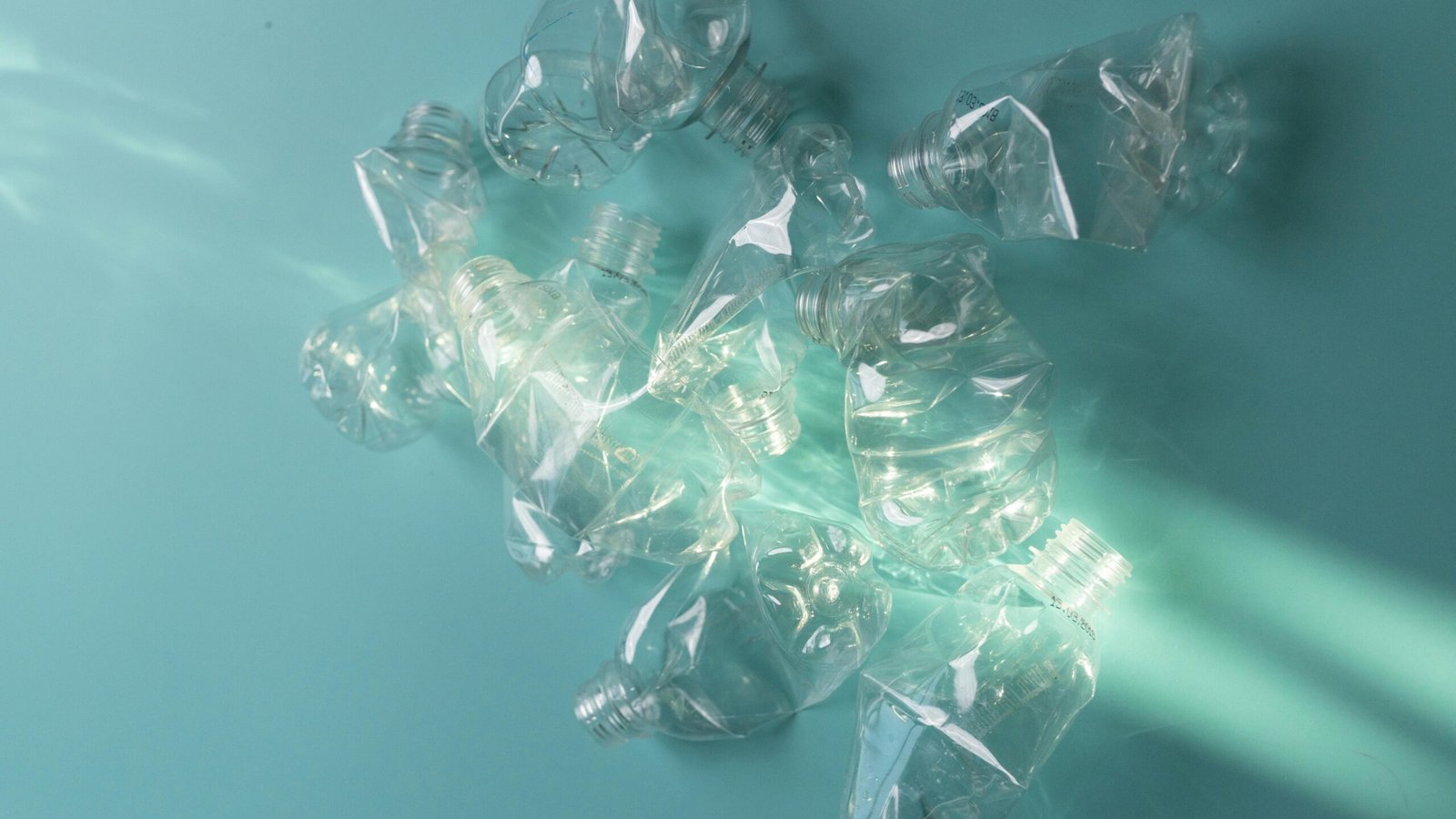

Microplastics have been detected in diverse environments, including Antarctic ice, deep ocean trenches, human blood, and, notably, human brain tissue. A 2025 study reported that microplastics and nanoplastics can constitute up to 0.5% of brain biomass and have been associated with conditions such as dementia and Alzheimer’s disease. Another significant study demonstrated that patients with microplastics in their carotid artery plaques exhibited a substantially higher risk of heart attack, stroke, and mortality.
Global plastic production reaches 300 million tons annually, with the majority being non-degradable. Even after disposal, plastic degrades into progressively smaller particles that infiltrate all areas of the natural environment. Removing these particles from water presents significant challenges; conventional methods such as filtration and flocculation are costly, susceptible to clogging, and become less effective as particle size decreases.
Now, researchers at Texas A&M University have published a study in Nature Communications that takes a fundamentally different approach. Instead of building better filters, they engineered a living organism, a type of photosynthetic algae called cyanobacteria, to grab microplastics out of water, sink to the bottom, and then be converted into a useful new material. The system is called RUMBA: Remediation and Upcycling of Microplastics by Algae.
The Core Idea: Using Biology’s Chemistry Against Plastic’s Chemistry
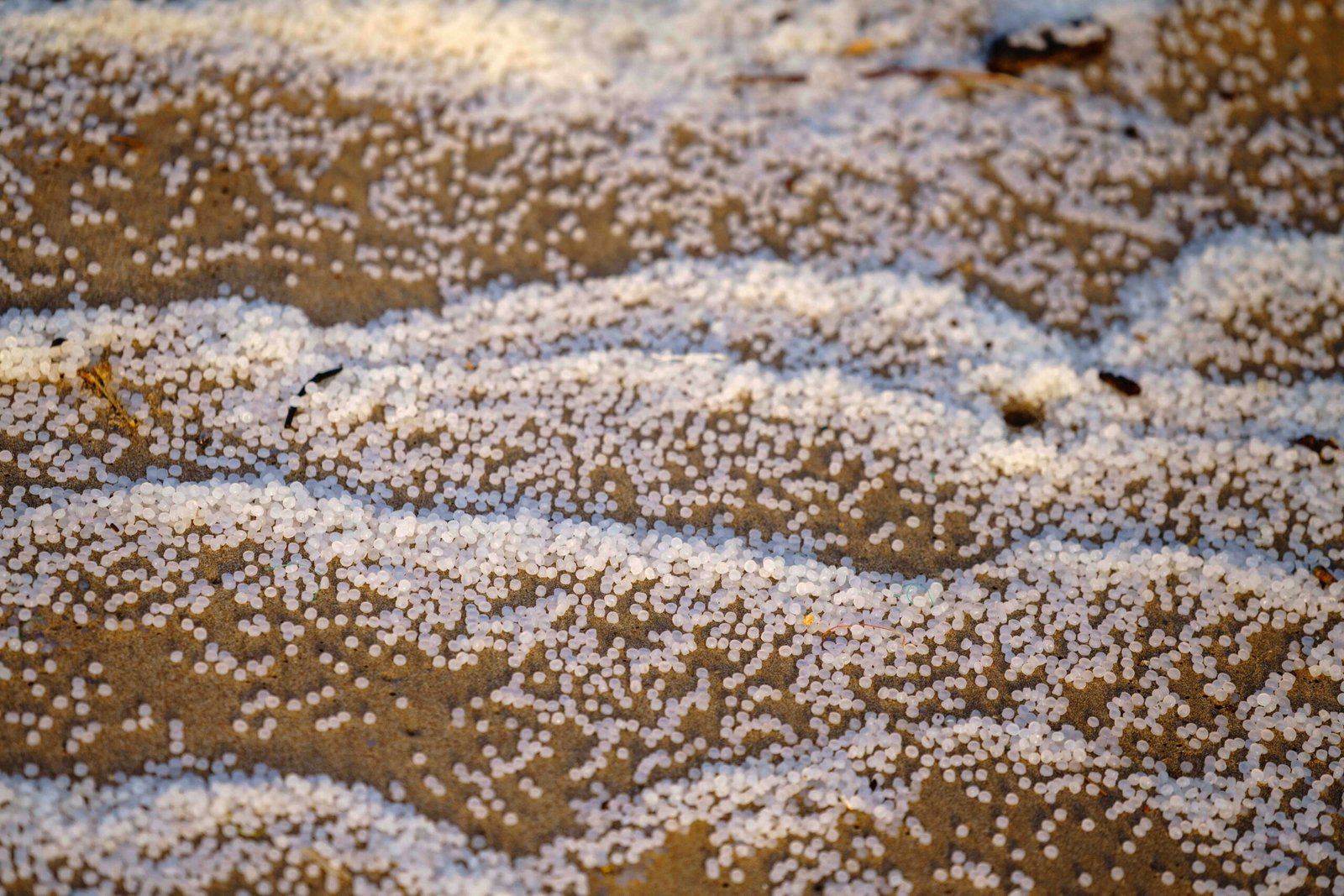
The insight behind RUMBA is elegant and almost counterintuitive. To understand it, you need to know one key fact about plastics: they are hydrophobic, meaning they repel water. This is one reason plastic particles don’t simply dissolve; they resist merging with their watery surroundings.
The researchers asked: What if you made an algae cell hydrophobic, too? A hydrophobic cell surface would naturally attract hydrophobic microplastic particles, the same way oil droplets in water tend to clump together. Charge and chemistry aside, like tends to attract like.
To make this happen, they engineered a fast-growing cyanobacterium called Synechococcus elongatus UTEX 2973 to produce limonene, yes, the same compound responsible for the scent of citrus peel. Limonene is naturally hydrophobic. When the engineered cells produce it, the limonene migrates to the cell surface and coats it, dramatically increasing the cells’ hydrophobicity. These modified cells are called Hydrophobic Cyanobacteria Cells (HCC).
When HCC cells are introduced into water containing microplastics, the cells aggregate with the plastic particles and sink. This process removes microplastics from the water column as they settle with the algae, forming a combined sediment. The mechanism relies solely on surface chemistry, without the need for magnets, filters, or additional chemicals. The Results: 91.4% Removal in One Hour
The system demonstrated notable performance metrics. When tested with polystyrene (PS) microplastics, one of the most prevalent types, the HCC system achieved 91.4% removal within one hour. The removal capacity was approximately 0.1 grams of microplastic per gram of algal biomass. For context, previous biological microplastic removal approaches, which mostly relied on sticky secretions called extracellular polymeric substances (EPS) produced by microbes, typically took six hours or more to achieve around 80% removal. RUMBA surpassed those results in a fraction of the time, and through a fundamentally different mechanism.
To verify that hydrophobic attraction was the primary mechanism, researchers introduced a surfactant (Tween 20) to disrupt hydrophobic surfaces. This intervention resulted in a marked decrease in removal efficiency, as the surfactant disrupted the interaction between cells and plastic. These findings confirm that the removal process is driven by hydrophobicity rather than random aggregation or EPS-mediated adhesion. Electron microscopy images revealed the mechanism. In images of normal (wild-type) cyanobacteria mixed with polystyrene microplastics, the plastic particles attached randomly and sparsely. In HCC samples, microplastic particles clustered specifically at cell junctions, exactly where limonene concentrates. Chemical imaging using Stimulated Raman Scattering microscopy confirmed that limonene signals overlapped directly with polystyrene signals, providing molecular-level proof that limonene was the mediator of capture.
Not Just Polystyrene: A Broad Spectrum of Plastics
Although polystyrene served as the primary test material, the researchers also evaluated the HCC system with polyethylene terephthalate (PET), commonly found in water bottles and food containers, and polyethylene (PE), prevalent in shopping bags and packaging films. Fluorescence microscopy confirmed that HCC cells attached to and aggregated with both plastic types, indicating that the hydrophobic interaction mechanism is broadly applicable across various plastic chemistries. The system was also tested in real-world conditions using actual water samples: both surface water from a lake on the Texas A&M campus and wastewater from the university’s treatment plant. In both environments, HCC removed approximately 90% of larger microplastics (500 nm and 800 nm), with around 80% removal of the smallest tested particles (200 nm). The researchers also tested HCC against environmental microplastic particles isolated from 200 liters of real wastewater and observed clear cell-microplastic interactions that wild-type cells did not show.
The Triple Threat: Microplastics, Wastewater Nutrients, and CO₂
A notable advantage of RUMBA is its multifaceted environmental impact. The use of cyanobacteria, photosynthetic microorganisms that naturally absorb CO₂ and nutrients during growth, enables the platform to address multiple environmental challenges simultaneously. Wastewater nutrient removal: The engineered strain proved highly effective at stripping nitrate, ammonia, and phosphate from wastewater. When cultivated in wastewater with supplemental nutrients, the system achieved nearly 100% removal of ammonium and phosphate, and up to 97% removal of nitrate. Excess nutrients (nitrogen and phosphorus) in waterways are a major cause of algal blooms and oxygen-depleted “dead zones,” so removing them is environmentally significant in its own right.
Biomass production: During microplastic capture, cyanobacteria also generate biomass. In a five-day integrated trial, the system produced 54 g/L of biomass per liter of treated water. With additional nutrient supplementation, biomass yields increased to 3.5-3.8 g/L, providing substantial downstream value to the captured material. Carbon capture: Unlike energy-intensive conventional water treatment, cyanobacteria run on sunlight and CO₂. The system is photosynthetic, meaning it actively draws down carbon dioxide as it operates.
From Pollution to Product: Upcycling the Captured Plastic
Here’s where RUMBA becomes genuinely circular. After the algae and microplastics co-sediment, the resulting material, a mixture of cyanobacterial biomass and captured plastic, can be processed directly into bioplastic composite films.
The production process involves drying the combined sediment, dispersing it in a solvent, filtering the mixture, and casting it into films. The resulting composite material integrates both polystyrene and algal biopolymers, including proteins, pigments, and other cellular components, into a unified new material. The mechanical tests on these films revealed something unexpected and useful. Compared to pure polystyrene films, the algae-plastic composites made with HCC showed 2.3 times greater elongation (they can stretch further before breaking) and 2.2 times greater toughness (they absorb more energy before failure). They were somewhat less stiff and weaker in tensile strength, but the improvements in toughness and flexibility that pure PS lacks give the composite distinct material characteristics that could make it valuable for specific applications.
The golden-green coloration of the composite films, resulting from chlorophyll and carotenoid pigments in the cyanobacteria, indicates potential aesthetic applications for specialty materials. Is It Economically Viable?
In addition to laboratory results, the researchers conducted a comprehensive techno-economic analysis (TEA) and life cycle assessment (LCA) to evaluate the scalability of RUMBA. The minimum selling price of the bioplastic produced through open-pond RUMBA cultivation was estimated at $3.58 per kilogram, competitive with common bioplastics such as polyhydroxyalkanoates (PHA), which typically sell for $4 to $6 per kilogram. When powered by renewable energy and accounting for byproduct displacement, the system could achieve net negative carbon emissions of −4.50 kg CO₂ per kilogram of bioplastic produced. For reference, most conventional bioplastic production processes emit between 0.6 and 282.6 kg CO₂ per kilogram.
The analysis indicated that photobioreactor cultivation, a more controlled, enclosed system, would raise the minimum selling price to $30.68 per kilogram, making it less competitive at present. However, open-pond systems, which offer greater scalability for environmental applications such as wastewater treatment, represent a more feasible implementation pathway. What Still Needs Work
The researchers acknowledge several limitations. Although a 19-day continuous trial demonstrated sustained system effectiveness, industrial deployment will require long-term stability assessments and further strain engineering to prevent genetic drift that may reduce cell hydrophobicity. Additional testing is needed to evaluate performance against complex pollution mixtures containing heavy metals and organic contaminants, and the upcycling process requires optimization to better control the mechanical properties of the resulting composite. Still, as a proof of concept, RUMBA is unusually complete: it demonstrates the removal mechanism, validates it under real-world water conditions, integrates it with wastewater treatment, produces useful biomass, converts captured pollution into a new material, and confirms economic and environmental viability through modeling.
The Bigger Picture
Microplastic pollution poses a significant environmental challenge due to its diffuse, often invisible nature, making large-scale remediation difficult with conventional methods. While RUMBA may not provide a definitive solution, it introduces an innovative approach: a living system that removes pollution, generates value, operates using sunlight, and produces a usable material rather than a waste stream. It’s one of the cleaner examples of what synthetic biology can offer environmental science, not just organisms engineered for industrial production, but for cleaning up the mess industry has already made.
Reference
Long, B., Li, Q., Hu, C., Chen, Y., Zeng, Y., Li, W., Pearson, S., Liu, M., Fei, C., Yuan, J. S., & Dai, S. Y. (2025). Remediation and upcycling of microplastics by algae with wastewater nutrient removal and bioproduction potential. Nature Communications, 16, 11570. https://doi.org/10.1038/s41467-025-67543-5