
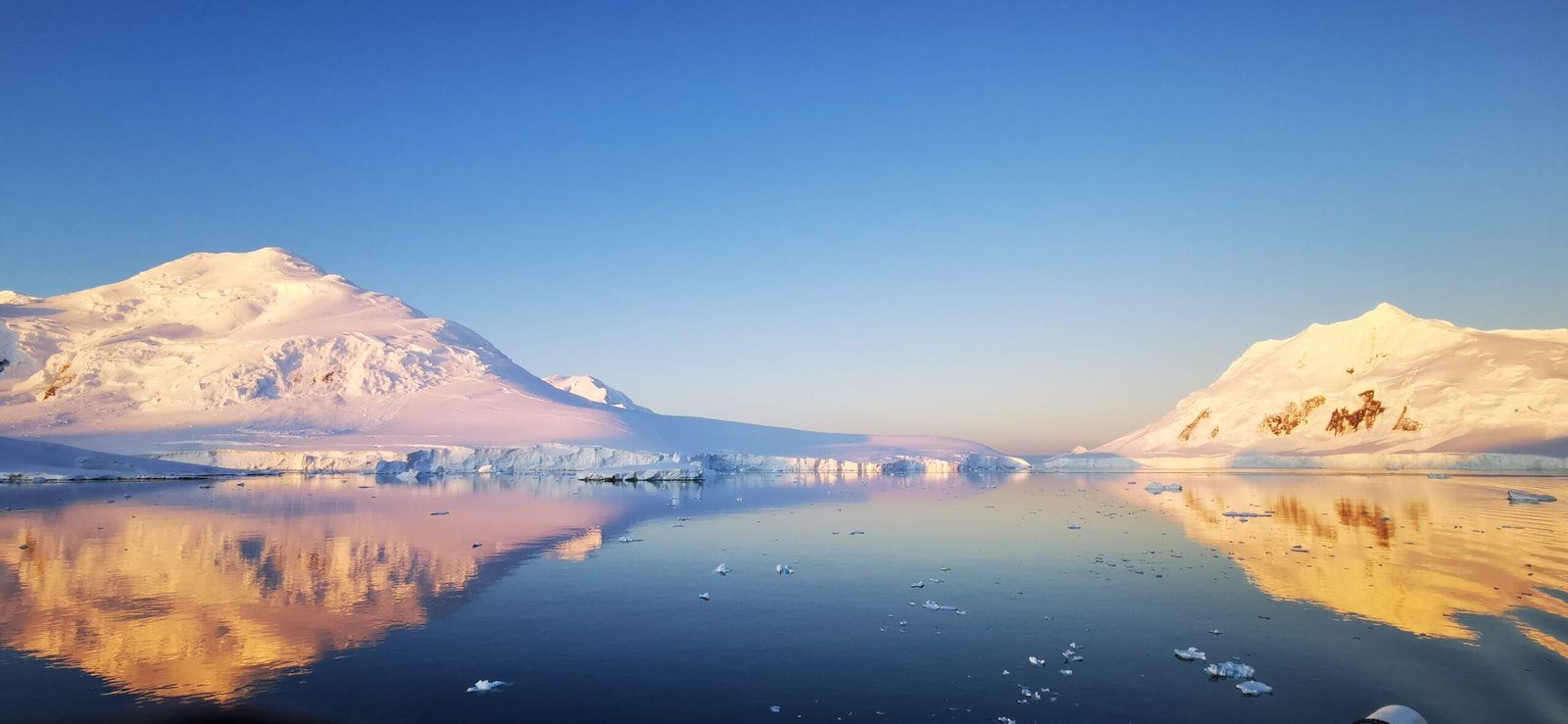

The Antarctic Ice Sheet holds about 70% of Earth’s fresh water. If it melted entirely, global sea levels would rise by roughly 58 meters, enough to submerge most of the world’s coastal cities. That won’t happen in our lifetimes, but the question of how fast parts of it might melt in the coming decades is one of the most consequential open questions in climate science. The uncertainty is so large that, while sea-level rise of several tens of centimeters by 2100 is considered likely, a rise of up to 5 meters by 2150 under high-emission scenarios cannot be ruled out.
A new study published in Nature Communications has identified a previously underappreciated mechanism that could be quietly accelerating that process not through dramatic collapse or sudden catastrophe, but through the slow, hidden work of underwater channels carved into the undersides of Antarctic ice shelves.
The Architecture of Antarctic Ice
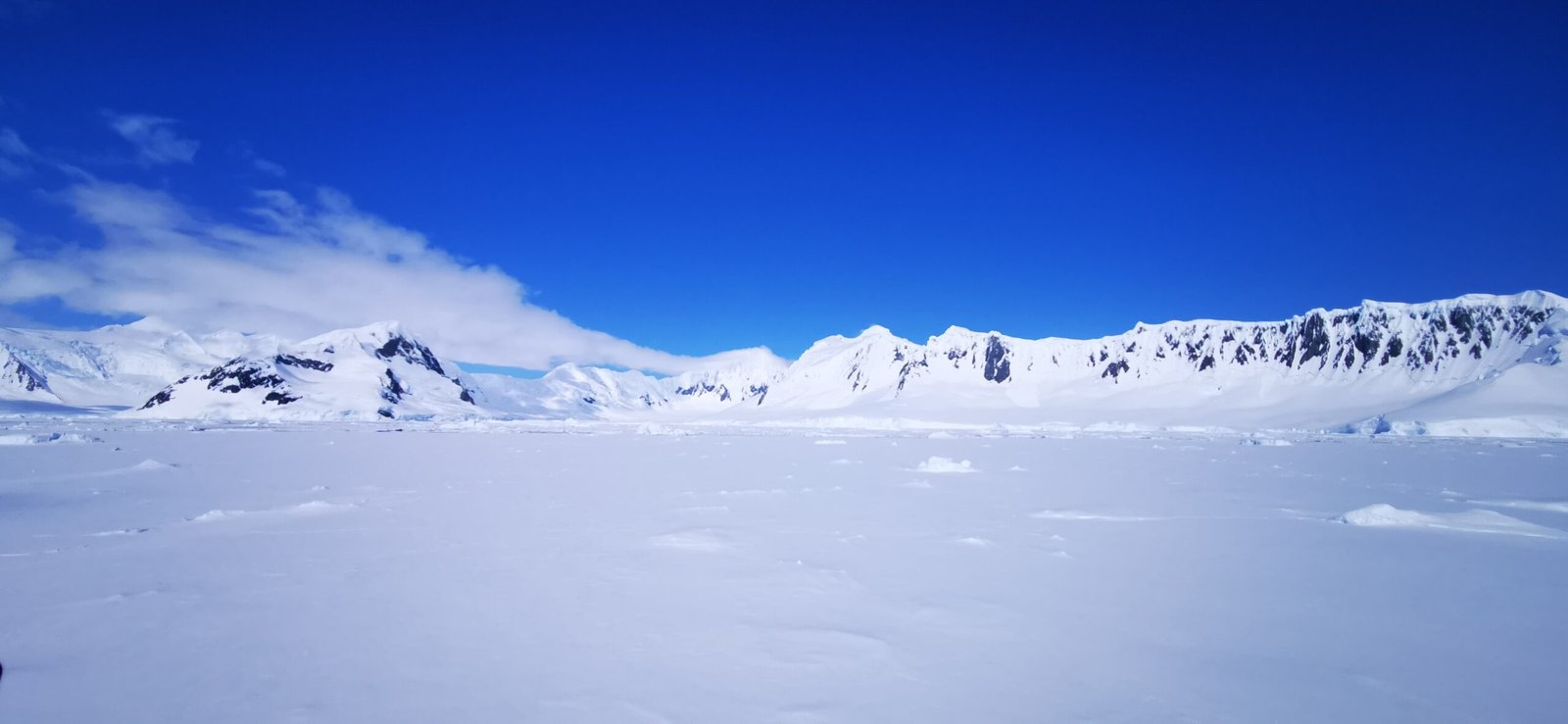
To understand what’s happening, it helps to picture the structure of the Antarctic Ice Sheet. On land, vast glaciers accumulate ice over millennia, flowing under their own weight toward the ocean. When they reach the coast, they don’t simply stop; they extend outward over the water as ice shelves: floating tongues of ice that can stretch hundreds of kilometers into the sea and reach depths of hundreds of meters below the ocean surface.
These ice shelves matter enormously because they act as brakes. By pushing back against the glaciers behind them, they slow the flow of ice into the ocean. When they thin or break apart, as has happened increasingly in West Antarctica, the ice behind them accelerates, raising sea levels faster. The stability of the ice shelf is therefore central to the stability of the entire ice sheet.
What drives ice shelf thinning? Primarily, the ocean. Warm seawater circulating beneath the ice shelves melts them from below, a process called basal melting. The faster this melting proceeds, the thinner and more vulnerable the ice shelf becomes.
The Channels in the Ice
Beneath many Antarctic ice shelves, carved into their undersides like river valleys seen from below, are elongated trenches called basal channels. These are not small features. They can be several kilometers wide and up to hundreds of meters deep, and they can extend for hundreds of kilometers from the point where the glacier meets the seafloor (the grounding line) toward the open ocean edge.
Scientists have known about these channels for years, but their role has been genuinely puzzling. Are they dangerous, concentrating, melting, and weakening the ice shelf structurally? Or are they protective — funneling meltwater away before it can cause wider damage? Modeling studies and observational data have pointed in both directions, leaving the question unresolved.
This new research, led by scientists from Norway’s Akvaplan-niva and Norwegian Polar Institute, along with colleagues from Australia and Finland, provides the most detailed picture yet of how these channels interact with the ocean, and the answer carries significant implications for how we think about ice shelf stability.
The Study: Fimbulisen Ice Shelf, East Antarctica
The researchers focused on the Fimbulisen Ice Shelf, located near the Prime Meridian in the Atlantic sector of the Southern Ocean. Fimbulisen is a “cold-water” ice shelf; its cavity is typically filled with frigid water near the freezing point, and average basal melt rates are low (around 0.5 m per year). This is typical of many East Antarctic ice shelves, which have long been considered more stable than their West Antarctic counterparts.
But Fimbulisen has well-documented basal channels carved beneath its ice, aligned with the Jutulstraumen ice stream that feeds it. And long-term ocean monitoring below the shelf has shown something concerning: since 2016, warmer pulses of a water mass called Circumpolar Deep Water (CDW) have been intruding into the cavity with increasing frequency.
CDW is the ocean’s deep, relatively warm water mass. In West Antarctica, massive quantities of CDW flood beneath ice shelves, driving melt rates of tens of meters per year. In East Antarctica, CDW is normally kept out by oceanic barriers, but those barriers are weakening as climate patterns shift.
The researchers ran high-resolution computer simulations of the Fimbulisen ice shelf cavity to understand what happens when a CDW intrudes into a cold-water cavity with basal channels. They compared four scenarios: with and without the basal channels (using real topography vs. a smoothed version), and with and without CDW intrusions (cold vs. warm ocean forcing).
The Mechanism: A Trap for Warm Water
What the simulations revealed is a self-reinforcing mechanism the researchers call melt-driven overturning in basal channels, which works through the subtle physics of how different water masses behave when they meet.
Here is the key sequence of events:
CDW is warm but also relatively salty, and therefore dense, it settles toward the seafloor as it enters the ice shelf cavity beneath lighter, colder water (called Winter Water, or WW). As the CDW travels along the seafloor into the deeper parts of the cavity and begins melting the ice above it, something changes: the meltwater freshens and slightly cools the CDW, making it less dense. This meltwater-modified CDW becomes buoyant while retaining significant heat.
Now the channels become critical. As this buoyant, warm modified CDW rises, it gets physically funneled into the channels carved in the ice base above it. The channel acts as a trap: the warm water rises to its crest and is held there, unable to escape laterally. At the same time, faster water flow within the channel (due to the channel’s geometry, which promotes stronger currents) enhances the mechanical transfer of heat to the ice above.
The result is a dramatic, order-of-magnitude (10x) amplification of melting at the top of the channel, where the ice is actually thinnest and most vulnerable, compared to nearby flat areas. In the simulations, melt rate anomalies within the channels exceeded 10 meters per year under warm-ocean conditions, compared with the overall cavity average of about 1 meter per year.
Why This Is More Dangerous Than Expected
The differentiation matters: higher melting at the channel crest and lower melting at the channel base create a melting gradient that determines whether a channel grows or closes.
Ice naturally wants to close basal channels. The process called ice creep, the slow, gravity-driven flow of ice, tends to flatten thickness gradients, filling in the channels from the sides. For a channel to persist or deepen, the melting at its crest must outpace this closing tendency.
The simulations showed that under cold-ocean conditions (no CDW), ice creep wins, and the channels slowly close. But under warm conditions, even the moderate CDW intrusions observed at Fimbulisen, the melt-driven overturning mechanism generates sufficient differential melting to sustain or even grow channels. The combined thinning rates on the western flank near the channel crest were 5 to 10 meters per year higher than outside the channel under warm conditions.
This is the crux of the threat. Channels that grow become deeper structural weaknesses in the ice shelf. And deeper channels, carved through the thicker, deeper ice near the grounding line, undermine exactly the part of the ice shelf that provides the most buttressing to the glacier behind it.
“Cold” Ice Shelves Are Less Safe Than We Assumed
One of the most significant implications of this work is what it says about East Antarctic ice shelves, such as the cold-water shelves like Fimbulisen, which have largely been considered stable.
Previous understanding suggested that the dramatic channel-driven melting observed in West Antarctica was a consequence of the unusually large quantities of CDW in those warmer cavities. The new mechanism described here shows that even modest CDW intrusions, brief pulses of relatively warm water reaching a cold-water cavity, can be dramatically amplified by the presence of basal channels. You don’t need a West Antarctic-scale warm water flood to trigger the feedback. A comparatively small change in ocean temperature is enough if the channels are there to trap and concentrate the heat.
This is concerning because CDW access along the East Antarctic coast has increased in recent years, driven by shifting wind patterns linked to climate change. Model projections suggest this trend may continue.
The researchers emphasize that their simulations used moderate, realistic CDW intrusions rather than extreme scenarios. The amplification they found is a property of the system’s geometry and physics, not a worst-case projection.
What This Means for Sea Level Projections
Current large-scale climate models used to project sea level rise typically cannot resolve features as small as basal channels; their spatial resolution is too coarse. This study suggests that omitting these features may lead models to significantly underestimate the sensitivity of ice-shelf basal melting to ocean warming.
The researchers call for incorporating channelized melting dynamics into coupled ice sheet-ocean models. This is technically challenging; it requires far higher resolution than current global climate models typically run at, but it is increasingly necessary to generate reliable sea-level projections. Failing to account for these dynamics means the models may show ice shelves that appear stable right up until they aren’t.
The specific numbers from this study are calibrated to Fimbulisen under current observed conditions. But the mechanism by which CDW becomes buoyant as it melts ice, rises into channels, gets trapped, and dramatically amplifies local melt rates is governed by basic ocean physics that applies to any cold-water ice shelf cavity where CDW intrudes beneath lighter, colder water. That description now fits a growing number of locations in East Antarctica.
The Bottom Line
Beneath the ice shelves of East Antarctica, a self-reinforcing feedback has been operating in relative obscurity: channels carved into the ice base act as traps for warm intruding water, amplifying melt rates by tenfold and potentially driving the growth of structural weaknesses near the most critical parts of the ice shelf. Even moderate pulses of ocean warming, the kind already being observed and projected to increase, are enough to trigger this process.
What looks stable from above may not be stable below. And the margin for stability may be narrower than current sea level projections assume.
Reference
Zhou, Q., Hattermann, T., Zhao, C., Gladstone, R., Lauber, J., Uotila, P., & Morris, A. (2026). Channelized topography amplifies the melt-sensitivity of cold Antarctic ice shelves. Nature Communications, 17, 3790. https://doi.org/10.1038/s41467-026-71828-8