


There is a scene playing out constantly in microbial communities around the world in soil, in oceans, in your gut that scientists are only just beginning to understand in its full complexity. Bacteria share DNA with each other. Not accidentally, and not always through straightforward replication, but through a dedicated biological system that bacteria have evolved specifically to package genetic information and deliver it to their neighbors.
And now, a study published in Nature Microbiology (2026) has revealed something genuinely surprising about how that process works: bacteria appear to have co-opted their own immune defense machinery originally designed to fight viruses and turned it into a tool for gene sharing.
This finding, from researchers at the John Innes Center and the University of York, doesn’t just add a detail to existing knowledge. It challenges a foundational assumption about what immune systems are for.
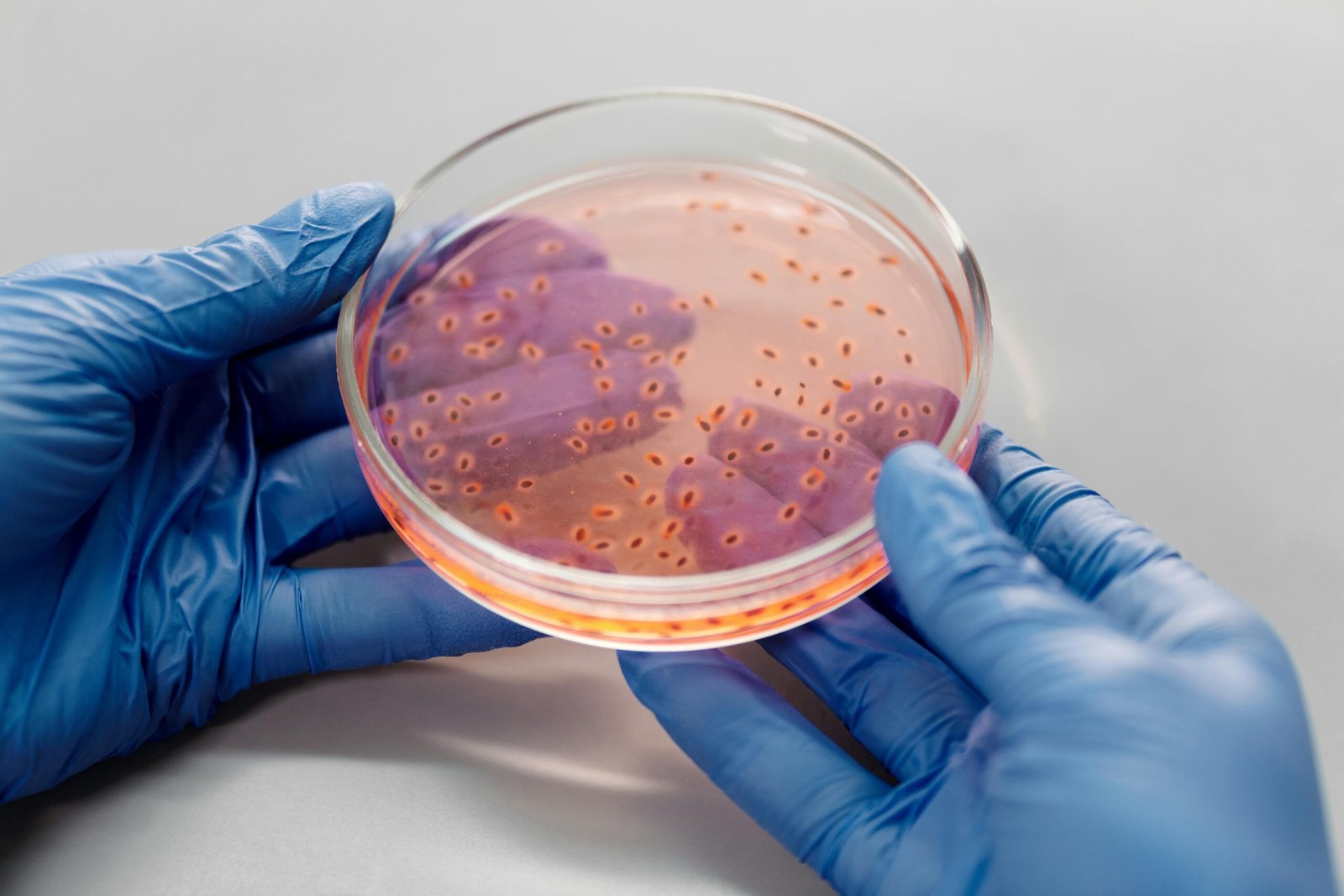
The Remarkable World of Gene Transfer Agents
To appreciate why this discovery matters, it helps to understand the biological characters involved.
Bacteria face a constant assault from bacteriophage viruses that specifically infect bacterial cells. Over billions of years of co-evolution, bacteria have developed an extraordinary arsenal of immune defenses to detect and destroy these invaders. At least 150 distinct anti-viral defense systems have been cataloged in recent years, ranging from the famous CRISPR systems (which humans have borrowed for gene editing) to more exotic mechanisms involving programmed cell death.
But bacteria don’t just fight viruses; sometimes they work with virus-like entities for their own benefit. This is where gene transfer agents (GTAs) enter the picture.
GTAs are among the most fascinating objects in microbiology. They are essentially domesticated viruses, ancient phages that, over evolutionary time, were captured by bacteria and converted from parasites into tools. Instead of hijacking a bacterium to make copies of themselves and spread infection, GTAs package random fragments of the bacterial host’s own DNA into virus-like particles and release them. Those particles then deliver the DNA to neighboring bacteria.
The key biological peculiarity of GTAs is that they are incapable of self-replication. The DNA packages they produce are too small to carry the entire GTA gene cluster. So GTAs cannot reproduce and spread like ordinary viruses. They are, in a sense, altruistic; they cause the cells that produce them to die, releasing DNA parcels that benefit the broader bacterial community.
This DNA sharing has been linked to bacterial populations surviving environmental stress, repairing damaged DNA, and potentially sharing genes that confer advantages such as antibiotic resistance.
The Mystery: How Do GTA-Producing Cells Actually Die?
When a bacterial cell produces GTA particles, they need to be released. That means the cell must burst open, a process called lysis. It is essentially controlled cell death in the service of gene transfer.
What was puzzling about the bacterium Caulobacter crescentus, the model organism used in this study, was that it appeared to lack a conventional mechanism for lysis. Most bacteriophages kill cells using a well-understood two-component system: a protein called a holin that punches holes in the inner membrane, and an enzyme called an endolysin that then degrades the cell wall. But searches of the Caulobacter genome found no recognizable holin or endolysin genes.
So what was causing the cells to burst?
The research team, led by Emma Banks and Tung Le at the John Innes Center, set out to find the answer using a genome-wide screen. They deployed a technique called transposon mutagenesis sequencing essentially inserting random genetic “stumbling blocks” throughout the bacterial genome, then determining which genes, when disrupted, prevented lysis. By comparing which genes were disrupted in GTA-active versus GTA-inactive strains, they could identify candidates.
The screen revealed a three-gene operon, a cluster of genes transcribed together, which they named LypABC (for “putative lysis proteins A, B, and C”). When any one of these three genes was deleted, GTA particles formed normally inside the cell but could not get out. The cell survived in a zombie-like state, accumulating virus-like particles internally, but failing to lyse.
The Surprising Identity of LypABC: A Repurposed Immune System
Here is where the discovery takes its most surprising turn.
When the researchers analyzed the structure and sequence of the LypABC proteins, they found that all three bore unmistakable resemblance to components of a known anti-phage immune system called the CARD–NLR system. This system was first identified in a soil bacterium called Lysobacter enzymogenes, which normally functions as an antiviral defense. When it detects a phage infection, it activates a cascade of molecular events culminating in the deliberate death of the infected cell. This sacrificial strategy, known as abortive infection, prevents the virus from completing its life cycle and stops it from spreading to neighboring cells.
CARD–NLR systems take their name from two structural modules: a CARD (caspase recruitment domain, familiar from animal immunity) and an NLR (nucleotide-binding leucine-rich repeat, a module found in both plant and animal immune receptors). In humans and other animals, NLR proteins are central to inflammasome signaling, the molecular machinery that triggers inflammatory cell death in response to infection. Seeing their bacterial equivalents repurposed for gene transfer is a remarkable echo across evolutionary kingdoms.
Using structural prediction tools, including AlphaFold3, the team confirmed that LypA and LypB closely match known CARD–NLR proteins from other bacteria. Functional experiments showed that the peptidase domains of LypA and LypC and the ATPase domain of LypB are individually essential for lysis. Mutations in any of these key functional regions abolished cell bursting entirely.
Crucially, the team also showed that LypABC is not required for GTA particle assembly or DNA packaging. The immune-like system is specifically required for the final step, breaking the cell open to release the particles.
A Lethal System That Must Be Kept Under Strict Control
There is an obvious problem with having a lysis-inducing immune system in your genome: if it activates at the wrong time, it kills the cell without benefit.
This is exactly what the researchers found when they artificially overproduced LypABC. Forcing high-level expression of all three proteins in any bacterial cell, whether producing GTAs or not, was lethal. Ghost cells (the hollow remnants of lysed bacteria) accumulated rapidly. LypABC, when unrestrained, is essentially a death switch.
To prevent this, the bacteria maintain strict control through a transcriptional repressor protein called CdxB. This protein binds directly to the DNA region controlling LypABC gene expression, keeping it turned off under normal conditions. When the researchers deleted CdxB, LypABC expression surged, and cell lysis dramatically increased.
The CdxB protein turned out to do something even more elegant than simply blocking LypABC. It simultaneously binds to the promoter regions of the genes that activate GTA production, meaning CdxB acts as a dual repressor, coupling two stages of the GTA lifecycle under a single regulatory switch. When CdxB is appropriately relieved of its repression in GTA-producing cells, both GTA activation and the lysis system are released together, ensuring that cells don’t produce GTA particles without being able to release them, and don’t lyse without having something useful to release.
What This Tells Us About Immune System Evolution
The conceptual significance of this finding extends well beyond the biology of one obscure soil bacterium.
Bacterial immune systems have always been understood as purely defensive they exist to protect the cell from outside threats. But LypABC demonstrates that the molecular components of an immune system can be co-opted for an entirely different biological purpose: facilitating the controlled death of a cell to benefit the wider community.
This is a form of evolutionary repurposing that mirrors what we see elsewhere in biology. Many of the molecular machines that perform essential cellular functions today started out doing something entirely different. The machinery of apoptosis, programmed cell death in animals, shares deep evolutionary roots with bacterial immune systems, and those roots are now becoming visible in new and unexpected places.
The discovery also raises immediate questions about the broader world of bacterial genetics. How common is this kind of immune system co-option? Are there other cases where anti-phage defense components have been conscripted into gene transfer or other cooperative functions? And what does it mean for our understanding of antibiotic resistance, a phenomenon heavily dependent on horizontal gene transfer, that bacteria may be using repurposed immune machinery to spread DNA?
These questions don’t yet have answers. But they make the bacterial world look considerably more sophisticated than it did before.
The Bottom Line
Bacteria are not passive collections of genes bobbing through the environment. They are active participants in complex genetic economies — sharing DNA, defending against viruses, and sometimes sacrificing individual cells for the benefit of the community. And now we know that the tools they use for defense and for gene sharing are not as separate as we thought.
An immune system, it turns out, can also be a gene-delivery system. It simply depends on who is in charge of the controls.
References
Banks, E.J., Bárdy, P., Tran, N.T., Nguyen, P.M., Stojilković, B., Gozzi, K., Maqbool, A., & Le, T.B.K. (2026). A bacterial CARD–NLR-like immune system controls the release of gene transfer agents. Nature Microbiology. https://doi.org/10.1038/s41564-026-02316-4