


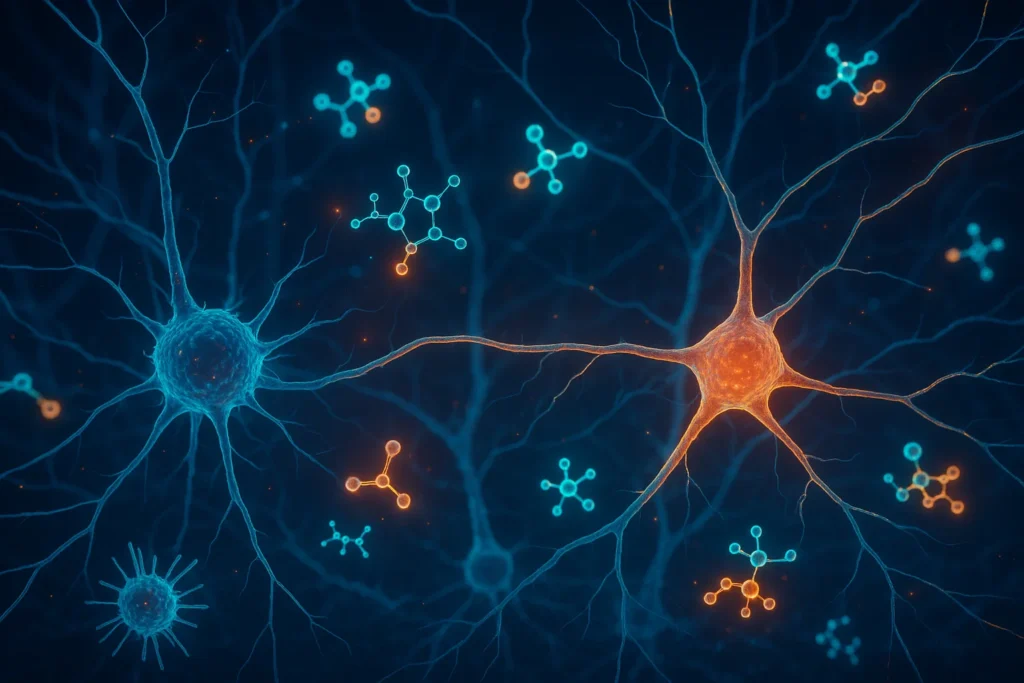
Vitamin K could be long known as a coagulating substance in the blood, and metabolism of the bones, yet, the modern neuroscience has revealed one more absolutely new task of this substance, namely, its impact on the health of the brain. The study that was published in AcS Chemical Neuroscience in the year 2025 reports on a novel category of vitamin K analogues to incorporate retinoic acid type side chains, which are able to induce neuronal differentiation, a biological mechanism involving the transformation of immature brain cells into functional neurons.
This advancement provides a possible avenue to restore lost or damaged neurons in diseases like Alzheimer, Parkinson and Huntington whereby the neurons degenerate gradually in the body causing loss of memory and motor skills.
The story of Blood Clots to Brain Cells: A Molecular Evolution.
There are a number of forms of natural vitamin K such as K1 (phylloquinone) that is found in plants and K2 (menaquinones MK-n) that are found in bacteria and animal tissues. This paper is based on menaquinone-4 (MK-4), which is a bioactive subtype that is abundant in the brain. Previous studies showed that MK-4 has a surprising capacity to activate the process of converting neural progenitor cells into neurons, suggesting that it has a concealed neurological capability.
The natural activity of MK-4 was however limited. To get around this, the investigators conjugated the conjugated side chain on the vitamin K framework of retinoic acid, a known molecular characteristic that causes cell differentiation. It was through this chemical redrawing that eleven different vitamin K analogues were produced and their stability, receptor activity and neurogenic properties were studied.
Compound 7: The Star Performer
Compound 7 was the most active of the synthesized derivatives. It fused the structural backbone of vitamin K with a side chain based on retinoic acid capped by a methyl ester group and became more stable and responded more biologically.
Compound 7 exhibited:
Strong stimulation of the steroid and xenobiotic receptor (SXR) and retinoic acid receptor (RAR), both of them controlling neuronal genes.
Three times more Map2 gene induction which is a marker of fully developed neurons than natural MK-4.
Effective permeation of blood brain barrier and conversion to MK-4 after entering the brain.
These results indicate that one molecule would be able to stimulate neurogenesis as well as provide neuroprotective properties of vitamin K more efficiently than current compounds.
The Mechanism: Vitamin K Speaks to Neurons.
The scientists followed the molecular signals in treated brain cells in order to comprehend the mechanism through which these analogues initiate neuron formation. They discovered that vitamin K analogues stimulate the metabotropic glutamate receptor 1 (mGluR1) a receptor that is important in synaptic signaling and plasticity. The effect of neuronal differentiation by blocking the mGluR1 was significantly reduced when researchers blocked it, proving the fact that it is central. The additional dissection revealed that the stimulation of mGluR1 triggers intracellular cascades that release calcium ions, activate protein kinase C and activate gene transcription factor associated with neuron development.
Simultaneously, vitamin K elevated the concentrations of chromodomain helicase DNA binding protein 5 (Chd5) a regulator that rearranges the DNA to open chromatin and allow the expression of genes. This was an epigenetic change, which was accompanied by increased acetylation of histone H3 that has been identified to enhance the development of neurons.
All these mechanisms together prove that the vitamin K analogues do not rely solely on the receptor signaling but on epigenetic activation in short, they are rewriting the expression of genes in a manner that promotes neuron development.
A Path to Neuroregeneration
The neurodegenerative therapies currently used are primarily symptomatic, rather than cell replacement. Provided that researchers are able to exploit compounds that re activate neural stem cells, it would result in:
The regeneration of the lost neurons of Alzheimer and Parkinson.
Reinfection of aging or oxidative stress synapses.
Slow down or reverse decline in cognition through re-establishing functional neural circuits.
The pharmacokinetic tests in mice are particularly promising in the study. Compound 7 was effectively absorbed and peaked in the brain in 6 hours and persisted in changing to MK-4 in excess of 24 hours a prolonged release which would enhance long term neuroprotection.
Vitamin K and Retinoic Acid Relationship.
The biology of the union of vitamin K and vitamin A is not an accident. There is extensive literature on the role of retinoic acid in cell differentiation during embryonic development. Through its incorporation of the side chain to vitamin K, scientists have effectively developed a hybrid molecule that connects the metabolism and gene regulation.
Although natural retinoic acid may occasionally result in toxicity or uncontrolled cell growth, these new vitamin K-based analogs have a balanced profile they retain cell stability but induce neurogenesis. It is a tune of delicate biochemical dialogue concerning two crucial vitamins being re-engineered to repair the brain.
To Future Brain Therapies.
Compound 7 is a potential turning point in neurotherapeutics, which was discovered. Its mechanism of delivery is biocompatible and efficient since it crosses the blood brain barrier and is naturally metabolized into MK-4.
Possible applications are:
Alzheimer disease and Parkinson disease Adjunct therapy through stimulation of endogenous neurogenesis.
Formulations of nutraceuticals promoting brain resiliency to oxidative stress and ferroptosis.
Platforms of drug development that aim at repairing neuroglutamate receptors mGluR1.
Like all first of kind finds, additional studies should be conducted on these compounds to examine them using human neuronal models and in long term experiments. Nevertheless, the findings are encouraging as they are an indication of a positive change, not only to safeguard neurons but also to restore them.
The Possibility of the Brain.
Vitamin K has gone a long way with its humble relation with blood clotting. The combination of its molecular structure and retinoic acid has allowed scientists to create the future of regenerative neuroscience. Compound 7 and its analogs have the potential to be the foundation blocks of neuroprotective medicine assisting the brain in repairing itself internally. The concept of aging gracefully with a healthier and self renewing brain stops being a science fiction thanks to what we are learning about the crossroads of vitamins and neural biology.
References
Hirota Y et al. ACS Chemical Neuroscience (2025). A New Class of Vitamin K Analogues Containing the Side Chain of Retinoic Acid Have Enhanced Activity for Inducing Neuronal Differentiation. DOI: 10.1021/acschemneuro.5c00111