


Knee osteoarthritis can turn everyday movements into a challenge. Walking even a short distance might take more time. Climbing stairs needs extra focus. Standing up from a low chair might mean using both hands. Exercise is important for treatment, but picking between walking, cycling, strengthening, or other activities can be tough when moving already hurts.
A 2025 review in The BMJ looked at 217 randomised trials with 15,684 participants to compare different exercise approaches. Aerobic exercise came out on top, showing the strongest evidence for reducing pain at around four and 12 weeks, improving physical function and walking at about 12 weeks, and boosting quality of life at about four weeks. Strengthening, neuromotor training, and other methods also helped with specific results. Read the original BMJ review.
If your main issue is walking endurance, aerobic exercise is a good place to start. If standing up from a chair is hard, strengthening exercises may help. If you feel unsteady, you might need to start slower or get more support. The study shows what each exercise type is best for, helping you choose. The right program depends on your symptoms, goals, and what you can stick with.
Understanding knee osteoarthritis in simple terms
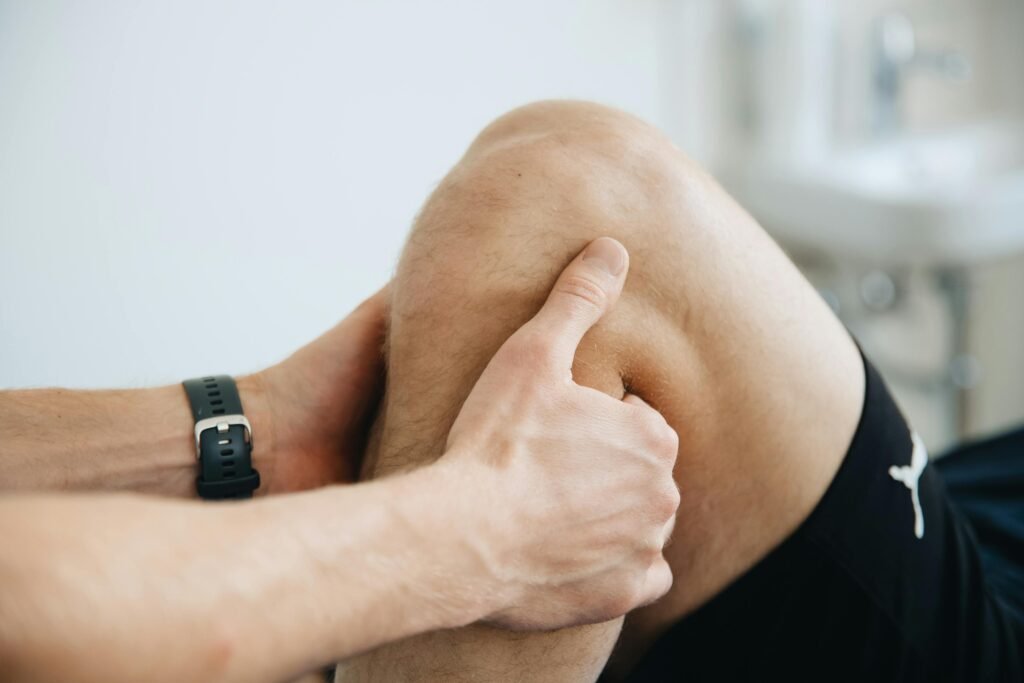
Knee osteoarthritis impacts the entire joint. The cartilage, which is the smooth tissue at the ends of bones, can become thinner and change. The bone underneath and the tissues around the joint can also change. Muscles that help you move may get weaker, especially if pain leads to being less active. This explains why knee osteoarthritis can change how your joint feels and how confident you are using it. See the NIH overview of osteoarthritis.
Common symptoms are pain during or after activity, stiffness after sitting or when you wake up, and sometimes swelling or trouble bending or straightening your knee. Symptoms can come and go. You might have a tougher week after changing your activity, or for no clear reason. Two people with similar X-ray results can feel very different levels of pain or have different trouble walking. A good assessment looks at what you’re feeling and which daily tasks have become harder.
The UK National Institute for Health and Care Excellence, or NICE, says osteoarthritis can often be diagnosed clinically in adults aged 45 or older who have activity-related joint pain and either no morning stiffness or stiffness lasting no longer than 30 minutes. Imaging may be appropriate when symptoms are atypical or another diagnosis is suspected. Symptom severity and their impact on function should guide management. Read the NICE osteoarthritis recommendations.
For more on how imaging can shape expectations, see Do X-Rays for Knee Osteoarthritis Change Patient Beliefs About Treatment?
How the 2025 BMJ review compared exercise programmes
Lei Yan and colleagues reviewed trials published from 1990 to 2024. They sorted exercise programs into six groups. Aerobic exercise included activities that build endurance. Strengthening used resistance to work muscles. Flexibility focused on how far you can move. Neuromotor exercise trained balance, coordination, or control. Mind–body exercise mixed movement with things like attention or breathing. Mixed exercise combined two or more types.
The researchers looked at pain, physical function, walking performance (called gait), and quality of life. Gait means how a person walks and how they do on walking tests. Physical function covers things like standing, using stairs, or moving around at home. You might see improvement in one area before another. The review grouped results at about four, 12, and 24 weeks, using the closest available measurements if the exact timing wasn’t there.
The study used a network meta-analysis. Normally, pooled comparisons combine trials that test the same two options. A network analysis can also estimate differences indirectly. For example, if some studies compare aerobic exercise to usual care and others compare strengthening to usual care, researchers can use the shared comparison to estimate how aerobic and strengthening exercises compare. This way, they can use more of the available evidence, even if few trials directly compare the two.
How helpful an indirect comparison is depends on how similar the trials are in important ways. People in the studies might have started with different pain levels, control groups might have gotten different advice, and some programs may have had more supervision. The network approach gives a broad overview of the evidence. Direct trials are still needed to see if the rankings hold up when two programs are given to similar groups under the same conditions.
Which exercise performed best, and for what?
Aerobic exercise ranked highest overall in the outcomes the authors looked at. The strongest evidence was found in certain time periods, but other types of exercise also showed helpful results. The table shows some key findings compared to control groups.
| Follow-up | Exercise results to know |
| About 4 weeks | Aerobic exercise probably reduced pain and improved quality of life. Mind–body exercise probably improved physical function, and neuromotor exercise probably improved walking performance. |
| About 12 weeks | Aerobic exercise probably improved pain, physical function, and walking performance. Strengthening and mixed exercise probably improved physical function. |
| About 24 weeks | Mixed exercise probably improved walking performance. Flexibility exercise may have reduced pain, and aerobic exercise may have improved physical function. Evidence for the last two findings was low certainty. |
At about 12 weeks, aerobic exercise was estimated to reduce pain by −1.19 standard deviations compared to control, with a 95% confidence interval from −1.59 to −0.79 and moderate certainty. The minus sign means less pain. Using a standardised measure lets researchers combine results from trials that used different scales. This doesn’t mean everyone’s pain dropped by 1.19 points out of 10, and it can’t predict how much any one person will improve. See the BMJ results and evidence ratings.
The four-week results also show why the outcome matters. A balance and coordination programme can improve a walking test because it practices control and stepping. Aerobic exercise can improve the ability to sustain activity. Resistance training can help with tasks that require force, such as rising from a chair. All three may make daily movement easier, but improvement in one capability can come sooner than improvement in another.
Does the review tell us whether walking beats cycling?
The main result of the review is about aerobic exercise as a whole. Different aerobic programs use different equipment, last for different times, go at different speeds, have different levels of supervision, and put different amounts of weight on the knee. If you can walk comfortably outside, you might choose walking because it directly practices what you want to get better at. If walking for a long time is hard, stationary cycling might be easier. Some people also find water-based exercise helpful if they have access to a pool.
The review’s overall ranking fits with several types of aerobic exercise. The study gives stronger evidence about broad exercise categories than about the best specific activity, exact amount, or setting. A 2026 review looked at how intense aerobic exercise should be, but the evidence was too uncertain to pick a clear best level. This means you can adjust the challenge to your current ability and build up over time. Read the 2026 review of aerobic exercise intensity.
Why strengthening still matters
Standing up from a chair, climbing stairs, and stepping down all need your leg muscles to produce and absorb force. The quadriceps at the front of your thigh help straighten your knee and control how it bends when you put weight on it. Hip and other leg muscles also help with movement and balance. Strengthening exercises let you practice these skills in a planned way, with tasks chosen to match your needs and the movements you want to get better at.
The BMJ review found moderate-certainty evidence that strengthening improved physical function at about 12 weeks compared to control. A mixed programme can combine strength work with endurance, mobility, or balance. What counts as mixed varies by trial. The label means the programme had more than one part, but the details show what was done and how often. So, two mixed programs can be quite different for participants.s.
A 2026 randomised trial led by Hossain in Bangladesh gives a more specific example. It compared an eight-week home strengthening program plus lifestyle advice to a group that got pain medication and lifestyle advice. Out of 247 adults aged 45 to 70, those in the home program improved more in pain and function during the study. The trial compared these two care packages over eight weeks. It didn’t directly compare strengthening with aerobic exercise or show how long the improvement would last. Read the 2026 home-exercise trial.
When deciding what to do at home, having clear goals can help you choose exercises. If you want to use stairs more confidently, you might practice movements that build the strength and control needed for that. If your main goal is to walk to the shops, focus on aerobic activity, but add strength work if weakness is holding you back. The best starting exercise is one that’s hard enough to help you improve but easy enough to do regularly.
What a 2026 review added about combining exercise types
A second network meta-analysis, published in the Journal of Orthopaedic & Sports Physical Therapy in 2026, focused on aerobic exercise, resistance exercise, and programmes combining the two. It included 35 trials and 3,808 participants. Combined training at up to 12 weeks had the largest estimated effects on pain, physical function, and quality of life in that analysis. Confidence in those estimates was low, and the authors found limited evidence about whether the long-term effects were clinically important. Read the 2026 exercise-type review.
The reviews compared things in different ways. The BMJ mixed category might include combinations like strengthening and flexibility, while the 2026 review focused on combining aerobic and resistance training. The timing of results was also grouped differently. When looking at these rankings, it’s important to know which activities were grouped and when their effects were measured. The newer review suggests it can be helpful to combine endurance and strength exercises if both match a person’s goals.
Where balance, flexibility, and tai chi fit
A slow-paced tai chi class might be a good choice for someone who wants to work on movement and coordination with others. A structured balance program can help with specific issues, like feeling unsteady when turning or changing direction. These methods can overlap. Researchers put programs into categories for their analysis, but a single class may work on several skills at once.
Flexibility exercises serve a different purpose. They can help when bending or straightening the knee is hard and makes tasks like getting into a car difficult. The BMJ review found there might be some pain relief after 24 weeks, but the evidence was not strong. If someone also wants to improve walking endurance or make standing easier, mobility work can be part of their plan. The key is to figure out which movement is limited and whether the problem is due to stiffness, weakness, or not feeling confident with that activity.
How large are the benefits in everyday life?
The BMJ results look encouraging, but the estimated benefit changes with the studies, outcome scales, and comparison groups used. An independent 2024 Cochrane review included 139 trials of land-based exercise. Compared with usual care, no treatment, or limited education, exercise improved pain by about 13 points out of 100 and physical function by about 12.5 points out of 100 immediately after the intervention. Estimated gains were smaller in some other comparisons, and the reviewers were uncertain how often the average differences would matter to patients. Read the Cochrane review and patient summary.
These two reviews looked at different questions. Cochrane grouped all land-based exercise and compared it to different control groups. The BMJ team estimated effects by exercise type and follow-up time, using both direct and indirect comparisons. The BMJ’s results, given in standard deviations, can’t be directly compared to Cochrane’s 100-point scale. Taken together, the reviews support including exercise in care and show that the size of the benefit is less certain than a simple ranking might suggest.
Daily goals offer another way to measure progress. For example, you might finish a short shopping trip with fewer breaks or stand up from your usual chair more easily. These are changes you can notice, even if your pain score changes from day to day. Sometimes, people feel less pain before they can walk farther. Tracking a specific task along with symptoms gives a better picture of whether an exercise program is working.
The type of control group also affects what the results mean. In one Cochrane comparison, people in the control group got attention or a placebo treatment. The estimated pain improvement there was about nine points out of 100, but the certainty was low. This is different from comparing a structured program to just giving limited advice. Spending time with a professional, getting encouragement, and help with practical problems can change what people do and how they feel about their care. Reviews that combine different trials have to consider these differences as much as possible based on the available reports.
Statistical certainty and what matters to each person are different things. A group average might mean big improvements for some people, small changes for others, and little or no change for a few. If the average is close to the point where improvement is meaningful, patients can decide for themselves if they are making progress. A walking test might show a change in a controlled setting, but someone may care more about being able to walk to the bus stop without needing a break.
What the research can and cannot tell us about safety
The BMJ authors did not find a clear difference in reported side effects between exercise groups and controls. Only 40 out of 217 trials, or about 18%, reported on safety. Because of this limited reporting, reviews can’t say much about rare events or differences between types of exercise. Cochrane also found that estimates of side effects changed depending on the comparison and were often uncertain. These results suggest it’s important to talk about how well someone tolerates an exercise and to adjust it if needed.
NICE says joint pain can get worse when starting therapeutic exercise, but sticking with it has benefits. Some discomfort is just one thing to notice. It’s also important to see what happens after exercise. If pain keeps getting worse, new swelling appears, or it becomes harder to do normal activities, it’s time to review the program with a clinician or physiotherapist. Changing the movement, effort, or recovery time may help make the activity work better for the person.
A suddenly hot, red, swollen knee with fever or feeling unwell needs urgent assessment. Inability to move the knee or put weight on it also warrants urgent care, particularly after an injury. Those situations call for an assessment of the cause before resuming an exercise programme. See NHS guidance on urgent knee symptoms.
How to choose exercise around a daily goal
Start with a movement you want to make easier.
A goal such as walking comfortably to the end of the street is easier to evaluate than a broad aim to “get fitter.” For someone in that situation, short bouts of walking on a level surface may be a practical way to practise the activity. Stationary cycling could provide an aerobic option if stepping repeatedly is the current barrier. Someone focused on getting up from a chair may choose a strengthening activity that practises a similar movement with suitable support.
How well someone tolerates an activity can depend on small details. Walking outside means dealing with different surfaces, slopes, shoes, and sometimes a return trip that can’t be shortened if symptoms get worse. Cycling gives support from the seat and lets you adjust the effort, but you still need enough knee bend to pedal comfortably. The best option may change as symptoms, confidence, and access to equipment change.
Make the first version repeatable.
NICE recommends that exercise should be tailored to each person and suggests thinking about supervised sessions. Supervision can help someone learn the right movements, decide if they need balance support, and find an effort level they can repeat. This is especially useful if a knee gives way often or if someone is returning to exercise after a long break. Home exercise can also work well if the plan is clear and there’s a way to get help or make changes when needed.
How long you walk, how fast, whether there are hills, the resistance, and how often you exercise all affect how hard it is. Changing just one thing at a time makes it easier to see what your knee can handle. If someone increases walking distance and adds hills in the same week, it can be hard to know which change was too much. Progress can also mean doing the same exercise with better control, less tiredness, or fewer symptoms later in the day.
Look for a pattern across several weeks.
One easy way to track progress is to use a familiar route or task and notice how it feels over time. How often do you need breaks? Is it easier to get up from your usual chair? Can you handle stairs with more confidence? It helps to check your symptoms later that day and the next day, especially after changing your routine. One good or bad session doesn’t tell the whole story. Using the same route or chair makes it easier to compare. If you change the setting, like walking on a steeper path, make a note of it so you know why the activity felt harder.
People can adjust their exercise plans based on practical things like safe places to walk, the weather, work shifts, or access to equipment. An indoor hallway, a stationary bike, or a good home program can meet different needs. A routine should give you a chance to practice the movements or build the endurance you want. If a plan needs equipment or travel you rarely have, it may be hard to keep up, even if the exercises worked well in studies.
Fit exercise into the rest of care.
Exercise is just one part of caring for osteoarthritis. Learning more can help people understand why symptoms change and how to adjust their activities. For adults with osteoarthritis who are overweight or obese, NICE suggests talking about weight management as another option. Some people may also need pain relief guided by a clinician or a walking aid to make daily life easier. The right mix depends on how symptoms affect someone and what matters most to them.
Reviewing care is particularly important when pain or loss of function continues to have a substantial impact on quality of life. NICE advises considering referral for joint replacement when that impact is substantial and nonsurgical care is ineffective or unsuitable. That decision takes the person’s overall situation into account. It cannot be predicted from their place in an exercise trial or how their knee looks on an image.
What still needs better evidence?
The main results from the BMJ review are most convincing in the first few months. The 24-week comparison covers only about half a year, while knee osteoarthritis can last for many years. Some outcomes had little long-term data, and the authors noted that small studies may have influenced some pain and quality-of-life results. There were fewer studies on quality of life than on pain. So, how much we can trust the rankings depends on the outcome, the timing, and how strong the comparisons are.
The studies also differed in who took part and how the exercise was given. Supervised programs can offer help with technique, encouragement, and changes when symptoms shift. Written home programs might be easier to access but need other types of support. Researchers could make the evidence stronger by directly comparing programs with similar amounts of contact and by tracking how much of each program people actually did. Sharing information about symptoms, side effects, participation, and results after six months would also help people weigh the pros and cons.
The main things measured were symptoms and how well people could function. The review did not show that the best exercise helps regrow cartilage or stops the need for a future knee replacement. People can feel less pain or walk better even if their joint structure does not change. Longer studies with scans or other tests would be needed to answer questions about changes in the joint. In everyday care, being able to walk farther or use stairs more easily is a real benefit on its own.
Key takeaway
The main takeaway from the BMJ review is that aerobic exercise can help with several important issues in knee osteoarthritis, especially pain and walking ability in the first few months. Strength training can make daily tasks easier, and balance or mixed exercises are helpful when steadiness and walking are the main concerns. An exercise program works best when it can be repeated, changed as symptoms change, and matched to a goal that matters to the person.
References
1. Hossain KMA, et al. Eight-week strengthening-based home exercise trial for knee osteoarthritis. Health Science Reports. 2026. Journal article
2. Yan L, Li D, Xing D, et al. Comparative efficacy and safety of exercise modalities in knee osteoarthritis. The BMJ. 2025. Full article
3. Lawford BJ, Hall M, Hinman RS, et al. Exercise for osteoarthritis of the knee. Cochrane Database of Systematic Reviews. 2024. Review and plain-language summary
4. National Institute for Health and Care Excellence. Osteoarthritis in over 16s, guideline NG226. Clinical recommendations
5. 2026 network meta-analysis of exercise type and duration. Journal of Orthopaedic & Sports Physical Therapy. PubMed record
6. 2026 systematic review of aerobic exercise intensity for knee osteoarthritis. PubMed record