


Discussions of parental age and its effects on children’s health have traditionally focused on mothers. The well-established risks associated with advanced maternal age, such as chromosomal abnormalities, miscarriage, and pregnancy complications, have shaped reproductive medicine for decades. However, a landmark study published in Nature is now drawing significant attention to paternal age, with notable findings.
Researchers from the Wellcome Sanger Institute sequenced sperm from 57 healthy men aged 24 to 75, using an ultra-sensitive technique capable of detecting mutations in single DNA molecules. The results indicate that sperm accumulate harmful mutations over a man’s lifetime, suggesting that evolutionary processes may contribute to this phenomenon.
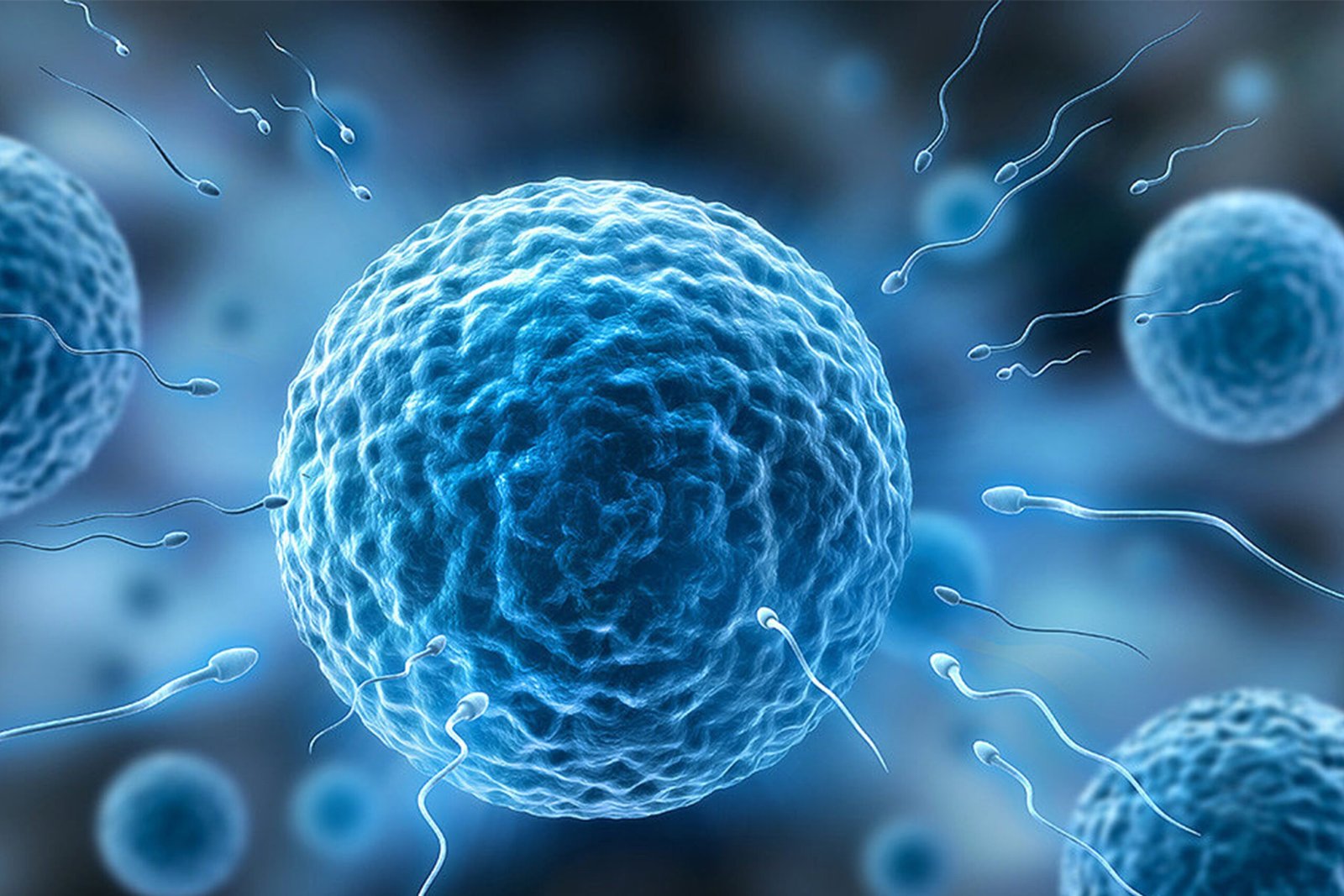
Sperm accumulate mutations with age, but at a much slower rate than other cell types.
Every time a cell divides, there’s a chance it will make a small copying error in the DNA. Spermatogonial stem cells, the cells in the testes that continuously produce sperm, divide throughout a man’s life, producing somewhere between 150 and 275 million sperm per day. Over time, these divisions accumulate mistakes. The study determined that sperm accumulate approximately 1.67 new DNA mutations per year per haploid genome (each sperm contains one copy of the genome). Although this number may appear substantial, it is about eight times slower than the mutation rate observed in blood cells. The male germline, the cell lineage responsible for producing sperm, appears to possess unusually robust protection against mutation.
This process can be likened to a library copying books by hand: blood cells generate approximately 20 imperfect copies per year, while sperm-producing cells produce fewer than 2. Although the copies made by sperm-producing cells are more accurate, errors still accumulate over a lifetime.
The underlying force influencing sperm: positive selection
A notable aspect of this research is that not all sperm mutations have equivalent effects. Certain mutations confer a competitive advantage to spermatogonial stem cells, enabling them to divide more rapidly, survive longer, or produce more sperm than neighboring cells. As a result, these mutant cells can gradually outcompete normal cells in the testes, leading to an increasing proportion of sperm carrying the specific mutation.
This process, known as positive selection, represents the same fundamental mechanism that drives cancer. However, in the testes, these advantageous cells do not form tumors; instead, they produce sperm. Importantly, sperm can transmit these mutations to offspring.
The researchers identified 40 genes in which this kind of selection is actively occurring in sperm, 31 of them newly discovered. Many of these genes are familiar from cancer biology: KRAS, BRAF, HRAS, FGFR2, FGFR3, PTPN11, NF1, and others. These aren’t random coincidences. Mutations that promote cancer cell proliferation often also promote spermatogonial stem cell proliferation. The same molecular shortcuts that drive tumor growth can drive clonal expansion in the testes.
40 Genes under positive selection in sperm, including 31 newly identified
8× Slower mutation rate in sperm than in blood cells
Three to five percent of sperm in men over age fifty carry a likely disease-causing mutation.
2–3× Increased risk of disease mutations in sperm due to positive selA novel
Risk: mutations that become increasingly prevalent through evolutionary processes are common
This insight distinguishes the current research from previous studies. Earlier work had identified a limited number of specific “selfish” mutations, so named because they benefit the stem cell but may harm the offspring. The most prominent example involves mutations in the FGFR3 gene, which can cause achondroplasia (the most common form of dwarfism) and become significantly more prevalent in the sperm of older men.
By sequencing the entire exome (the protein-coding portion of the genome) of sperm rather than focusing solely on known hotspots, this new study demonstrates that the phenomenon is far more widespread than previously recognized. Mutations in forty genes, many of which are associated with serious developmental disorders in children or are established cancer drivers, are selectively enriched in sperm as men age.
The study found that, across all participants, approximately 3.3% of sperm carried a likely disease-causing mutation. Among 30-year-olds, this figure was about 2%, increasing to roughly 4.5% in 70-year-olds. Notably, positive selection, rather than the mere accumulation of random mutations, accounted for about one-third of this elevated disease burden.
Reasons for the association between these mutations and serious conditions
The overlap among germline selection genes, cancer genes, and developmental disorder genes is not coincidental. The same cellular pathways, particularly the RAS–MAPK signaling pathway that regulates cell growth and division, are implicated in all three contexts. Mutations in genes such as PTPN11, HRAS, and KRAS can cause Noonan syndrome, a developmental disorder affecting the heart and growth, when inherited. These mutations also drive certain cancers in somatic cells and confer a growth advantage to spermatogonial stem cells in the testes.
Most of the thirty-one newly discovered selection genes were found to operate through mechanisms different from those previously described. Rather than “activating” mutations that initiate growth signals, these genes often harbor “loss-of-function” mutations that inactivate proteins that normally inhibit cell division. Both types of mutations can provide a selective advantage in stem cells and can cause disease in offspring.
Lifestyle factors: unexpected findings regarding risknce
A notable finding relates to lifestyle factors. The study assessed whether body mass index, smoking, and alcohol consumption influenced mutation rates or disease burden in sperm and found no significant effects for any of these variables. While smoking and alcohol consumption affected mutation patterns in blood, the germline appears largely protected from these environmental exposures.
However, this does not imply that lifestyle is irrelevant to reproductive health, as sperm count, motility, and DNA fragmentation can all be influenced by lifestyle choices. Regarding the specific selection-driven mutation burden described in this study, age emerges as the dominant factor rather than lifestyle habits.
What does this mean in practice?
It is important to clarify the implications of these findings. The presence of a disease-related mutation in sperm does not guarantee that a child will inherit the associated condition. Many pathogenic variants in sperm may not result in live births, as they can impair fertilization, be embryonic lethal, or fail to cause disease if not appropriately expressed. The relationship between sperm mutation frequency and the prevalence of disease at birth remains under investigation.
Furthermore, the average paternal age at conception is significantly lower than the cohort’s upper age limit. Consequently, the practical impact on population-level birth outcomes is likely more modest than the headline statistics suggest.
Nevertheless, these findings strongly indicate that paternal age is an underappreciated variable in reproductive health planning. The risk is genuine, increases with age, and involves a broader range of genes and mechanisms than previously recognized.
The researchers also highlight an important consideration for genetic research: some mutations previously attributed to disease-causing genes in studies of children with developmental disorders, particularly MIB1, may actually reflect germline selection in the father rather than a true disease association. This distinction could influence the interpretation of genetic testing results for certain conditions.
Broader implications: evolutionary processes operating simultaneously at multiple levels
A particularly notable finding is the contrast between processes occurring at the individual level and those observed across generations. In the testes of an individual, positive selection increases the prevalence of certain mutations in sperm over time. However, at the population level, these same mutations are subject to negative selection, as individuals who inherit harmful mutations are less likely to survive or reproduce, thereby maintaining their presence in the gene pool. Thus, positive selection operates in the short term, while negative selection acts across generations.
This phenomenon exemplifies evolution in action, occurring both within an individual’s lifetime and across human history. The germline, which connects successive generations, is not a static archive of inherited information but rather a dynamic landscape in which individual cells compete, and the successful cells contribute to the next generation.
As trends toward delayed reproduction continue globally, understanding the full scope of paternal age effects will become increasingly important for individuals making reproductive decisions, clinicians providing genetic counseling, and researchers designing future genomic studies.
Reference
Neville MDC, Lawson ARJ, Sanghvi R, et al. Sperm sequencing reveals extensive positive selection in the male germline. Nature. 2025.