
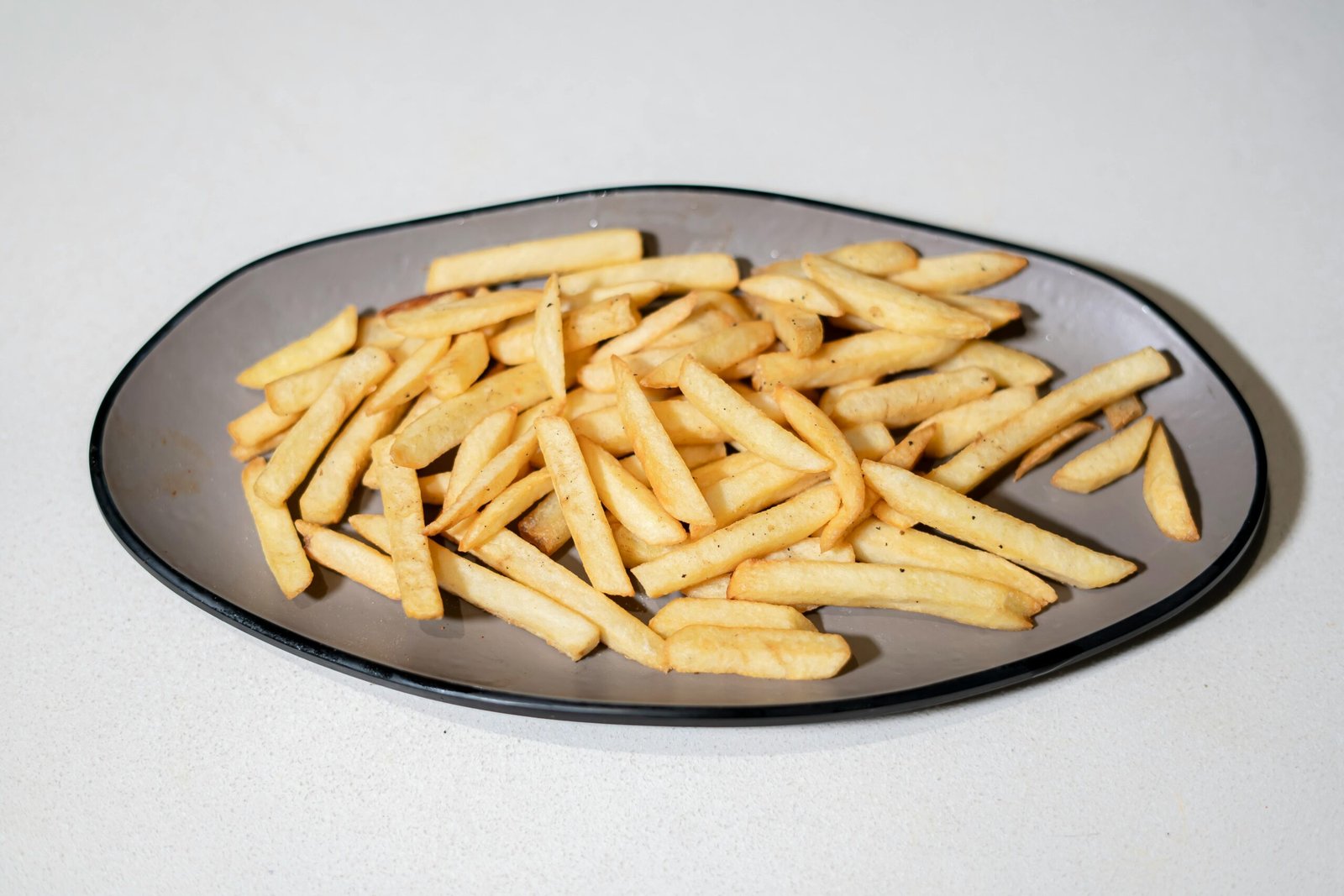

Fried foods are ubiquitous due to their appealing sensory qualities, including a crispy exterior, fluffy interior, and rich flavor. Deep frying has created a culinary experience that has persisted for millennia. However, significant health concerns remain. Conventionally fried foods are high in calories and fat, and are associated with increased risks of obesity, heart disease, and type 2 diabetes. This presents a central challenge in food science: how to retain the desirable qualities of fried foods while reducing their negative health impacts.
A 2026 study published in Current Research in Food Science by researchers at the University of Illinois offers a promising advancement toward this goal, utilizing a technology already present in most kitchens: microwaves.
Why Conventional Frying Loads Food With Oil
Understanding the significance of microwave frying requires first examining why conventional deep frying results in high oil absorption in foods.
When a French fry is immersed in hot oil, its surface heats rapidly, causing moisture to escape as steam. This process generates internal pressure that initially resists oil penetration. However, as frying progresses, the surrounding oil cools, slowing the heating process and reducing internal pressure. When the pressure drops below zero, known as negative gauge pressure, the food absorbs oil into its porous structure.
This phenomenon explains the high oil content in fried foods. The reduction in internal pressure effectively creates a vacuum, drawing oil deep into the food’s porous matrix, particularly during the later stages of cooking.
Enter Microwave Frying: Heating From the Inside Out
Microwave frying combines conventional hot oil, which heats the food’s surface, with microwave radiation, which heats the food internally. Unlike hot oil, microwaves do not depend on a temperature gradient; instead, they penetrate the food and convert electromagnetic energy into heat throughout its interior.
This internal heating results in the development and maintenance of higher internal pressure than is possible with conventional frying alone.
Elevated internal pressure increases resistance to oil penetration.
Researchers at the University of Illinois conducted detailed simulations of microwave frying at two frequencies, 2.45 GHz (the standard frequency for home microwave ovens) and 5.8 GHz, and compared these results with conventional deep-frying of French fries at 180°C.
What the Study Found: Faster, Crunchier, and Less Oily
The results demonstrated significant differences across all measured parameters.
Microwave frying at 2.45 GHz reduced frying time by 33-76% compared with conventional methods. At 5.8 GHz, cooking times decreased by 36 to 42%. These reductions have substantial implications for the food industry, where time efficiency directly affects energy costs and production capacity.
At the equivalent endpoint moisture content, the industry standard for doneness, microwave-fried French fries at 2.45 GHz contained up to 33% less oil than conventionally fried samples. At 5.8 GHz, oil reduction ranged from 3 to 5%.
Microwave frequency also affects crust texture. Microwaves do not distribute energy uniformly; instead, they penetrate to a specific depth, known as the penetration depth, before their energy is absorbed. At 2.45 GHz, microwaves penetrate deeper into the French fry, while at 5.8 GHz, energy is concentrated closer to the surface.
Surface-focused heating at 5.8 GHz causes the crust to dry and thicken more rapidly. Stress relaxation of French fries prepared with 5.8 GHz microwave frying was measurably stiffer, indicating increased crunchiness, compared to those produced by either al frying or 2.45 GHz microwave frying. Thus, the two frequencies present a trade-off: 2.45 GHz achieves greater oil reduction, while 5.8 GHz provides enhanced crust texture.
The Science of Pore Pressure: Why This Actually Works
The oil-reducing effect of microwave frying is attributed to pore pressure, which is the pressure exerted by fluids such as water, steam, and oil against the internal walls of a food’s porous structure.
A French fry can be conceptualized as a sponge containing numerous interconnected channels. During frying, water within these channels vaporizes and expands, generating pressure that pushes outward and resists oil infiltration. Higher and more sustained internal pressure results in reduced oil absorption.
The problem with conventional frying is that heating is slow and uneven, hot oil can only heat the surface, and the temperature gradient between oil and food diminishes rapidly as frying progresses. Internal pore pressure peaks early and falls quickly, allowing oil to rush in during the back half of the cooking process.
Microwave frying changes this dramatically. Because microwaves heat the interior of the food directly and continuously, pore pressure builds faster, reaches higher peak values, and stays elevated longer. The research showed that peak pore pressures during microwave frying were significantly higher than during conventional frying, and this sustained internal resistance is precisely what keeps oil out.
Researchers observed that as the outer layers of the fry dry during microwave frying, microwave power dissipation follows the drying front inward. Consequently, microwave energy continues to heat the subsequent moist layers beneath the dry crust, progressively increasing pressure and thickening the crust throughout the frying process. This self-reinforcing mechanism is not achievable with conventional frying.
What About Taste and Texture?
A healthier French fry that lacks palatability does not constitute a viable solution; it merely poses a different challenge.
Previous alternatives to conventional frying have encountered similar challenges. Air frying yields fries with a puffed-up appearance and a noticeably dry mouthfeel. Although vacuum frying effectively reduces oil content, it requires costly equipment and an additional de-oiling step after cooking. Neither method has successfully replaced deep frying in commercial applications.
Microwave frying addresses many of these challenges. Since the food remains submerged in hot oil, it retains the surface contact and lipid coating that give fried foods their characteristic flavor and mouthfeel. The internal moisture and oil dynamics are managed more effectively, rather than eliminated. Sensory research by Parikh and Takhar (2016) found no significant differences in overall liking between microwave-fried and conventionally fried potatoes, providing important evidence of this technology’s potential to replace established frying methods.
Why 2.45 GHz vs. 5.8 GHz Matters
Microwave ovens typically operate at 2.45 GHz, a frequency within the industrial, scientific, and medical (ISM) bands designated for non-communication purposes. This frequency is effective for heating food, and the supporting infrastructure is widely available.
The 5.8 GHz frequency is a more recent development in food applications and provides a distinct heating profile. Microwaves at higher frequencies have a shorter penetration depth, concentrating energy near the food’s surface rather than its core. This property enhances surface crisping and crust formation, which are critical attributes in fried foods.
In practical terms:
- Choose 2.45 GHz if the goal is maximum oil reduction and faster cooking times.
- Choose 5.8 GHz if the goal is maximum crunchiness and a thicker, crispier crust.
For food manufacturers, this technology enables tunable frying, allowing precise control over oil content and texture profiles for specific products.
What This Means for Public Health
The implications of this research extend beyond food technology. Consumption of fried foods, particularly French fries and potato chips, is a major contributor to excess calorie intake globally. Frequent consumption, defined as four or more servings per week, is associated with increased risks of obesity, hypertension, heart failure, and type 2 diabetes.
If microwave frying can provide a comparable sensory experience with one-third less oil, the reduction in caloric intake across millions of servings daily could be substantial. Restaurants, institutional food services, and packaged food manufacturers could lower the fat content of fried products without altering key consumer-facing attributes such as taste, appearance, or texture. These qualities have previously hindered the adoption of healthier frying alternatives.
The Road Ahead
Researchers acknowledge that the technology is not yet ready for large-scale production. The current prototype fryer exhibits a non-uniform electric field distribution, resulting in inconsistent cooking rates for fries positioned differently in the oil. Achieving uniform product quality would require continuous movement of fries during cooking, a standard practice in conventional commercial fryers, which would require further engineering for microwave integration.
Additionally, a feedback issue exists: as the oil heats during microwave frying, its temperature can vary by up to 8°C across the oil bath. Implementing an automatic power-adjustment system linked to oil-temperature sensors would be necessary to ensure consistent commercial performance.
But the physics are proven, the models are validated, and the results are clear. Microwave frying produces faster-cooked, less oily, potentially crunchier French fries with no meaningful sacrifice in sensory quality.
The deep fryer has been the predominant method in commercial kitchens for decades. Microwave frying may represent the first substantive alternative.
Reference
Shah, Y., & Takhar, P. S. (2026). Predicting the quality changes during microwave frying of food biopolymers by solving the hybrid mixture theory-based unsaturated transport and electromagnetics equations. Current Research in Food Science, 12, 101264. https://doi.org/10.1016/j.crfs.2025.101264