
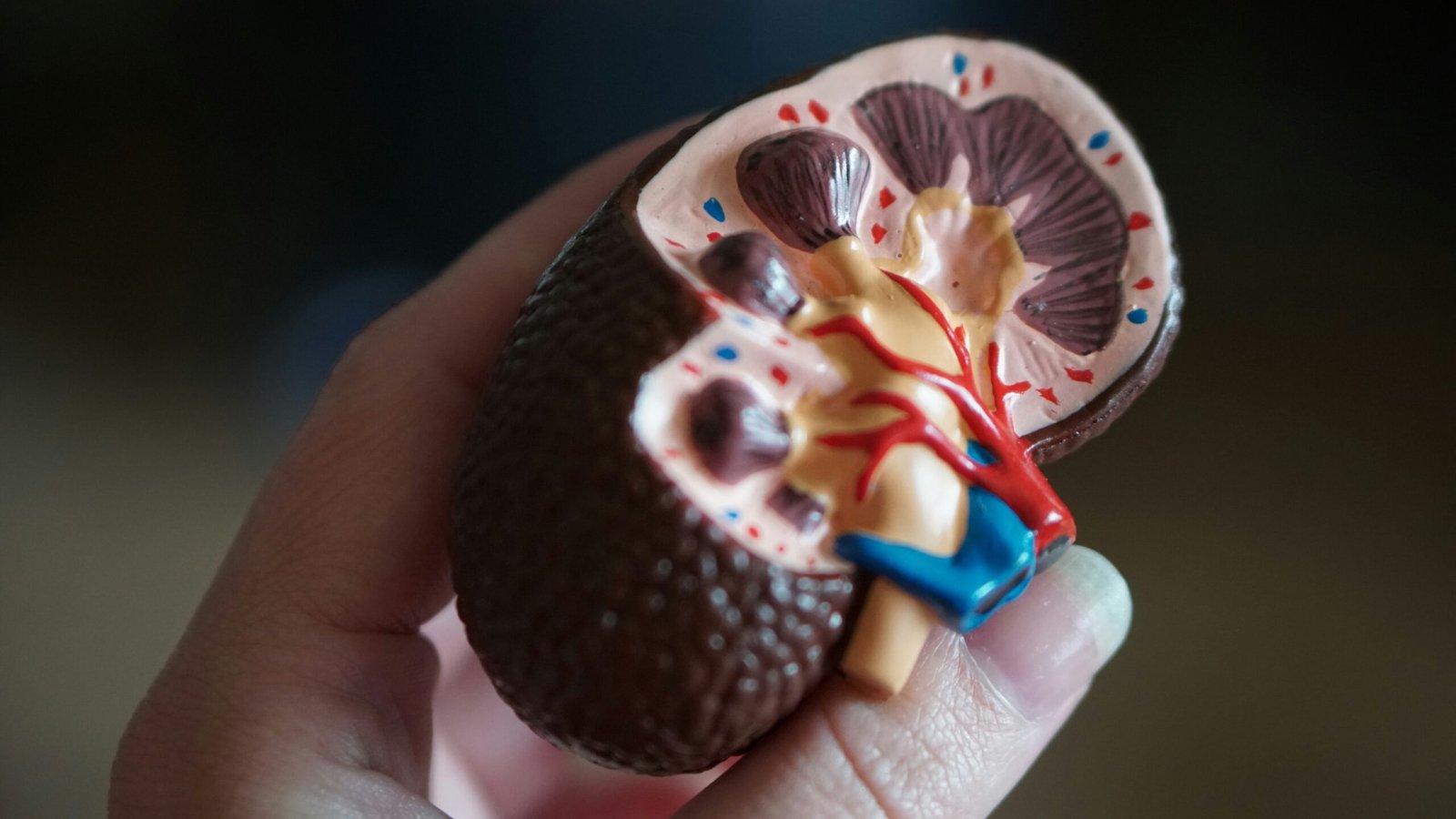

Millions of individuals with chronic kidney disease (CKD) experience progressive loss of kidney function, and most current pharmacological interventions merely slow this decline rather than halt it. Recent findings indicate that a drug initially developed for constipation may provide a novel approach to kidney protection. Researchers now hypothesize that the underlying mechanism involves the gut.
A phase 2 clinical trial published in Science Advances in August 2025 demonstrated that lubiprostone, a chloride channel-activating laxative, helped preserve kidney function in patients with moderate CKD. Notably, the drug does not act directly on the kidney but instead modifies the gut microbiome, increasing production of spermidine, a compound that protects kidney cells at the mitochondrial level.

What Is Chronic Kidney Disease And Why Is It So Hard to Treat?
Chronic kidney disease affects approximately one in ten individuals worldwide, and its progression remains challenging to arrest. As kidney function deteriorates, the organs lose their capacity to filter waste from the blood, ultimately necessitating dialysis or transplantation. Standard therapies, such as ACE inhibitors, SGLT2 inhibitors, and GLP-1 agonists, can slow disease progression; however, the incidence of end-stage renal disease has not decreased substantially.
An often overlooked aspect of CKD is its association with gastrointestinal health. Individuals with CKD commonly experience constipation, gut microbiome imbalances (dysbiosis), and increased intestinal permeability, sometimes referred to as “leaky gut,” which allows bacterial toxins to enter the bloodstream. These factors promote systemic inflammation and contribute to the accumulation of uremic toxins, which the impaired kidneys cannot effectively eliminate. Notably, constipation has been associated with accelerated kidney function decline in several observational studies.
This observed gut-kidney relationship prompted researchers to investigate whether treating constipation with an appropriate pharmacological agent could confer renal protection.
The Trial: 118 Patients, 24 Weeks, Three Groups
The LUBI-CKD TRIAL enrolled 118 patients at nine hospital centers in Japan. All participants had stage IIIb–IV CKD, corresponding to kidney function between 25 and 45 percent of normal capacity. Participants were randomly assigned to receive either a placebo, lubiprostone 8 micrograms per day, or lubiprostone 16 micrograms per day for 24 weeks.
The study employed a double-blind design, in which neither patients nor clinicians were aware of treatment allocation, thereby ensuring rigorous assessment of the drug’s effects.
The primary goal was to determine whether lubiprostone would reduce blood levels of indoxyl sulfate (IS), a well-known uremic toxin associated with accelerated CKD progression. On that count, the drug came up short: it did not significantly reduce indoxyl sulfate or other uremic toxins measured in the trial.
But when researchers looked at kidney function itself, the picture shifted dramatically.
The Unexpected Finding: Kidney Function Preserved
Patients receiving the 16-microgram dose of lubiprostone exhibited statistically significant preservation of estimated glomerular filtration rate (eGFR), a primary indicator of renal filtration capacity. Over 24 weeks, the placebo group experienced an average decline of approximately 1.55 eGFR units, whereas the 16-microgram group demonstrated a slight improvement of 0.37 units. Although the difference of roughly 1.9 units appears modest, when annualized, it represents a clinically meaningful reduction in the decline in kidney function.
The 16-microgram group also showed significant improvements in blood urea nitrogen (BUN), another waste product that accumulates when kidneys fail, and a better preservation of the rate of kidney function decline over time.
Among participants with moderate CKD (eGFR 36-45), the lower 8-microgram dose of lubiprostone also demonstrated kidney-protective effects.
No cases of dehydration or serious electrolyte imbalances were observed, addressing a key safety concern in CKD patients who are susceptible to fluid and mineral disturbances. The most frequently reported adverse events were mild-to-moderate gastrointestinal symptoms, such as diarrhea, occurring in 12 to 16 percent of patients receiving lubiprostone.
The Mechanism: A Gut-to-Kidney Molecular Pathway
The underlying biological mechanisms are particularly noteworthy.
Because the drug worked without reducing uremic toxins, the researchers knew something else was going on. They conducted a comprehensive multiomics analysis, simultaneously examining the metabolome (all measurable metabolites in blood, urine, and stool), gut microbiome composition, and microbial gene functions in patients before and after treatment.
What they found was a clear chain of events:
1. Lubiprostone altered the gut microbiome. The drug increased populations of beneficial bacteria, including Roseburia, Blautia, and Marvinbryantia, while reducing harmful species like Clostridium perfringens and Desulfovibrio. These beneficial bacteria are known to produce short-chain fatty acids and support metabolic health.
2. Bacterial enzyme activity changed. One microbial enzyme in particular stood out: agmatine deiminase (aguA), a key enzyme in the pathway that converts the amino acid arginine into polyamines, a family of bioactive compounds that includes putrescine, spermidine, and spermine. The abundance of aguA-producing bacteria increased significantly in patients receiving lubiprostone.
3. Spermidine levels rose in responders. Among patients whose kidney function improved (“responders”), plasma levels of spermidine (SPD) were significantly higher after treatment than in the placebo group.
4. Spermidine protected renal mitochondria. Administration of directly administered spermidine to mice with experimentally induced kidney failure improved kidney function, enhanced renal tissue preservation, and resulted in a measurable restoration of mitochondrial health in kidney cells.
Advanced 3D confocal imaging demonstrated that kidney failure leads to mitochondrial fragmentation and shrinkage. Spermidine treatment reversed this process, restoring the elongated, interconnected mitochondrial networks essential for cellular energy production.RNA sequencing of kidney tissue confirmed these findings at the molecular level: spermidine suppressed the expression of inflammation-related genes and restored the expression of genes involved in mitochondrial energy production, including components of oxidative phosphorylation, the process by which mitochondria generate ATP.
Why This Matters
First, these findings challenge the prevailing assumption in CKD research that uremic toxins are the primary drivers of kidney decline. Lubiprostone preserved kidney function without reducing uremic toxin levels, suggesting that mitochondrial dysfunction and gut dysbiosis may also be critical therapeutic targets.
Second, the study identifies spermidine as a potential therapeutic agent in kidney disease. Spermidine is already recognized for its roles in supporting cardiovascular health, reducing age-related inflammation, and enhancing mitochondrial function in neurons. Its demonstrated role in renal protection broadens the scope of existing research.
Third, the findings highlight the gut-kidney axis as a real and manipulable pathway, one that can be targeted with safe, orally administered drugs already on the market.
The researchers also propose potential biomarkers for predicting response to lubiprostone, including baseline plasma urate levels, fecal Holdemania bacterial abundance, and fecal aguA enzyme activity, all of which appeared to differentiate responders from non-responders.
Limitations and What Comes Next
The trial included a relatively small sample size (118 patients), a 24-week duration, and an exclusively Japanese cohort, all of which limit the generalizability of the findings. The renoprotective effects were secondary endpoints in an exploratory trial and should therefore be interpreted with appropriate caution.
The authors recommend larger, longer-term, multi-ethnic trials that directly assess improvement in kidney function as the primary endpoint. They also suggest that lubiprostone may have additional mechanisms of action, such as direct effects on renal chloride channels or effects mediated by its active circulating metabolite, which warrant further investigation.
Given lubiprostone’s established safety profile and long-standing use in constipation, the threshold for initiating a larger confirmatory trial is comparatively low.
The Takeaway
A commonly used laxative appears to slow kidney decline not by eliminating toxins, but by modulating gut bacteria to produce a molecule that preserves kidney cells at the mitochondrial level. This finding illustrates the interconnectedness of physiological systems and highlights the gut-kidney axis as a promising yet underexplored therapeutic target.
For the estimated 850 million individuals worldwide living with CKD, advancing research into the gut-kidney axis represents an urgent priority.
References:
Watanabe, S., Nakayama, M., Yokoo, T., et al. (2025). Lubiprostone in chronic kidney disease: Insights into mitochondrial function and polyamines from a randomized phase 2 clinical trial. Science Advances, 11(35), eadw3934. https://doi.org/10.1126/sciadv.adw3934