
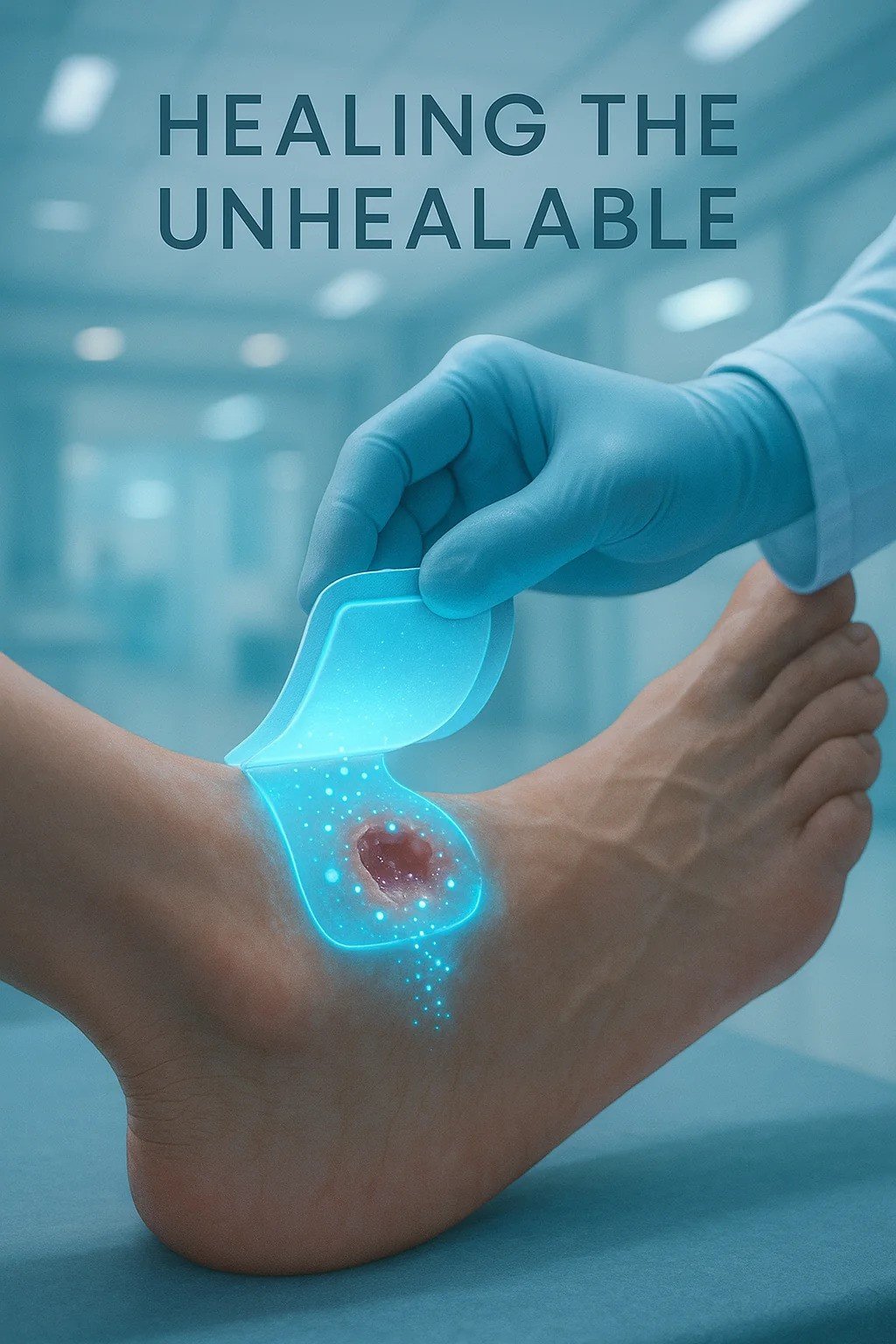

For many people with diabetes, even a minor skin injury can turn into a serious health issue. Wounds that usually heal in weeks might stay open for months, raising the risk of infection, hospital stays, and sometimes even amputation.
Researchers are working on new biomaterials that may help heal these stubborn wounds.
One promising idea is to use a soft, water-filled material called a hydrogel together with tiny biological particles called exosomes. This combination could help create better conditions for tissue repair.
In a pioneering study published in Theranostics in 2019, researchers led by Chenggui Wang developed an injectable, self-healing, antibacterial hydrogel that gradually releases exosomes derived from adipose mesenchymal stem cells.
Their experimental system improved wound closure, blood vessel formation, and skin tissue regeneration in diabetic animal models.
Recent studies, including reviews from 2025 and 2026, have increased scientific interest in this approach.
Still, these promising results don’t mean exosome-loaded hydrogels are proven treatments for chronic diabetic wounds. Most of the evidence so far comes from lab and animal studies.
It’s important to keep this in mind when thinking about the future of regenerative wound care.
Why Are Diabetic Wounds So Difficult to Heal?
Diabetes can interfere with several biological processes required for normal wound healing.
Healthy wound repair involves a coordinated sequence of inflammation, new tissue formation, blood vessel development, and remodelling.
For people with diabetes, this process can get disrupted.
1. Reduced Blood Circulation
Peripheral arterial disease can reduce blood flow to the legs and feet, limiting the delivery of oxygen and nutrients required for tissue repair.
If blood flow isn’t good enough, wounds can have trouble healing, even with the right dressings.
2. Peripheral Neuropathy
Diabetes can damage nerves, particularly in the feet.
This may reduce the ability to feel pain, pressure, or temperature changes.
Someone might keep walking on an injured spot without knowing more damage is happening.
3. Persistent Inflammation
Inflammation is essential during the early stages of healing.
But diabetic wounds can stay inflamed for too long, which stops normal tissue repair from moving forward.
Immune cells might not switch well from cleaning up damage to helping with repair.
4. Increased Infection Risk
Open wounds are vulnerable to microbial contamination and infection.
In some diabetic wounds, impaired immune responses and poor tissue perfusion make infections more difficult to control.
Bacterial biofilms can make treatment even harder.
5. Impaired Formation of New Blood Vessels
Angiogenesis, which means forming new blood vessels, is key for bringing oxygen and nutrients to healing tissue.
Diabetes can interfere with this process, limiting the growth of healthy replacement tissue.
All these challenges help explain why diabetic foot ulcers usually need care from several types of medical specialists, not just a simple dressing.
What Is a Hydrogel?
A hydrogel is a three-dimensional network of water-attracting polymers that can absorb and retain large quantities of fluid.
Since hydrogels hold a lot of water, they can act a bit like natural soft tissue.
Scientists have studied hydrogels for many uses, including drug delivery, tissue engineering, wound dressings, and regenerative medicine.
For chronic wounds, hydrogels may offer several advantages:
- Maintaining a moist wound environment.
- Conforming to irregular wound surfaces.
- Delivering therapeutic compounds locally.
- Supporting the movement and activity of repair-related cells.
- Providing a temporary matrix during tissue recovery.
Not all hydrogels have the same properties.
Standard hydrogel dressings are already used in some clinics, but newer experimental versions have extra features like antibacterial properties, injectable forms, and controlled release of biological compounds.
The 2019 Theranostics study investigated a multifunctional hydrogel designed to combine several of these capabilities.
The Original Research: An Injectable, Self-Healing Hydrogel
In 2019, researchers from Wenzhou Medical University and Xi’an Jiaotong University in China published a study titled:
Engineering Bioactive Self-Healing Antibacterial Exosomes Hydrogel for Promoting Chronic Diabetic Wound Healing and Complete Skin Regeneration.
The work appeared in Theranostics, volume 9, issue 1, pages 65–76.
The research team included Chenggui Wang, Min Wang, Tianzhen Xu, Xingxing Zhang, Cai Lin, Weiyang Gao, Huazi Xu, Bo Lei, and Cong Mao.
They designed a multifunctional hydrogel called FHE, based on a formulation involving F127, oxidised hyaluronic acid, and epsilon-poly-L-lysine.
The researchers then incorporated exosomes derived from adipose mesenchymal stem cells into the material, creating an exosome-loaded hydrogel known as FHE@exo.
The combined system was designed to address several barriers to diabetic wound repair simultaneously.
Original peer-reviewed paper: Wang et al., Theranostics (2019), DOI: 10.7150/thno.29766
Full open-access article: Theranostics, Engineering Bioactive Self-Healing Antibacterial Exosomes Hydrogel
Three Important Features of the Smart Hydrogel
The research team’s material combined three properties that could benefit wound treatment.
1. Injectability: Reaching Irregular Wound Spaces
Unlike rigid wound dressings, the FHE hydrogel exhibited shear-thinning behaviour.
This means the hydrogel can temporarily become more fluid when force is applied, like when it moves through a syringe.
Once the force was removed, the hydrogel could recover its structure.
This property is attractive for irregular wounds because an injectable formulation may conform to spaces that conventional dressings cannot easily cover.
But just because a material can be injected in the lab doesn’t mean it’s safe for treating deep or infected wounds in people.
2. Self-Healing: Recovering After Mechanical Disruption
The researchers designed the polymer network to restore its structure after being disrupted.
This behaviour is called self-healing.
In experimental tests, the hydrogel recovered rapidly after deformation or damage.
For wound care, self-healing could help a material remain in place despite changes in shape or movement.
It’s important to note that self-healing here means the hydrogel’s structure can repair itself, not that it can automatically heal human skin.
The biological healing effects must be evaluated separately.
3. Antibacterial Activity: Limiting Bacterial Growth
The hydrogel incorporated epsilon-poly-L-lysine, a polymer with antimicrobial properties.
Laboratory experiments demonstrated antibacterial activity.
This is potentially important because bacterial contamination can interfere with chronic wound repair.
Still, showing antibacterial effects in lab tests isn’t the same as treating a real diabetic foot infection in patients.
Severe diabetic wound infections may require systemic antibiotics, drainage, surgical intervention, and assessment of blood circulation.
What Are Exosomes, and Why Are They Important?
Exosomes are small extracellular vesicles released by cells.
They are surrounded by a lipid membrane and can carry biological molecules such as proteins, lipids, and RNA.
These vesicles participate in cell-to-cell communication.
Researchers are investigating whether extracellular vesicles derived from mesenchymal stem cells can influence biological processes involved in tissue repair.
The hydrogel study used exosomes obtained from adipose-derived mesenchymal stem cells.
Adipose tissue is commonly known as body fat.
Even though these vesicles come from stem cells, the treatment doesn’t involve putting live stem cells into the wound.
That’s why exosome-based therapies are considered a new, cell-free way to support tissue repair.
How Might Exosomes Help Chronic Wounds?
Laboratory and animal research suggests that stem-cell-derived extracellular vesicles may influence:
- Inflammatory signalling.
- Migration and proliferation of repair-related cells.
- Formation of new blood vessels.
- Collagen production and extracellular matrix remodelling.
- Communication between immune cells and skin cells.
But exosomes aren’t a single, uniform medicine.
Their biological composition can differ depending on the cells used, growth conditions, collection methods, purification procedures, and storage.
These differences are some of the main reasons it’s hard to create standard clinical treatments with exosomes.
Why Combine Exosomes With a Hydrogel?
One challenge of applying extracellular vesicles directly to a wound is that their local availability may be limited.
They can disperse from the treatment site or lose activity before they have sufficient time to interact with surrounding tissue.
A hydrogel might help solve this problem.
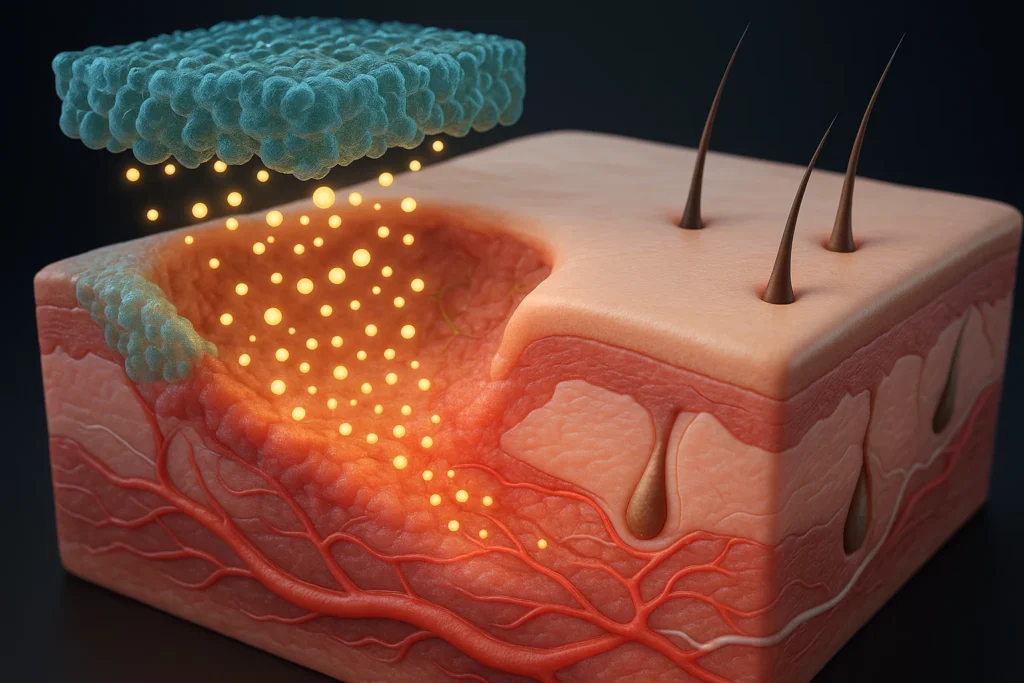
By embedding exosomes inside a polymer network, researchers can potentially protect the vesicles and control how they are released.
In Wang and colleagues’ formulation, the hydrogel demonstrated sustained, pH-responsive exosome release.
The idea is that the hydrogel functions as a localised delivery platform while the exosomes provide biological signals associated with tissue repair.
So, this approach brings together physical support for the wound and helpful biological activity.
Whether this combination actually helps people heal better is still something researchers need to study in clinical trials.
What Did the Original Experiments Reveal?
The 2019 research included material characterisation, antibacterial testing, cell-based laboratory studies, and experiments using diabetic full-thickness skin wound models.
Several findings stood out.
Improved Blood Vessel-Related Cell Activity
In laboratory experiments, the exosome-loaded hydrogel promoted the proliferation and migration of human umbilical vein endothelial cells.
It also increased their ability to form tube-like structures.
These findings matter because endothelial cells help form and maintain blood vessels.
But forming tubes in a lab dish is just a test—it doesn’t prove that real blood vessels will grow in human wounds.
Faster Wound Closure in Diabetic Animals
The researchers found that wounds treated with the exosome-loaded hydrogel closed more efficiently than wounds receiving certain comparison treatments.
In the experimental model, the combined formulation performed better than the hydrogel or exosomes alone.
This hints that combining the biomaterial with biological vesicles could be more effective.
Greater Formation of New Blood Vessels
The treated wounds showed enhanced angiogenesis.
Better vascular development may help support oxygen and nutrient delivery to regenerating tissue.
This is especially important since poor blood vessel growth is common in chronic diabetic wounds.
Enhanced Collagen Deposition and Skin Repair
The researchers also observed greater collagen deposition and re-epithelialization.
Collagen is an important structural protein in skin, while re-epithelialization describes the formation of a new epithelial layer across the wound.
The study reported the appearance of skin appendages and reduced scar tissue in treated wounds.
These findings suggest improved tissue regeneration.
But when the paper mentions complete skin regeneration, it’s based on what the researchers saw in their experiments. It doesn’t mean the hydrogel can restore all normal skin functions in people.
Why Were the Results Scientifically Important?
The research was notable because it addressed several aspects of wound repair through a single engineered platform.
Traditional dressings primarily protect wounds and manage the local environment.
By contrast, the FHE@exo hydrogel was designed to combine wound coverage, antibacterial activity, sustained delivery, and biological signalling.
The study showed that all these features could work together in a single material.
It also offered an early example of how regenerative medicine and materials science could be integrated to improve diabetic wound healing.
This combination has now become a busy area of research in tissue engineering.
What Has Changed Since the 2019 Study?
Research into exosome-loaded hydrogels has expanded considerably since Wang and colleagues published their original experiments.
By 2025 and 2026, investigators explored additional polymer formulations, extracellular vesicle sources, controlled-release systems, and approaches to make regenerative wound dressings more suitable for clinical use.
Several important reviews help explain the current evidence.
2025: Systematic Review Supports the Potential of Exosome Therapy
A systematic review and meta-analysis published in the Journal of Tissue Viability in August 2025 investigated exosome-based treatments for diabetic wounds.
The researchers reviewed 19 eligible preclinical studies.
They found that exosome-based therapies were associated with improvements in wound healing, angiogenesis, re-epithelialization, and collagen deposition.
But the studies varied a lot in how they got the vesicles, how they gave them, and what biomaterials they used.
Most evidence came from rodent experiments.
The review stressed that we need standard methods and bigger, better clinical trials.
Read the study: Journal of Tissue Viability (2025), DOI: 10.1016/j.jtv.2025.100917
September 2026: Analysis of 75 Preclinical Studies
A more recent systematic review and network meta-analysis, published in Materials Today Communications in September 2026, examined 75 controlled animal studies involving hydrogel-based delivery of stem cells or exosomes.
The researchers compared combination therapies against the biological payload alone, hydrogel alone, and untreated controls.
Across the analysed studies, hydrogel-assisted delivery was associated with improvements in several outcomes, including wound closure, collagen deposition, angiogenesis, and inflammation-related measurements.
These results suggest that hydrogels might offer extra benefits compared to just putting regenerative material straight on a wound.
Nevertheless, the authors identified limitations involving study variability, small-study effects, and inconsistencies in parts of the evidence.
But these findings don’t prove that any specific hydrogel works in people.
Read the analysis: Materials Today Communications (2026), DOI: 10.1016/j.mtcomm.2026.116139
2026: Clinical Translation Remains a Challenge
A 2026 review in Wiley Interdisciplinary Reviews: Nanomedicine and Nanobiotechnology examined the prospects for using exosome-hydrogel systems in diabetic wound repair.
The review discussed how hydrogel carriers may prolong exosome retention and support sustained delivery.
The review also pointed out challenges that need to be solved before these systems can become standard treatments.
These include biological consistency, manufacturing quality, storage, dosing, safety, and appropriate clinical evaluation.
Read the review: From Dilemma to Breakthrough: Prospects for Clinical Application of Exosome-Hydrogel Systems in Diabetic Wound Repair (2026)
How Do Experimental Hydrogels Compare With Current Wound Treatments?
Smart hydrogels look promising, but it’s important to see them in the context of current diabetic wound care.
| Treatment approach | Main purpose | Current evidence or role |
| Wound cleaning and debridement | Remove damaged or nonviable tissue | Established clinical wound management |
| Pressure offloading | Reduce repeated pressure on foot ulcers | Core evidence-based treatment for appropriate plantar ulcers |
| Infection management | Control clinically significant bacterial infection | Essential when infection is diagnosed |
| Vascular assessment and revascularization | Address inadequate blood supply | Important for selected patients with peripheral arterial disease |
| Conventional wound dressings | Protect and manage the wound environment | Established supportive care, selected by wound needs |
| Exosome-loaded smart hydrogels | Deliver regenerative signals while supporting the wound environment | Experimental; promising preclinical findings |
Current clinical guidelines continue to emphasise wound assessment, appropriate offloading, infection management, blood-flow evaluation, and individualised care.
For example, the International Working Group on the Diabetic Foot recommends non-removable knee-high offloading devices as a first-choice intervention for many neuropathic plantar forefoot and midfoot ulcers when appropriate.
The IWGDF and Infectious Diseases Society of America also emphasise prompt assessment and treatment of diabetic foot infections.
Clinical references:
What Must Happen Before Smart Hydrogels Become Routine Treatments?
Despite the scientific progress, several challenges remain.
1. Demonstrating Safety in Humans
An injectable biomaterial must be evaluated for local tissue reactions, inflammation, toxicity, and compatibility with human wound environments.
Researchers also need to understand how the material breaks down and whether its components produce unwanted effects.
2. Standardising Exosome Production
Extracellular vesicle preparations can differ between laboratories.
The cell source, purification method, concentration, and biological activity must be characterised consistently.
Without reliable quality controls, two products described as exosome therapies may not have the same effects.
3. Establishing Appropriate Dosages
Researchers must determine how much exosome material is required, how frequently it should be delivered, and how long it remains active.
The optimal formulation may also depend on wound size, infection status, and underlying circulation.
4. Testing Complex Human Wounds
Animal wound models do not fully reproduce the challenges of human diabetic foot ulcers.
Human wounds may involve severe neuropathy, poor arterial circulation, bacterial biofilms, repeated mechanical pressure, and several coexisting medical conditions.
A product that speeds up wound closure in the lab might not work the same way in real-life situations.
5. Conducting High-Quality Clinical Trials
Well-designed clinical trials need to measure outcomes that matter to patients.
These include complete wound closure, time to healing, recurrence, infection, need for hospitalisation, amputation risk, pain, and quality of life.
Trials must also determine whether hydrogel-exosome treatments provide meaningful benefits when added to high-quality standard wound care.
6. Addressing Manufacturing and Cost
Advanced hydrogels may require specialised manufacturing, sterilisation, storage, and quality-control processes.
These requirements could make them more expensive than conventional treatments.
A successful product would have to show it works biologically and is also useful and practical in real clinics.
Could Smart Hydrogels Reduce Diabetes-Related Amputations?
Preventing amputations is an important goal of diabetic wound research.
Since slow healing and infections can lead to serious problems, treatments that safely help tissue repair might lower some of these risks.
However, the original Theranostics study did not demonstrate a reduction in amputations among human patients.
The 2026 preclinical findings also do not establish that these materials prevent limb loss.
To make that claim, researchers would need clinical studies with people who have diabetic foot ulcers and carefully measured long-term results.
For now, the most reliable strategies for reducing amputation risk remain early wound identification, pressure relief, appropriate infection treatment, adequate blood supply, and coordinated specialist care.
October 2026 Update: Where Does the Technology Stand?
By October 2026, exosome-hydrogel systems have developed into a substantial research field.
Research suggests that mixing extracellular vesicles with engineered biomaterials can lead to better healing in experiments than using either one alone.
New studies are also investigating more sophisticated designs, including materials that respond to wound-associated changes in pH, oxidative stress, or other environmental signals.
However, a more complex hydrogel is not automatically a better clinical treatment.
Researchers must establish whether each additional feature improves healing enough to justify its manufacturing, safety, and regulatory challenges.
Most importantly, better wound healing in diabetic animals doesn’t prove the treatment works in people.
The specific FHE@exo formulation developed by Wang and colleagues remains a preclinical research approach based on the evidence discussed here.
The next big step is to reliably move these findings into clinical practice.
Conclusion
Creating injectable, self-healing, antibacterial hydrogels with stem-cell-derived exosomes is a big step forward in experimental regenerative bioengineering.
The original 2019 research by Chenggui Wang and colleagues demonstrated that a multifunctional hydrogel could improve wound healing, blood vessel formation, and tissue regeneration in diabetic animal models.
Studies published up to October 2026 have made the case even stronger for combining regenerative biological materials with advanced hydrogel delivery systems.
But most of this progress is still at the preclinical stage.
The most meaningful breakthrough will come when these materials demonstrate consistent safety and improved healing outcomes in well-designed human clinical trials.
Until then, smart exosome-loaded hydrogels should be viewed as promising investigational technologies—not replacements for established diabetic wound care.
References and Scientific Sources
- Wang, C., et al. (2019). Engineering Bioactive Self-Healing Antibacterial Exosomes Hydrogel for Promoting Chronic Diabetic Wound Healing and Complete Skin Regeneration. Theranostics, 9(1), 65–76.
https://doi.org/10.7150/thno.29766 - Chen, L., et al. (2025). A Systematic Review and Meta-Analysis to Investigate the Effectiveness of Exosomes for Diabetic Wounds. Journal of Tissue Viability, 34(3), 100917.
https://doi.org/10.1016/j.jtv.2025.100917 - Zhang, B., Li, Y., & Wu, Y. (2026). Hydrogel Biomaterial Platforms for Stem Cell and Exosome Delivery in Diabetic Wound Healing: A Preclinical Systematic Review and Network Meta-Analysis. Materials Today Communications.
https://doi.org/10.1016/j.mtcomm.2026.116139 - Han, C., et al. (2026). From Dilemma to Breakthrough: Prospects for Clinical Application of Exosome-Hydrogel Systems in Diabetic Wound Repair. Wiley Interdisciplinary Reviews: Nanomedicine and Nanobiotechnology.
https://doi.org/10.1002/wnan.70080 - Bus, S. A., et al. (2024). Guidelines on Offloading Foot Ulcers in Persons With Diabetes (IWGDF 2023 Update). Diabetes/Metabolism Research and Reviews.
https://doi.org/10.1002/dmrr.3647 - Senneville, É., et al. (2023). IWGDF/IDSA Guidelines on the Diagnosis and Treatment of Diabetes-Related Foot Infections. Clinical Infectious Diseases.
https://doi.org/10.1093/cid/ciad527 - IWGDF/IDSA. Official Clinical Guidelines for Diabetes-Related Foot Infections.
https://www.idsociety.org/practice-guideline/diabetic-foot-infections/