
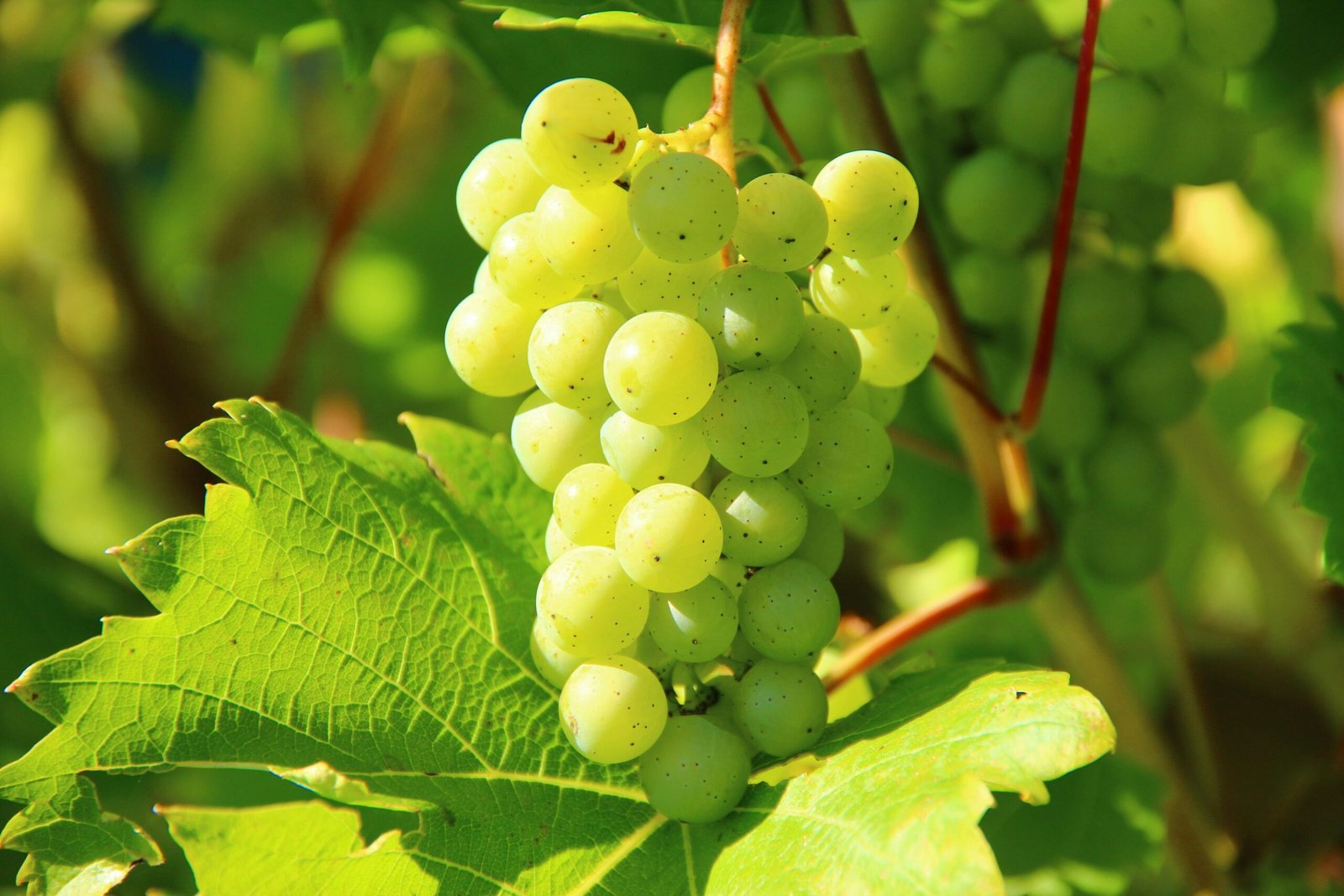

You’ve heard that a healthy diet shows on your skin. But what if specific foods could actually reprogram how your skin cells behave, making them tougher, more resilient, and better equipped to handle environmental stress like UV radiation?
Recent findings indicate that grapes may directly influence your skin’s resilience. New research published in ACS Nutrition Science suggests that’s exactly what grapes appear to do. Scientists studying human skin biopsies have found that just two weeks of regular grape consumption meaningfully alters gene expression in skin tissue, triggering biological processes that strengthen the skin barrier and reduce damage caused by ultraviolet (UV) light. The effects appear to be widespread and occur beneath the surface, in ways we can’t see with the naked eye.

The Study: What the Researchers Did
A team of researchers from Western New England University and partner institutions recruited volunteers for a carefully controlled clinical trial. Participants spent two weeks on a restricted “washout” diet designed to remove confounding dietary variables, then consumed the equivalent of three daily servings of fresh grapes (delivered as a standardised freeze-dried powder) for a further two weeks.
Before and after the grape intervention, skin biopsies were collected from two sites on each participant: an area of skin exposed to UV irradiation (calibrated to the individual’s minimal erythema dose, or MED, the precise amount of UV that just begins to cause redness), and a sun-protected area on the hip used as a control.
The biopsies were then analysed using RNA sequencing to map the complete transcriptome, essentially a readout of which genes are switched on or off in the skin. Lipidomic analysis of blood plasma was also performed, and levels of malondialdehyde (MDA), a marker of UV-induced oxidative damage, were measured in the skin using immunostaining.
Four participants provided complete, high-quality data sets for the full transcriptomic analysis. These four subjects were notable for one reason: they showed no measurable increase in UV resistance in standard clinical testing (the MED did not change after grape consumption). They were, in conventional terms, “non-responders.”
What the Results Revealed
Grape Eaters Had Less UV-Induced Oxidative Damage
Despite showing no classical signs of improved UV resistance, all four subjects demonstrated reduced UV-induced malondialdehyde generation after consuming grapes. Across the larger cohort of 26 subjects, the same pattern held: grape consumption reduced the skin’s oxidative stress response to UV, regardless of whether the MED changed. This suggests grapes are offering a layer of protection that conventional measurements simply weren’t designed to detect.
Grape Consumption Changed Which Genes Were Active in Skin
Grape consumption changed gene activity in the skin of study participants. Using RNA sequencing, the researchers identified thousands of genes active in the skin samples, and their expression patterns shifted meaningfully after two weeks of grape consumption. The changes were highly individual, with each participant showing a unique signature of up- and down-regulated genes. But when the data was examined using Gene Ontology (GO) enrichment analysis, a method that groups genes by their biological function, recognisable patterns emerged.
In three of the four subjects, grape consumption was associated with enrichment of biological processes involved in:
- Keratinisation is the process by which skin cells produce keratin, strengthening the outer layer of the skin.
- Keratinocyte differentiation, the maturation of the skin’s primary cell type
- Cornification, the formation of the cornified cell envelope, is a protein shell that gives the outermost skin cells their durability.
- Skin and epidermis development processes that rebuild and reinforce skin architecture
These are not incidental processes. Keratinisation and cornification are central to how skin shields the body from UV radiation, chemical irritants, pathogens, and physical damage. They also help maintain moisture balance, preventing water loss, and keeping the skin firm and elastic. Grape consumption, in short, appeared to switch on a programme of skin reinforcement.
The Plasma Lipidome Also Shifted
Grape consumption produced substantial changes in participants’ plasma lipid profiles. Blood lipid analysis revealed widespread changes after the grape intervention. All 16 phosphatidylinositols measured increased in concentration, as did all four lysophosphatidylinositols, all 12 phosphatidylserines, and all 57 phosphatidylcholines lipid classes linked to membrane integrity, anti-inflammatory signalling, and skin barrier function. Unsaturated free fatty acids also increased, while saturated fats largely decreased. These changes point to a systemically healthier lipid environment, one with known benefits for the skin.
While these findings highlight broad trends, the next question is why changes weren’t identical for every participant.
Individual variability shapes how skin responds to grape consumption. One of the most striking findings in this study was the significant differences between individuals. Even before the grape intervention, each person’s skin displayed a distinctive gene expression signature showing that hundreds of genes could be expressed in one participant but entirely absent in another. After grape consumption, these gene expression patterns changed in each individual, but the specific ways they changed varied between participants. This highlights that people’s genetic background and biology influence how they respond to the same dietary change.
The researchers refer to variation between people (inter-individual) and within the same person under different conditions (intra-individual). They consider this variability to be typical in nutrigenomic research. Factors such as a person’s genes, gut microbiome, age, sex, and dietary habits all combine to determine how someone responds to foods like grapes.
This doesn’t mean grapes aren’t working for everyone. The authors calculate that if all four study participants selected for the transcriptomic analysis responded positively, and they did, then statistically, a very large proportion of the original 29-person cohort likely responded in a similar way. Their estimate: around 21 of 29 subjects likely experienced meaningful changes in skin gene expression after consuming grapes.
Given these individual differences, it’s helpful to consider the possible mechanisms behind grapes’ effects on skin.
Grapes contain hundreds of phytochemicals, including polyphenols, flavonoids, stilbenes, carotenoids, and more. Resveratrol is the most famous, but the researchers argue it’s the totality of these compounds working together, not any single molecule, that drives the effect.
Researchers suspect gut-skin communication underlies grapes’ effects. When you eat grapes, their phytochemicals interact with the gut microbiome, modifying the microbial community and triggering the production of new metabolites. These molecules then travel through what scientists call the gut–organ axes, communication pathways linking the gut to the skin, liver, brain, kidneys, and other tissues. The skin picks up these signals and responds at the genetic level, activating protective processes even before any visible or clinically measurable benefit appears.
This is the essence of nutrigenomics: the idea that food doesn’t just fuel us, it speaks to our DNA.
What This Means for You
This research has real implications for how we think about dietary skin protection. Sunscreen and topical treatments address UV damage at the surface. But grape consumption appears to work more deeply, adjusting the skin’s internal machinery, so it is better prepared for UV exposure before it even occurs.
Importantly, two weeks of consuming roughly 3 servings of grapes per day was enough to trigger these changes. The researchers used a standardised freeze-dried grape powder, but this maps onto a realistic dietary pattern of a handful of grapes at each meal.
There is no suggestion that grapes replace sun protection. But the findings do support grapes as a compelling complementary strategy for skin health, one with no known side effects, a solid mechanistic rationale, and a growing body of clinical evidence.
The Bottom Line
Your skin is talking to your diet. New research shows that two weeks of regular grape consumption can reduce UV-induced oxidative damage in the skin and activate gene expression programmes linked to natural skin barrier reinforcement, including keratinisation, cornification, and epidermal development. The effects are real, even in people who show no visible change in UV tolerance, and they appear to operate through the gut–skin axis, with grape phytochemicals reshaping the skin’s molecular landscape from the inside out.
The next time you reach for a bunch of grapes, know that the benefits may run far deeper than you think.
Reference
Dave, A., Piya, S., Koomoa, D-L. T., Lange, I., Choi, J., van Breemen, R. B., & Pezzuto, J. M. (2026). Inter- and intraindividual variation of gene expression in human skin following grape consumption and/or exposure to ultraviolet irradiation. ACS Nutrition Science. https://doi.org/10.1021/acsnutrsci.6c00003