

Anxiety disorders are among the most common mental health conditions in the world, affecting around 30% of adults in the United States at some point in their lives. Yet despite decades of research, treatments still fail a significant proportion of patients. Antidepressants and therapies help many people, but somewhere between 35% and 60% of treated patients never fully recover. That gap has driven researchers to look deeper into the brain for answers.
A 2025 study published in Molecular Psychiatry may have found something important: across multiple anxiety disorders, the brains of affected individuals consistently contain lower levels of a nutrient called choline. This was not a single study finding. It was a meta-analysis, a rigorous synthesis of 25 independent datasets collected over more than two decades of research, and the signal was remarkably consistent.
How Do You See Inside a Living Brain?
Before getting to what the researchers found, it helps to understand how they found it.
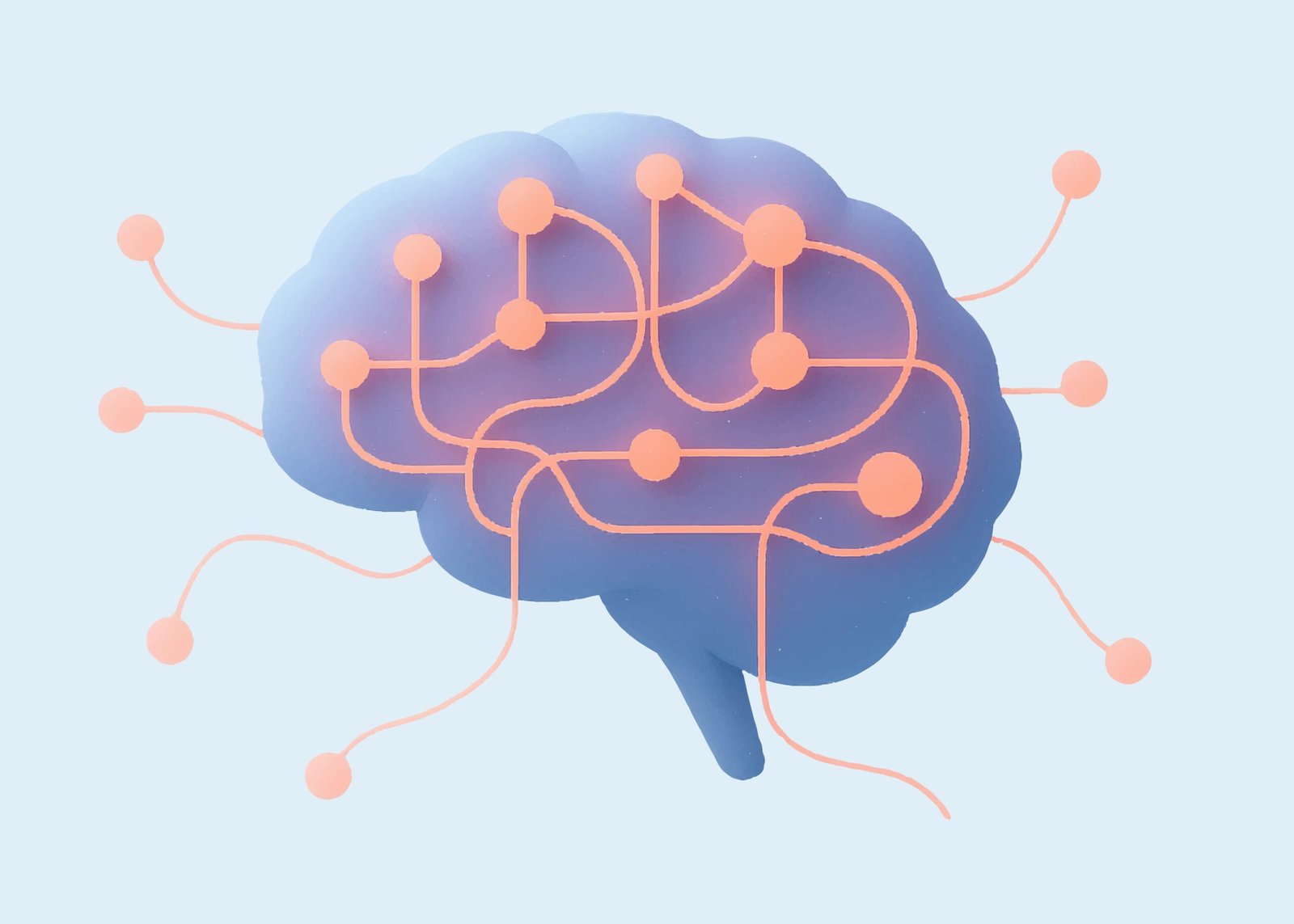
The technique used is called proton magnetic resonance spectroscopy (MRS), a specialised form of brain scanning that goes beyond the structural images most people associate with MRI. While a standard MRI shows the shape and structure of brain tissue, MRS can detect the chemical signatures of specific molecules present in that tissue. By analysing the radio frequencies emitted by hydrogen atoms in different molecules, it produces a kind of neurochemical fingerprint that allows researchers to measure concentrations of compounds like choline, glutamate, and creatine in specific brain regions in living people, without a single surgical incision.
Researchers at the University of California, Davis, analysed data from 25 datasets covering 370 patients diagnosed with generalised anxiety disorder (GAD), panic disorder, or social anxiety disorder, compared against 342 healthy controls. They examined eight brain chemicals across multiple brain regions.
Seven of those chemicals showed no consistent abnormality across anxiety disorders. One did.
The Choline Finding and Why It’s Unexpected
Choline-containing compounds (referred to collectively as tCho) were significantly reduced in the prefrontal cortex and across cortical brain regions, generally in people with anxiety disorders. In the highest-quality studies, the average reduction was around 8%, with a Hedges’ g effect size of −0.64, a moderate and statistically robust finding.
This is notable for several reasons.
First, the pattern held across all three anxiety disorder types, GAD, panic disorder, and social anxiety disorder, without meaningful differences between them. It appears to be a transdiagnostic feature of anxiety conditions, not a quirk of any one diagnosis.
Second, and perhaps most strikingly, the direction of the effect is the opposite of what is seen in most other neuropsychiatric conditions. In schizophrenia, bipolar disorder, traumatic brain injury, and HIV infection, brain choline levels tend to be elevated. Elevated choline is typically interpreted as a sign of membrane disruption, inflammation, or increased cell turnover. Reduced choline, as seen here, implies something different is happening in anxiety: depletion rather than disruption.
Third, a secondary finding showed that NAA (N-acetylaspartate), a marker of neuronal health and integrity, was also modestly reduced across cortical regions. This suggests some degree of compromised neuronal function in people with anxiety disorders, though this finding was less robust than the choline result and requires further investigation.
What Does Choline Actually Do in the Brain?
Choline is an essential nutrient. Unlike most brain chemicals, it cannot be synthesised in meaningful quantities in the brain; it must be taken from the diet and transported across the blood-brain barrier. Once inside the brain, choline plays several critical roles.
It is a key building block of phosphatidylcholine, the most abundant phospholipid in cell membranes. It contributes to the production of acetylcholine, the neurotransmitter central to attention, memory, and arousal. It also participates in methylation reactions, chemical processes essential for gene regulation, myelin maintenance, and a wide range of other neurological functions.
The tCho signal measured by MRS reflects primarily two soluble compounds, glycerophosphocholine and phosphocholine, which are continuously cycling through the synthesis and degradation of membrane phospholipids. When this signal drops, it suggests that the brain is drawing on these compounds faster than it is replenishing them, or that choline is being diverted into forms that MRS cannot detect.
Why Might Anxiety Drain the Brain of Choline?
The researchers offer a compelling hypothesis. Anxiety disorders are characterised by chronically elevated arousal, a persistent state of hyperactivation that involves the noradrenergic system (the brain’s norepinephrine-based alerting network), the cholinergic system, and related circuits. This chronic arousal state, they propose, increases the brain’s metabolic demand for choline in ways that dietary intake may not keep pace with.
Here is how the mechanism might work. Elevated noradrenergic activity, the kind that drives the heightened alertness and vigilance characteristic of anxiety, accelerates several choline-consuming biological processes. It promotes the proliferation and maturation of oligodendrocyte precursor cells, which are involved in myelin production and require choline-containing phospholipids to perform their function. It also stimulates methylation reactions in neurons that consume choline-derived methyl groups without producing new choline.
At the same time, the brain’s supply of choline from the bloodstream may not increase proportionally. Unlike most brain metabolites, choline cannot be synthesised within the brain to any significant degree. It depends almost entirely on dietary intake and transport across the blood-brain barrier via a specific molecular transporter. If the body is not taking in enough choline, and research suggests that 90% of American adults fail to meet the recommended daily amount, then chronically elevated demand without a proportionate supply could lead to a progressive shortfall in brain choline levels.
Supportive evidence for this idea comes from an unexpected direction. Hyperthyroidism, which elevates noradrenergic activity via a well-established interaction with thyroid hormones, is associated with reduced choline levels in multiple brain regions. Conversely, hypothyroidism produces elevated choline. Regular vigorous physical exercise, which also activates central noradrenergic systems, is similarly associated with lower brain tCho. These parallels suggest that the choline-depleting effect of elevated arousal is a real and generalizable phenomenon.
Adding another layer: a study of nearly 6,000 people found that lower serum choline levels were associated with clinically significant anxiety. And in animal models, dietary manipulation of choline and related methyl donors directly shifted anxiety behaviour. More choline means less anxiety; less choline means more.
Could Choline Supplementation Help?
This is the question the paper raises but stops short of answering definitively and appropriately, since no controlled clinical trials have yet tested choline supplementation in people with anxiety disorders. But the researchers lay out a plausible case for why it might be worth investigating.
If chronically elevated arousal in anxiety progressively depletes brain choline, and if that depletion itself then becomes a factor that perpetuates anxiety or impedes recovery, perhaps by impairing neuroplasticity, the brain’s ability to form new memories and patterns of learning that therapy depends on, then replenishing brain choline could theoretically improve treatment outcomes.
Animal studies have shown that choline deprivation impairs neuroplasticity and learning, while supplementation improves it. Clinical studies in older adults consistently show that higher choline intake is associated with better memory. One particularly interesting detail from the paper: the main way the brain receives choline from the bloodstream is in the form of lysophosphatidylcholine (LPC) molecules, and the LPC transporter that carries choline across the blood-brain barrier also preferentially carries omega-3 fatty acids. Research showing that omega-3 supplementation reduces anxiety symptoms may partly be explained by this shared transport route, simultaneously boosting brain choline levels.
The researchers propose that clinical trials combining MRS brain scanning with choline supplementation, possibly delivered as LPC containing omega-3 fatty acids, would formally test whether correcting low brain choline produces therapeutic benefit in anxiety disorders.
The Bottom Line
This meta-analysis does not claim that low choline causes anxiety or that taking a choline supplement will cure it. What it demonstrates, carefully and rigorously, is that reduced cortical choline is a consistent, reproducible neurobiological feature of anxiety disorders that cuts across diagnostic categories, a finding more reliable than anything else the MRS literature has produced for these conditions.
It raises the real possibility that one reason some people with anxiety disorders fail to respond to standard treatments is a neurometabolic factor that existing therapies do not address at all. Further research could determine whether that gap can be closed.
For a condition affecting hundreds of millions of people worldwide, and resisting treatment in more than a third of cases, that is a question well worth asking.
Reference
Maddock, R. J., & Smucny, J. (2025). Transdiagnostic reduction in cortical choline-containing compounds in anxiety disorders: a ¹H-magnetic resonance spectroscopy meta-analysis. Molecular Psychiatry, 30, 6020–6032. https://doi.org/10.1038/s41380-025-03206-7