


For most of human history, the origins and mechanisms of malaria remained unknown. Early humans were unaware of mosquitoes as vectors, did not understand parasites, and could not have identified Plasmodium falciparum, the microscopic organism responsible for the deadliest form of the disease. However, a recent study published in Science Advances in April 2026 suggests that malaria influenced patterns of human migration, settlement, and the spread of Homo sapiens across the African continent for at least 74,000 years.
Climate Was Not the Whole Story
The conventional understanding of early human dispersal posits that ice ages and wet periods alternately opened and closed corridors across Africa, driving small populations toward new territories or confining them to refuges. In this framework, climate is considered the primary architect of human prehistory, determining patterns of migration and settlement.
That picture is not wrong, but it is incomplete. Researchers from the Max Planck Institute of Geoanthropology, the University of Cambridge, and collaborating institutions set out to test whether a second, largely overlooked force, infectious disease, played an equally significant role in structuring.
The study focused on Plasmodium falciparum, the parasite responsible for the most severe form of malaria, which is transmitted by Anopheles mosquitoes that thrive in warm, humid, and vegetated environments. Currently, malaria infects an estimated 263 million people annually and remains a leading cause of death in sub-Saharan Africa. The researchers investigated whether malaria has always exerted such a significant influence and whether its historical geographic distribution across ancient Africa left a discernible impact on patterns of human movement.
Reconstructing the Invisible: A Malaria Map Across Deep Time
A central methodological challenge arises from the absence of medical records, hospital admissions, or patient data from 74,000 years ago. This raises the question of how to reconstruct the distribution of a disease across tens of thousands of years of prehistory.
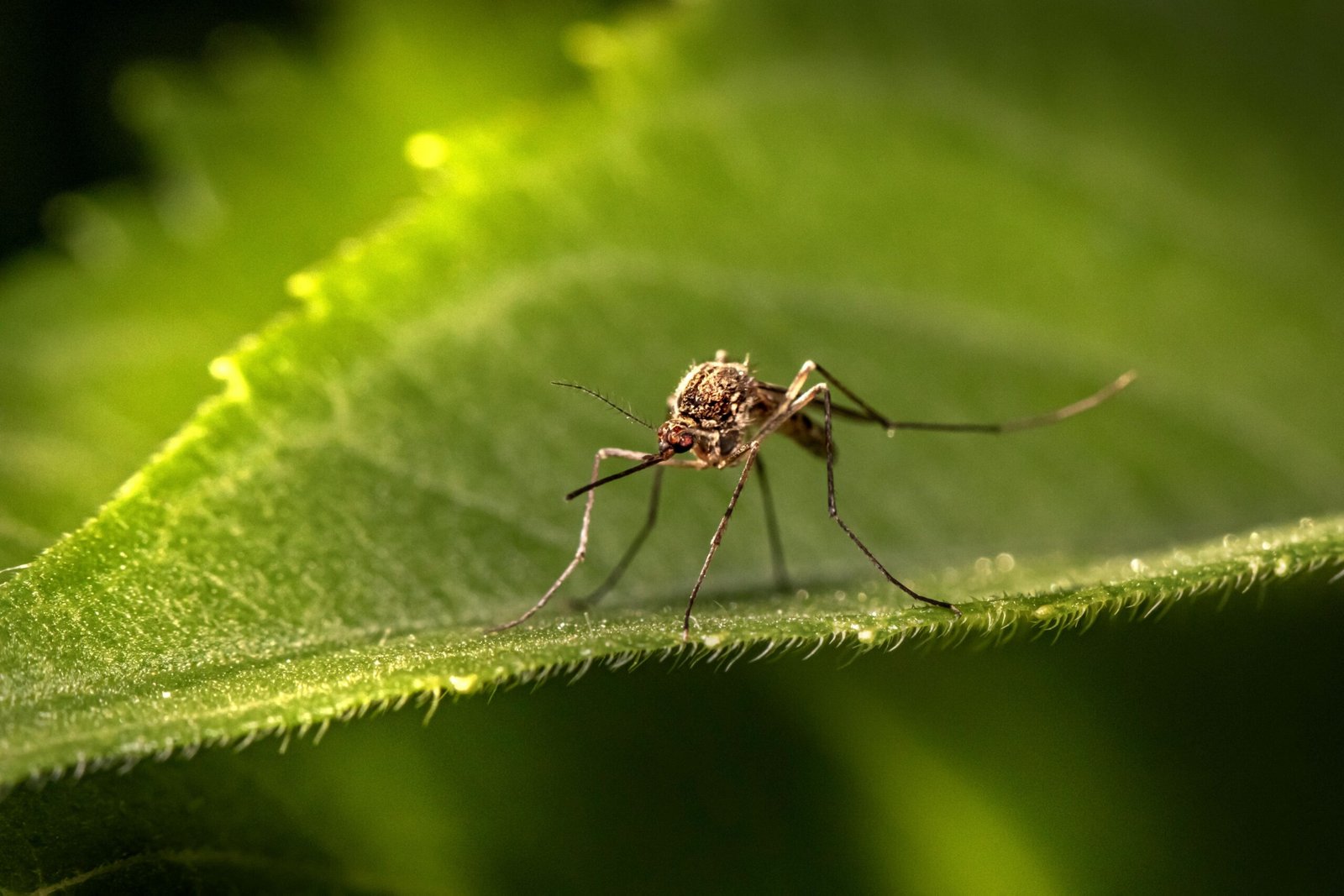
The answer lies in a technique called species distribution modeling (SDM), the same computational approach ecologists use to predict where a species is likely to live based on environmental conditions. The researchers applied it not to a plant or animal, but to the Anopheles mosquitoes that carry malaria.
The researchers constructed detailed models of the ecological niches of three major mosquito groups: the Anopheles gambiae complex (the dominant malaria vector in sub-Saharan Africa), a related coastal group (An. melasBy integratnd An.By integratd the By integratunestuBy integrating pr occseurrence data withse palaeoclimatic rseeconstruct, spanningions, tsehey projec, spanningted these models ba, spanningckward in time at 1, spanning,000-year intervals, spanning from the present to 74,000 years ago.
From these mosquito distribution maps, they calculated a malaria stability index, a measure of how much environmental conditions favor sustained malaria transmission at any given time and place. Crucially, this index does not claim malaria was definitely present in a location; it quantifies whether conditions were suitable for it to persist if it arrived.
The malaria risk map was then compared to an independent reconstruction of early human presence, utilizing an extensive dataset of archaeological sites across Africa dating back 120,000 years. This dataset was used to model the human ecological niche over time.
Both reconstructions—one of disease risk and one of human presence were developed independently using the same climatic data. The results of overlaying these reconstructions revealed a notable pattern.
The Pattern: Humans Consistently Avoided Malaria Zones
Across the entire 74,000-year study period, human occupation consistently clustered in areas of low malaria stability. Regions where environmental conditions strongly favored sustained malaria transmission were overwhelmingly those where early humans were not found.
This negative relationship held throughout the study period, regardless of the specific time slice examined. It was not an artifact of a single era or a single region; it was a persistent, continent-wide pattern. The areas suitable for human habitation were, again and again, the areas where malaria’s grip was weakest.
This pattern contributed to a dynamic geography of human movement. As climate conditions changed and malaria risk shifted across the landscape, the corridors available for human dispersal also changed. For example, regions between the Saharan and Ethiopian habitable zones appear to have alternated between periods of connectivity and isolation, with malaria risk at times facilitating open pathways for human contact and at other times creating effective barriers that isolated populations.
This pattern of alternating connectivity and isolation aligns with findings from genetic analyses of modern African populations. The study provides a potential mechanism for disease-driven avoidance that may explain the population-structure patterns identified by geneticists using ancient and modern DNA.
Sickle Cell Anemia as an Independent Validation
The researchers also identified a notable correspondence between their modeled history of malaria and a key genetic data point: the origin of sickle cell anemia.
Sickle cell anemia is caused by a mutation in the hemoglobin gene that, in its heterozygous form (one copy from each parent), provides partial protection against P. falciparum malaria. It is one of the clearest examples of disease-driven natural selection in the human genome. Recent genetic research has dated the origin of this mutation to between 25,000 and 22,000 years ago, shortly before the Last Glacial Maximum, and traced its emergence to the ancestors of Bantu populations in West Africa.
The study’s malaria reconstructions showed exactly the expected pattern. Malaria risk in West Africa was low throughout most of the study period, with the human niche and high-risk malaria zones showing little overlap. Then, from around 14,000 to 13,000 years ago, the picture began to change. The overlap between malaria hotspots and the periphery of human ranges increased, particularly in West Africa, suggesting that humans were beginning to venture into areas of higher malaria risk they had previously avoided.
This timing and location precisely match what would be expected if the sickle cell mutation emerged in response to intensifying malaria exposure in that region around that time. The independent agreement between the genetic evidence and the ecological reconstruction provides a powerful, if indirect, validation that the malaria model is capturing something real.
Malaria’s Peak Before Farming
Perhaps the most policy-relevant finding concerns the timing of malaria’s rise. A long-standing assumption in public health history has been that malaria became a major problem largely because of agriculture that when humans began clearing forests, creating standing water, and living in denser settlements around 8,000 years ago, they dramatically increased their exposure to malaria-carrying mosquitoes.
This study challenges that assumption directly. The analysis shows that the malaria stability index reached an extremely high peak around 13,000 years ago, thousands of years before crop domestication took hold. In other words, purely on the basis of climate and environmental conditions, malaria was already poised to be a major selective force on human populations well before the advent of farming further changed the game.
This finding is significant because it prompts a reassessment of which diseases are genuinely ancient and which were created or substantially amplified by human behavioral changes. In the case of malaria, climate appears to have been the primary driver during early human history.
A New Framework for Human Prehistory
The broader significance of this research lies in both its methodological and historical dimensions. For the first time, researchers have demonstrated the feasibility of reconstructing disease burden across ancient time periods tens of thousands of years before written records, reliable genetic detection of ancient pathogens, or direct archaeological evidence of disease by modeling the ecological niche of the disease vector. The authors point out that this approach is not limited to malaria. Any infectious disease transmitted by a vector with a modelable ecological niche could, in principle, be reconstructed in this way across deep time. The same logic could be applied to other mosquito-borne diseases, tick-borne illnesses, or waterborne pathogens whose vectors have a distinct and identifiable relationship with climate and environment.
The implications of this research extend beyond academic archaeology. Understanding which diseases influenced human settlement and dispersal in the past may inform inquiries into the origins of current disease vulnerabilities and resistances, as well as the global distribution of specific genetic adaptations.
The narrative of Homo sapiens is typically framed in terms of climate, geography, and culture. This study provides compelling evidence that disease, although invisible and ancient, should also be recognized as a significant factor in human history.
The Takeaway
For 74,000 years, prior to the development of germ theory, the recognition of mosquitoes as disease vectors, or the establishment of organized medicine, human populations collectively and unconsciously avoided malaria. The disease shaped migration corridors, created barriers between populations, and drove genetic adaptations that persist in hundreds of millions of people today. In every significant sense, malaria was one of the architects of the human species.
Malaria was not eradicated in the ancient world; rather, human populations adapted by navigating around it. This adaptive behavior has had a lasting impact on the species’ development.
Reference:
Colucci, M., Leonardi, M., Blinkhorn, J., Irish, S. R., Padilla-Iglesias, C., Kaboth-Bahr, S., Gosling, W. D., Snow, R. W., Manica, A., & Scerri, E. M. L. (2026). Malaria shaped human spatial organization for the past 74 thousand years. Science Advances, 12(17), eaea2316. https://doi.org/10.1126/sciadv.aea2316