
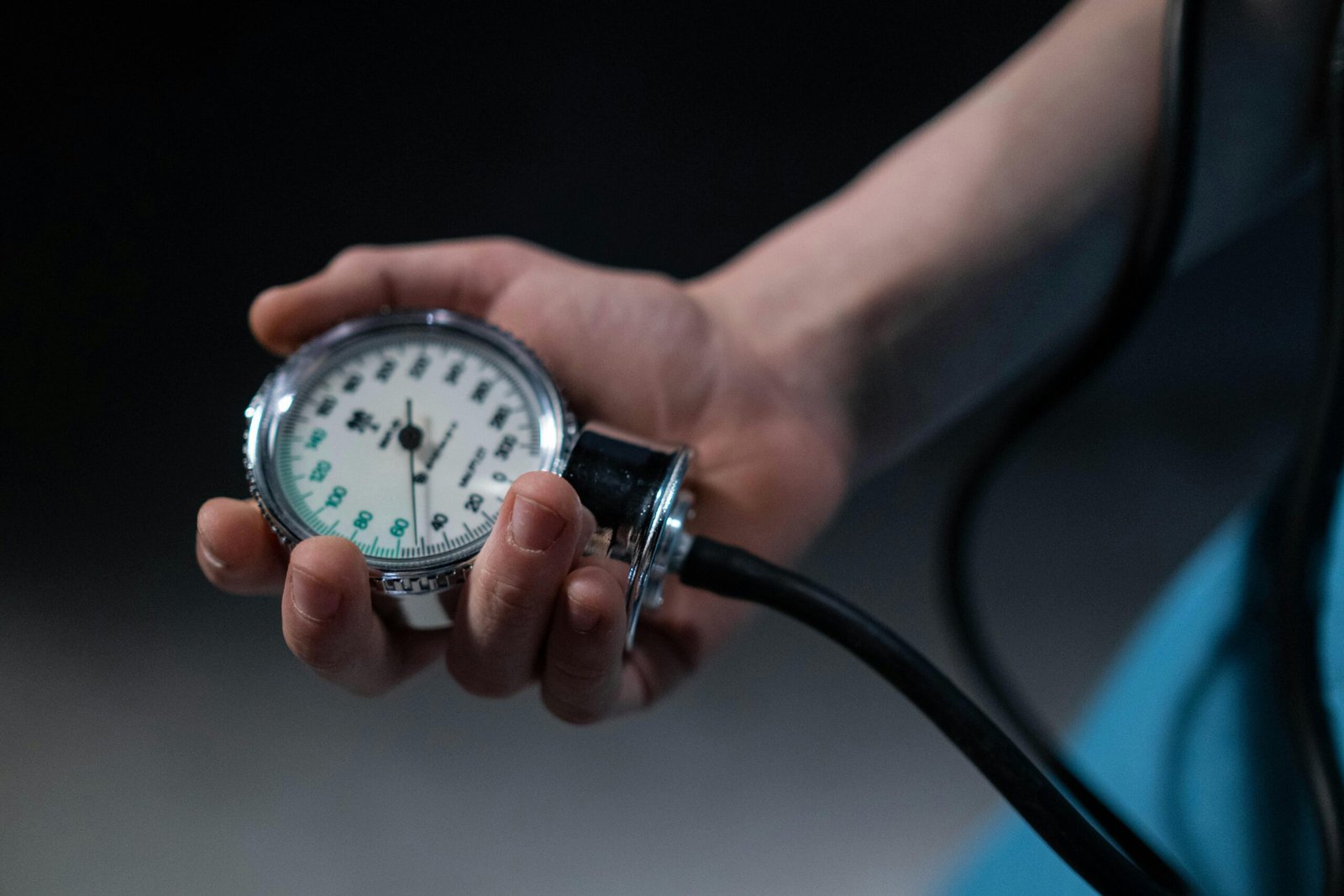

At most doctor visits, a cuff is wrapped around your upper arm to check your blood pressure. This number helps guide decisions about your health care.
This approach has been the standard in clinics for more than a hundred years and still works well for most people.
However, many people cannot have their blood pressure measured on the arm because of certain medical conditions.
This includes people who have lost an arm, stroke survivors with arm paralysis, and those with severe lymphoedema, morbid obesity, or artery disease in both arms. Standard arm cuffs do not work for them, but managing heart and blood vessel risks is still very important.
For years, doctors have measured blood pressure at the ankle for these patients. But there has not been a reliable, proven way to turn ankle readings into numbers that match what would be found on the arm.
In 2025, BMJ Open published the largest study so far on this topic. Researchers looked at data from 33,710 people in 14 studies around the world to answer a question that matters to millions of patients:

They wanted to find out if ankle blood pressure can accurately predict arm blood pressure and help improve patient care.
The results show that ankle blood pressure can accurately predict arm blood pressure, which could have a big impact on medical care.
Why Blood Pressure Is Measured in the Arm and Why That’s Sometimes Impossible
Blood pressure guidelines worldwide, from the American College of Cardiology to the European Society of Hypertension to the UK’s NICE, are based entirely on measurements taken at the upper arm (brachial artery).
There are good reasons for this: the arm is easy to reach, measurements are standardized, and it has been well studied. But this approach leaves out many people who need care.
Who cannot Have Arm Blood Pressure Measured?
According to the study authors, arm blood pressure measurement is not always possible for people with:
Approximately 13 people per 100,000 in the UK live with upper limb prostheses, with over 1,700 amputations above wrist level occurring annually.
Stroke with hemiplegia: 1.3 million stroke survivors live in the UK, and around 75% experience upper limb dysfunction.
Morbid obesity or bilateral lymphoedema where standard cuffs cannot fit or function correctly
Phocomelia is a rare congenital limb condition.
Bilateral arterial stenosis, which makes arm readings unreliable
For these people, the ankle is usually the best place to check blood pressure. But before this study, doctors did not have a proven, accurate way to convert ankle readings into numbers that match each person’s arm measurements.
The Study: Largest of Its Kind in Medical History
The research, formally titled the ABLE-BP (Arm Based on LEg Blood Pressures) study, was conducted by scientists at the University of Exeter, University of Oxford, and collaborating institutions across Europe, the United States, and Sub-Saharan Africa.
What Made This Study Unique
Instead of just looking at summary results, the researchers used a method called Individual Participant Data (IPD) meta-analysis. This approach combines each person’s data from all studies, which is considered the best way to achieve accurate results.
This method is much more thorough than usual meta-analyses. It lets researchers consider factors such as age, sex, ethnicity, weight, medical history, and cholesterol, so the results are more personalized rather than just general averages.
Who Was Included
33,710 participants from 14 studies
Mean age: 58 years (range: 18–99)
45% female
Mean baseline arm blood pressure: 138/80 mmHg
Studies from Europe, the USA, and Sub-Saharan Africa
Participants with peripheral artery disease (PAD) were excluded, as PAD profoundly alters ankle blood pressure readings.
What Was Measured
Researchers measured blood pressure in both arms and both ankles at the same time while people were lying down. They then followed up to see who had heart attacks, strokes, or died over time.
5 Proven Findings from the ABLE-BP Study
Finding 1: Ankle Blood Pressure Is, on Average, 12 mmHg Higher Than Arm Blood Pressure.
This is the most important and useful finding from the study.
Across all 33,710 participants, the mean difference between ankle and arm systolic blood pressure was 12.0 mmHg (95% CI: 8.8 to 15.2 mmHg), indicating that ankle readings are consistently higher, but by a predictable margin.
This matters because previous guidelines from the British and Irish Hypertension Society recommended subtracting 15 mmHg from ankle readings to estimate arm pressure. The Thalidomide Trust recommended subtracting 10 mmHg. Other formulae used multiplication instead.
The ABLE-BP study found the real average difference is about 12 mmHg. This correction could change how thousands of patients are diagnosed and treated.
To put it simply, if your ankle blood pressure is 152 mmHg, your arm blood pressure would be about 140 mmHg. This is an important number for deciding on blood pressure treatment.
Finding 2: A Multivariable Model Outperforms Every Existing Formula
The biggest technical achievement of this study was creating and testing a new prediction model. This tool uses math to estimate a person’s arm blood pressure from their ankle reading much more accurately than older methods.
Unlike older formulas that use the same correction for everyone, this model takes into account each person’s unique traits, such as:
- Ankle blood pressure reading
- Age
- Sex
- Smoking status
- Body mass index (BMI)
- Total cholesterol levels
- History of hypertension, diabetes, or heart disease
- Ethnicity
- Presence of cerebrovascular disease
This means the estimate is tailored to each person, not just a one-size-fits-all number.
How Accurate Is It?
The researchers tested how well the model worked using AUROC curves, which measure how accurately a test can tell the difference between conditions. A score of 1.0 means perfect accuracy, while 0.5 means just guessing.
The results were impressive across the full clinically relevant range of blood pressure thresholds:
| 130 mmHg | 0.90 | 80%+ | 82%+ |
| 140 mmHg | 0.91 | 81%+ | 83%+ |
| 160 mmHg | 0.93 | 90% | 83% |
In comparison, all three existing arithmetic formulae produced an identical AUROC of 0.841 significantly lower than the new model’s 0.868–0.880 at the same thresholds.
In practice, the new model leads to 2% fewer mistakes in classifying people as having high blood pressure. That might seem small, but in England alone, it means over 750 more people each year are correctly diagnosed, and the impact could be much bigger worldwide.
Finding 3: Your Individual Characteristics Significantly Change the Ankle-Arm Relationship
One of the most important and often missed points from this study is that the difference between ankle and arm blood pressure is not the same for everyone.
The gap between ankle and arm blood pressure varies significantly based on personal characteristics. The study found that the ankle-arm difference was:
Smaller (ankle closer to arm) in people who are:
- Female
- Smokers
- Of African American descent
- Those with ischaemic (coronary) heart disease
- Those with higher cholesterol levels
Larger (ankle further from arm) in people who are:
- Older
- Heavier (higher BMI)
- Of Hispanic American descent
- Those diagnosed with hypertension
This is why fixed formulas that treat everyone the same are less accurate. For example, a 70-year-old man with high blood pressure and a 35-year-old woman who does not smoke will have different ankle-arm differences, so one formula cannot work for both.
Finding 4: Lower Ankle Blood Pressure Predicts Cardiovascular Events
Besides serving as a stand-in for arm blood pressure measurements, ankle blood pressure also provides important information about heart and blood vessel health.
The study found that lower-reading ankle blood pressure was significantly associated with fatal and non-fatal cardiovascular events — including heart attacks, strokes, and coronary interventions (HR 1.005, 95% CI 1.002–1.007; p<0.001).
This association held up consistently across analyses, both with and without statistical adjustment for missing data.
This makes sense medically: if ankle blood pressure is low, especially when arm pressure is normal or high, it can mean there is artery disease or poor blood flow in the legs. Both are known risk factors for heart problems.
⚠️ Important note: This finding applies specifically to people without pre-existing peripheral artery disease (PAD), who were excluded from this study. In people with known PAD, ankle blood pressure readings have a different and more complex relationship to cardiovascular risk.
Finding 5: Ankle-Based Estimates Can Be Used in Cardiovascular Risk Scoring
A key question for doctors is whether they can still use standard heart risk calculators when estimating arm blood pressure from ankle readings.
The ABLE-BP study tested this directly by calculating both the Framingham and ASCVD 10-year cardiovascular risk scores using estimated versus directly measured arm blood pressures.
The results were reassuring. In both the derivation and validation groups, the risk scores calculated using estimated arm blood pressure were virtually identical to those using observed arm blood pressure:
- ASCVD score: 16.7% vs 17.2% (derivation group); 16.4% vs 16.9% (validation group)
- Framingham score: 19.3% vs 19.9% (derivation group); 19.6% vs 20.8% (validation group)
This means that when doctors use the ABLE-BP model to estimate arm blood pressure from ankle readings, they can enter that number into standard risk calculators to obtain a useful heart risk score. This helps provide better preventive care for patients who could not previously get reliable risk assessments.
Who It Is Designed For
This tool is meant for healthcare professionals who care for patients who cannot have their blood pressure measured on the arm, such as:
- GP surgeries and primary care settings
- Hypertension clinics
- Rehabilitation services for stroke and amputation patients
- Community nursing and home health services
It is not meant for people to use on their own or to diagnose themselves without a doctor’s help.
What This Means for Patient Groups Most Affected
People Living With Limb Loss or Limb Differences
The study authors estimate that 6,000 to 10,000 adults in the UK have major limb loss from birth or later in life. High blood pressure and heart disease are big concerns for this group, but current ways to interpret non-arm blood pressure have been inconsistent, leading to health inequalities.
The ABLE-BP model is the first to give these patients a standard, proven, and personalized way to manage their blood pressure.
Stroke Survivors
About 1.3 million people in the UK have survived a stroke, and around 75% have some trouble using their arms. Checking your own blood pressure helps lower the risk of another stroke, but it is very hard for people who cannot use regular arm cuffs.
With this model, accurate ankle-based blood pressure estimates could help more stroke survivors manage their blood pressure independently.
People With Thalidomide-Related Conditions
The study was partly funded by the Thalidomide Trust, recognizing that thalidomide survivors often have upper-limb differences and a higher heart risk. They have had to rely on unproven conversion formulas in the past, and this research finally addresses that gap.
Limitations the Researchers Were Honest About
Good science means being honest about what a study cannot show yet, and the ABLE-BP researchers were open about several important limits.
Ethnic diversity: The majority of participants came from European and North American cohorts, with only one Sub-Saharan African study included. The model requires further validation in Asian, South Asian, and other underrepresented populations before it can be confidently applied universally.
Differences between studies: Even though this was a very large study, there were still important differences in results between the studies. This means the ankle-arm relationship was not always the same, so we should be careful when applying these findings to everyone.
Limb loss not included: Strangely, the people who could benefit most from this research, those with limb differences or amputations, were not part of the study. Testing the model in this group is an important next step.
Measurement method: The model is based on ankle blood pressure measured with a Doppler while lying down. Results might be different if automatic cuffs are used or if the person is sitting up.
Diastolic blood pressure: Since ABI protocols typically do not record the lower (diastolic) ankle pressure, the model only works for systolic blood pressure, the top number in a blood pressure reading.
Why This Research Matters Beyond the Clinic
At its heart, this study is about making health care fair for everyone.
Blood pressure is the most important risk factor we can change for stroke, heart disease, and kidney failure. To manage it effectively, we need accurate, reliable measurements. But for millions of people who cannot use standard arm cuffs, this has not been possible until now.
The ABLE-BP study changes this. It gives people who have been left out of regular blood pressure checks the same quality of information as everyone else. A 2% improvement in correct classification may seem modest. But when applied across the scale of global hypertension, with more than 1.3 billion people worldwide affected, the downstream impact on misdiagnosis, untreated cardiovascular disease, and preventable deaths is substantial.
Expert Perspective
The study was done for the British and Irish Hypertension Society’s Standing Committee on Blood Pressure Measurement. It was funded by the National Institute for Health and Care Excellence (NICE), the Stroke Association, and the Thalidomide Trust, providing strong backing and a focus on patient needs.
The three public advisors who have faced barriers to arm blood pressure measurement were involved in every stage of the study, from planning to sharing results. This approach makes the findings more relevant and trustworthy. Conclusion
For more than a hundred years, measuring blood pressure in the arm has been the gold standard, and it should remain so for most people. But doctors also have a duty to care for those who do not fit this standard.
The ABLE-BP study gives doctors three important things: a reliable number (ankle blood pressure is about 12 mmHg higher than arm), a proven model (personalized, accurate, and free online), and a clear message (ankle blood pressure is useful data, not just a backup).This research is a big step forward for stroke survivors who check their blood pressure at home, for people born without arms who visit hypertension clinics, and for the many people worldwide whose heart risk has never been measured properly because the standard cuff does not fit.
Ankle blood pressure can be used to predict arm blood pressure. Knowing this, with more accuracy and a personal approach, can help save lives.