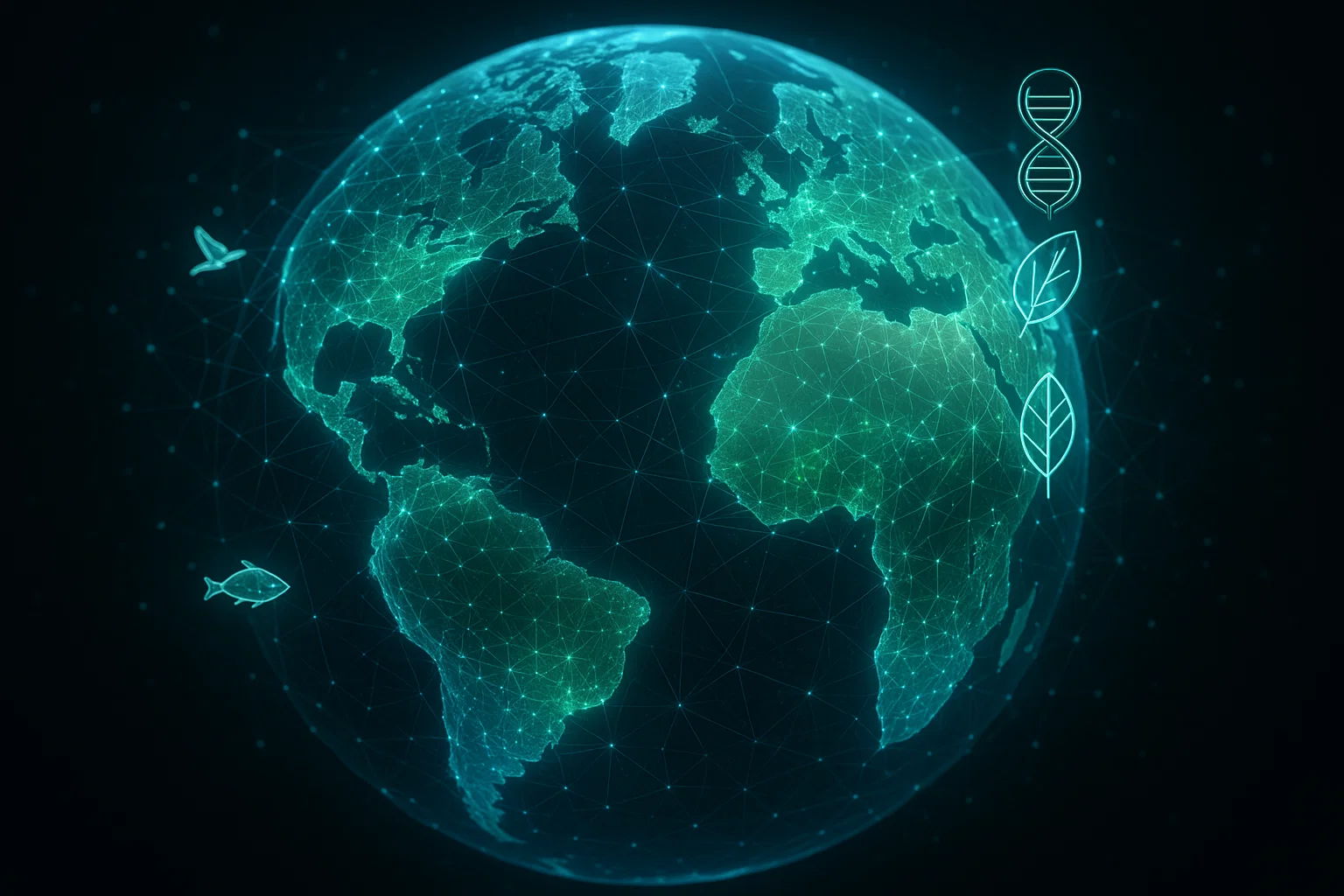

We are surrounded by an age of information data, satellite images of the climate of our planet to genetic codes of living organisms. However, the majority of this knowledge is still in bits and pieces and siloed hence restricting its potential to help humanity address the most pressing issues: the loss of biodiversity, climate change, emerging diseases, and environmental destruction.
In a radical 2025 BioScience report headed by David M. Kunkel and other senior scientists of leading U.S. research institutions, a radical proposal is proposed, the Building an Integrated, Open, Findable, Accessible, Interoperable, and Reusable (BIOFAIR) Data Network. The project is sponsored by the National Science Foundation (NSF) and organized by the American Institute of Biological Sciences (AIBS) to have the biologists, environmental scientists, data engineers and policymakers together to design a common digital infrastructure that will have the ability to coalesce biological and environmental data under a single interoperable framework.
The Vision: To A Living Digital Ecosystem: Out of disconnected databases.
The BIOFAIR project is an extension of the Extended Specimen Network that links biodiversity data (type specimens, genetic data and field data) with other datasets (climate data, land use maps, and public health indicators).
This combined system is designed to help researchers to:
Monitor the adaption of the species to changes in the environment,
Assess future biodiversity trends,
Observing risk factors of zoonotic disease, and
Assess conservation and land use policies accurately.
Essentially, the BIOFAIR Data Network will aim to bring to life a digital twin of the ecosystems of the planet enabling scientists to simulate and predict ecological processes in real-time, which have the potential to change the planetary response to climate and biodiversity disasters.

The BIOFAIR Roadmap of the Five Pillars.
The report gives a five theme roadmap that was developed by community driven workshops that entailed 200 experts working in 142 organizations. All of the themes are pillars of the integrated data future.
Stocktaking and Gap Analysis.
Prior to integration, the scientific community needs to be aware of what data is already there, where it is located and what is lacking. The BIOFAIR team also focuses on mapping current databases like Darwin core, ecological metadata language and ISO geographic standards to determine overlaps and gaps.
The researchers are able to identify overlapping definitions and enhance interoperability, as well as the focus on the underrepresented types of data, such as the acoustic, phenotypic, and video data, by examining such connections. This background preconditions the communicating systems which do not speak across one another.
Technological Capacity Building.
A revolution in data requires infrastructure. The report recommends investment into the scalable, resilient digital platforms that facilitate gathering, sharing, and storing data.
Already, such institutions as Global Biodiversity Information Facility (GBIF) and Distributed System of Scientific Collections (DiSSCo) are on the forefront to mobilize biodiversity data around the world. BIOFAIR builds on this model, with a vision of sharing APIs, machine learning tools, and open metadata templates in order to make biodiversity data actually FAIR Findable, Accessible, Interoperable, and Reusable.
Cyberinfrastructure should also be accommodative so that the smaller or underfunded institutions can also join due to regional mirror sites and lightweight data portals.
Standards or best practices
The development of an open culture of data is not just a matter of technology and it is also a matter of trust, transparency and accountability. BIOFAIR believes in the application of FAIR and CARE principles universally.
Whereas FAIR promotes the ideas of openness and interoperability, CARE (Collective benefit, Authority to control, Responsibility, and Ethics) makes Indigenous and community data sovereignty upheld.
The roadmap calls for:
Identifiers (DOIs) are persistent and assigned to each object of data,
Automatic software to connect datasets to research papers, and
Fair governance to avoid information abuse or omission.
These systems can guarantee that open data does not only enhance faster discovery, but it also protects the integrity of ethics in international research.
Education and Training
To develop the future generation of data literate scientists, BIOFAIR focuses on data stewardship, metadata curation and ethical governance training.
This approach is already learned in the form of programs such as ELIXIR, FAIR Data 101, and the Museums and Emerging Pathogens in the Americas (MEPA) community, which provide interdisciplinary workshops and peer to peer education.
The report looks forward to the national level certifications of data so that the biodiversity institutions and universities may be equipped to provide the specialists, capable of handling, interpreting and sharing complex data in a responsible manner.
Community Building and Inclusion.
Community building, perhaps the most radical pillar, is the promotion of a partnership between data producers, curators, and users in different countries and fields.
The authors emphasize the significance of the support of the local and Indigenous knowledge systems, the equal involvement of the Global South, and the elimination of the gap between the technical developers and social scientists.
Projects such as the Environmental Science Innovation and Inclusion Lab (ESIIL) and International Partners for the Digital Extended Specimen (IPDES) have shown how collaboration across the globe can develop sustainable infrastructure that is scientifically and socially sound.
The Next Steps: Making Vision a Reality.
The BIOFAIR roadmap suggests next steps to be taken that include:
Organizing professional working teams to detect areas of integration failure,
Creating joint funds schemes between NSF, GBIF and global organizations,
Incumbent development arrangements of equitable access, and
Supporting similar initiatives like the Bouchout Declaration and Disentis Roadmap (2025) to harmonize world data policies.
Such a matching of technical innovation with social responsibility is a paradigm shift the open data will no longer be a buzzword, but a sustainable system of scientific development and planetary defense.
A Digital Future of the World.
The BIOFAIR Data Network is not just a technical accomplishment but a promise to the world.
Through the interrelationship of the museum specimens to the satellites, genomes to geographies, and local communities to the world networks, BIOFAIR envisions a world in which science is useful to society through collaboration, transparency, and accessibility.
It is the science of the 21 st century: not only open and FAIR, but also ethical, inclusive, and sustainable.
The way ahead, as Dr. Jyotsna Pandey of AIBS sums up in the report, will need a conscious, long-term effort, to gather resources, develop relationships, and establish a sense of trust and capacity to enable a 21st century data ecosystem.
BIOFAIR is the vision realized a roadmap to a networked scientific future where information and humanity co evolve.
References
Kunkel, D. M., Long-Fox, B. L., Pittman, C., Portmann, J., Sheik, M., Bates, J. M., Bentley, A., Contreras, D. L., Ellwood, E. R., Lomas, M. W., Monfils, A. K., et al. (2025). Integrating biological and environmental data to solve key scientific and societal challenges. BioScience, 0(0), 1–8. https://doi.org/10.1093/biosci/biaf150