

Key takeaways
- Psychobiotics are live microorganisms, usually probiotics, that researchers study for their effects on mood and stress. These also include the fibers that help them grow. The idea is based on the gut-brain connection.
- A 2025 review in Medicine in Microecology suggests that psychobiotics may work by affecting stress hormones, the immune system, and brain chemicals. However, how they work is not fully understood yet.
- Results from combined studies are mixed. Some show lower depression scores, but results for anxiety are inconsistent. One analysis rated the certainty of these findings as low to very low.
- Researchers have studied probiotics as additions to regular treatment, not as replacements. Keep taking your prescribed treatment and talk to your clinician before making any changes.
Psychobiotics might help some people with depression, but the evidence is mixed. The support is even weaker for anxiety and everyday stress. The idea makes sense, and some early studies are promising, but overall results do not support using probiotics alone to treat mood problems.
What are psychobiotics?
The 2025 review defines a psychobiotic as a biological product that, when taken in the right amount, can provide psychological benefits. Most psychobiotics are probiotic strains like Lactobacillus and Bifidobacterium. A 2026 umbrella review also includes prebiotics and synbiotics as psychobiotic interventions. Prebiotics are fibers that feed gut bacteria, and synbiotics combine both probiotics and prebiotics.

How might gut bacteria affect mood?
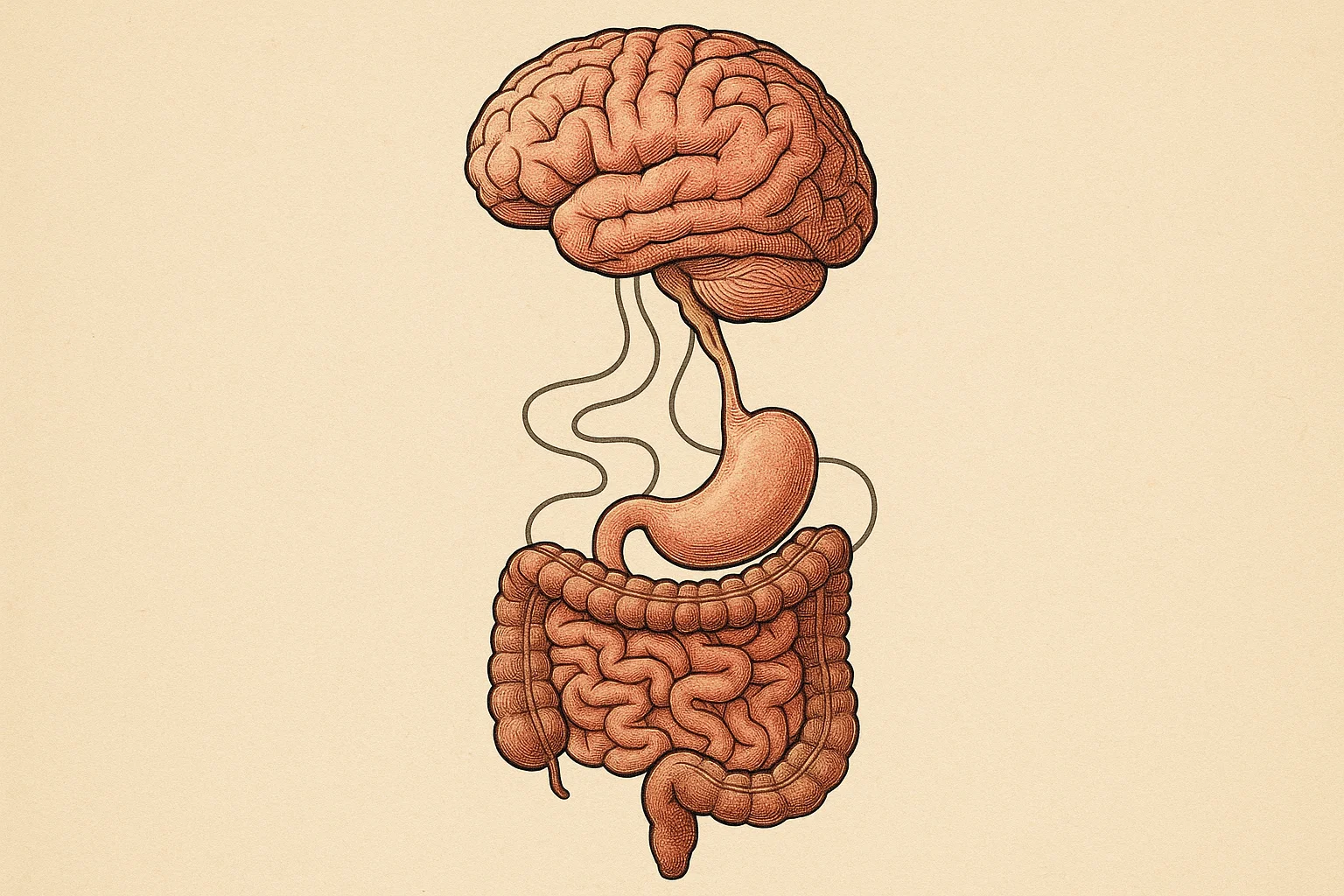
The gut and brain communicate through nerves, hormones, and the immune system. The 2025 review suggests that psychobiotics may help by affecting stress hormones, the immune system, and by producing neurotransmitters and short-chain fatty acids. The 2026 umbrella review also mentions inflammation, oxidative stress, and the strength of the gut barrier. These are possible mechanisms, but none are proven yet. The 2025 review clearly states that the exact mechanism is still not fully understood.
[First-hand example: add a clinician or dietitian interview, or a talk you attended, with name and date. Remove this line if you have none.]
What the 2025 review actually is
The main paper for this topic, Kamal et al. in Medicine in Microecology (volume 23, 2025), reviews different strains tested in human and animal studies, as well as psychobiotic products available on the market. This paper gives an overview of the field. It is not a new clinical trial, so it cannot prove on its own that psychobiotics work in people.
What clinical trials show
When researchers combine results from randomized trials, they get a more detailed and careful picture.
| Depression and Anxiety, 2018 | Meta-analysis of 12 trials, 1,551 people | No significant difference from placebo on anxiety; evidence called insufficient |
| Frontiers in Neurology, 2020 | Meta-analysis of trials through December 2019 | Lower depression scores overall; significant for depressive symptoms only in people with depression; no significant change in anxiety in patients. |
| Clinical Nutrition ESPEN, 2021 | Meta-analysis of trials to February 2020, graded for certainty | No significant difference on several depression, anxiety, and stress scales, certainty low to very low; authors still concluded probiotics may improve symptoms in clinical patients |
| Journal of Clinical Medicine, 2021 | Meta-analysis of 7 trials, 404 people with depression | Benefit when added to antidepressants (SMD 0.83); none when used alone (SMD -0.02) |
| Pharmaceuticals, 2026 | Umbrella review of meta-analyses | Evidence for prebiotics and synbiotics insufficient or heterogeneous |
Two main patterns appear. Probiotics seem to help more with depression than with anxiety, and they work better when added to standard treatment rather than used alone. For example, a recent pilot trial in adults over 60 found slightly lower mood and anxiety scores when a probiotic was used with antidepressants. Still, both groups improved at a similar rate.
Why the results are mixed
A 2025 systematic review of psychobiotics points out three main problems: studies use different methods, have small sample sizes, and lack long-term safety data. Trials also vary in the strain, dose, length, and how they measure mood. When evidence is rated as low or very low certainty, it means the real effect is unclear and could change with better research.
Safety and who should be careful
Most studies are short, so we know less about long-term safety. A 2026 review on probiotic safety points out that even probiotics usually considered safe can pose risks for people with weak immune systems or a damaged gut lining. If this describes you, talk to your clinician before starting any probiotic.
What this means for you
- Do not replace your current treatment with a probiotic. The best evidence is for using probiotics alongside standard care, not by themselves.
- Results depend on the specific strain. Just because one strain and dose worked in a trial does not mean another product will have the same effect.
- If you have ongoing low mood or anxiety, you should seek help. If your symptoms last or affect your daily life, talk to a doctor or mental health professional.
- Get help right away if you need it. If you are in distress or thinking about harming yourself, contact your local emergency services immediately. In the US, you can call or text 988.
Frequently asked questions
What is a psychobiotic? It is a live microorganism, usually a probiotic, that is studied for possible mental health benefits. Some researchers also include prebiotics and synbiotics in this group.
Do probiotics help with anxiety? The evidence is mixed. A 2018 analysis of 12 trials found no significant difference compared to placebo, and a 2020 analysis also found no significant change in anxiety among patients.
Do probiotics help with depression? There is more evidence for depression, especially when probiotics are used with antidepressants. However, results are inconsistent across studies, and certainty is often low.
Can probiotics replace antidepressants or therapy? No. Most trials tested them as additions to regular treatment, and one combined analysis found no benefit when probiotics were used alone.
Is there a best strain? There is no clear answer. The 2025 review looks at many strains and says the way they work is still not fully understood.
The bottom line
Psychobiotics are an interesting concept with a reasonable biological basis and some promising studies, especially as add-ons for depression. The evidence is weaker for anxiety and everyday stress, certainty is often low, and there is little long-term safety data. Be cautious about claims that gut bacteria will “naturally” fix mood, and talk to a clinician before changing your treatment.
Related on Scientifix Digest: Can Probiotics Help Treat Depression in Older Adults? · Homocysteine Levels Linked to Fatigue and Motivation
References
https://doi.org/10.1016/j.medmic.2024.100118
Kamal N, Saharan BS, Duhan JS, et al. Exploring the promise of psychobiotics: Bridging gut microbiota and mental health for a flourishing society. Medicine in Microecology. 2025;23:100118. Abstract
Efficacy of probiotics on anxiety: a meta-analysis of randomized controlled trials. Depression and Anxiety. 2018. PubMed
Effects of Probiotics on Depressive or Anxiety Variables in Healthy Participants Under Stress Conditions or With a Depressive or Anxiety Diagnosis: A Meta-Analysis of Randomized Controlled Trials. Frontiers in Neurology. 2020. doi:10.3389/fneur.2020.00421